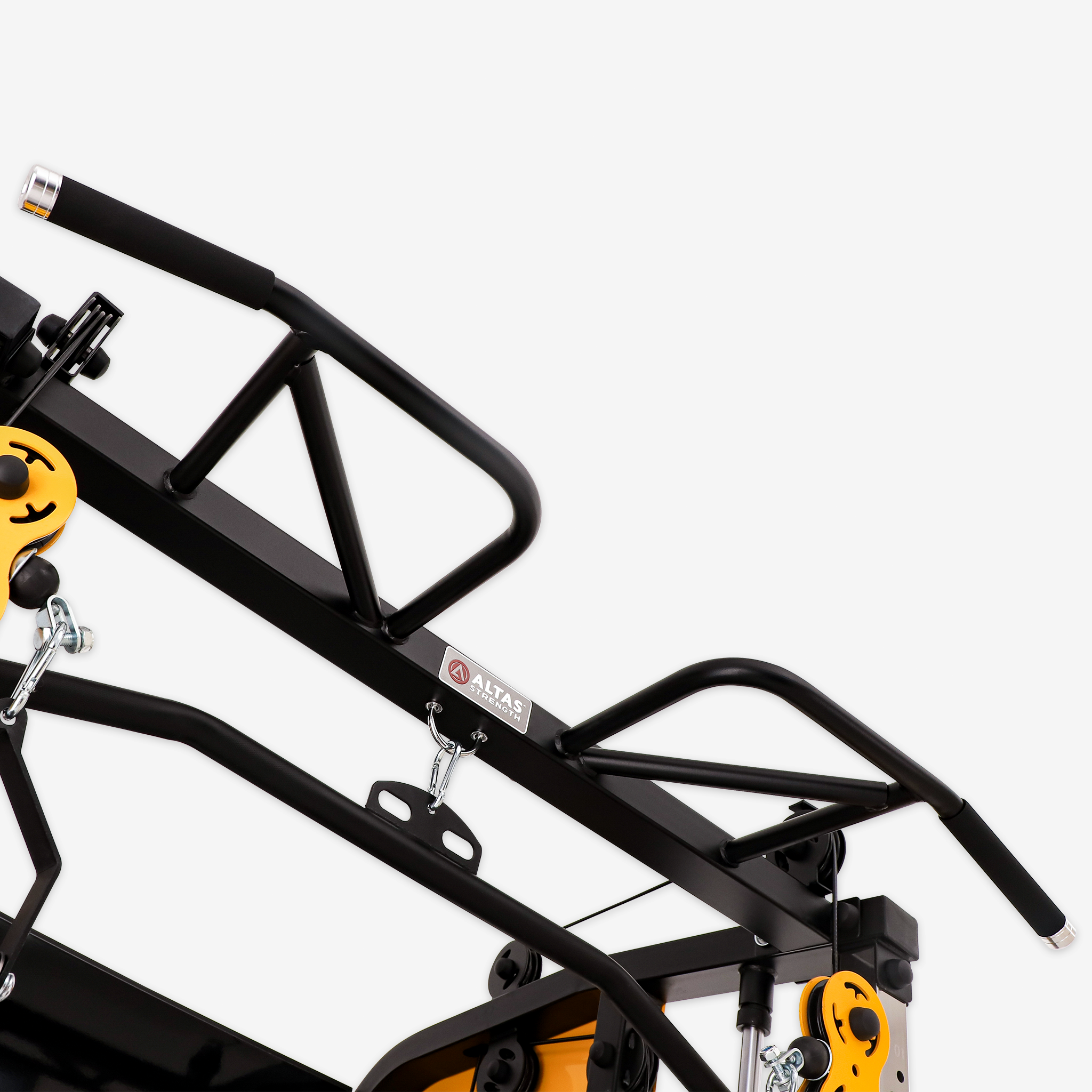
Building a home gym is about more than buying exercise equipment. The right setup should fit your available space, budget, training goals, and experience level. Choosing equipment without considering these factors can lead to unused machines, unnecessary spending, and a workout area that does not support your routine.
This guide explains how to choose home gym equipment, compare common training options, and decide whether a simple setup or a more complete home gym is right for you.
What Is Home Gym Equipment?
Home gym equipment includes the tools and machines people use to exercise at home. Depending on the user’s goals, a setup may include:
-
Dumbbells and weight plates
-
Barbells and racks
-
Adjustable benches
-
Resistance bands and mats
-
Cable machines
-
Smith machines
-
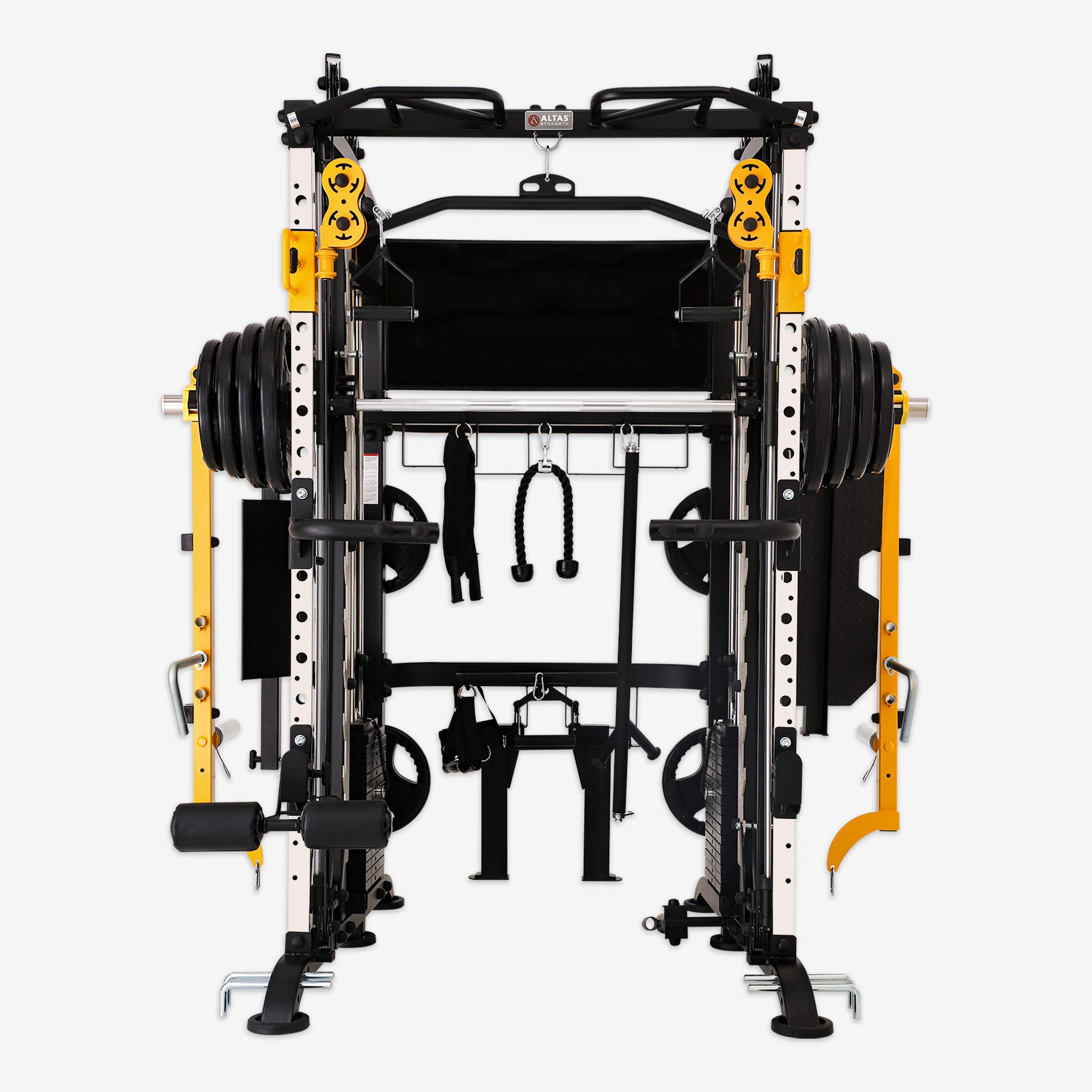
Multi-functional strength stations
-
Cardio equipment
There is no single equipment list that works for every household. The most useful setup is the one that supports the activities you plan to do and fits the space you have available.
What Problems Can Home Gym Equipment Help Solve?
1. Training around your own schedule
A home gym can reduce the need to travel to a commercial gym and allows users to arrange workouts around their daily routines.
It can also provide a more private training environment. However, the convenience depends on having a suitable space and equipment that matches your exercise preferences.
2. Matching equipment to your available space
Home gym equipment ranges from compact, portable items to large strength-training machines.
A small apartment may be better suited to adjustable dumbbells, resistance bands, or a foldable bench. A garage or spare room may accommodate a rack, Smith machine, or multi-functional station.
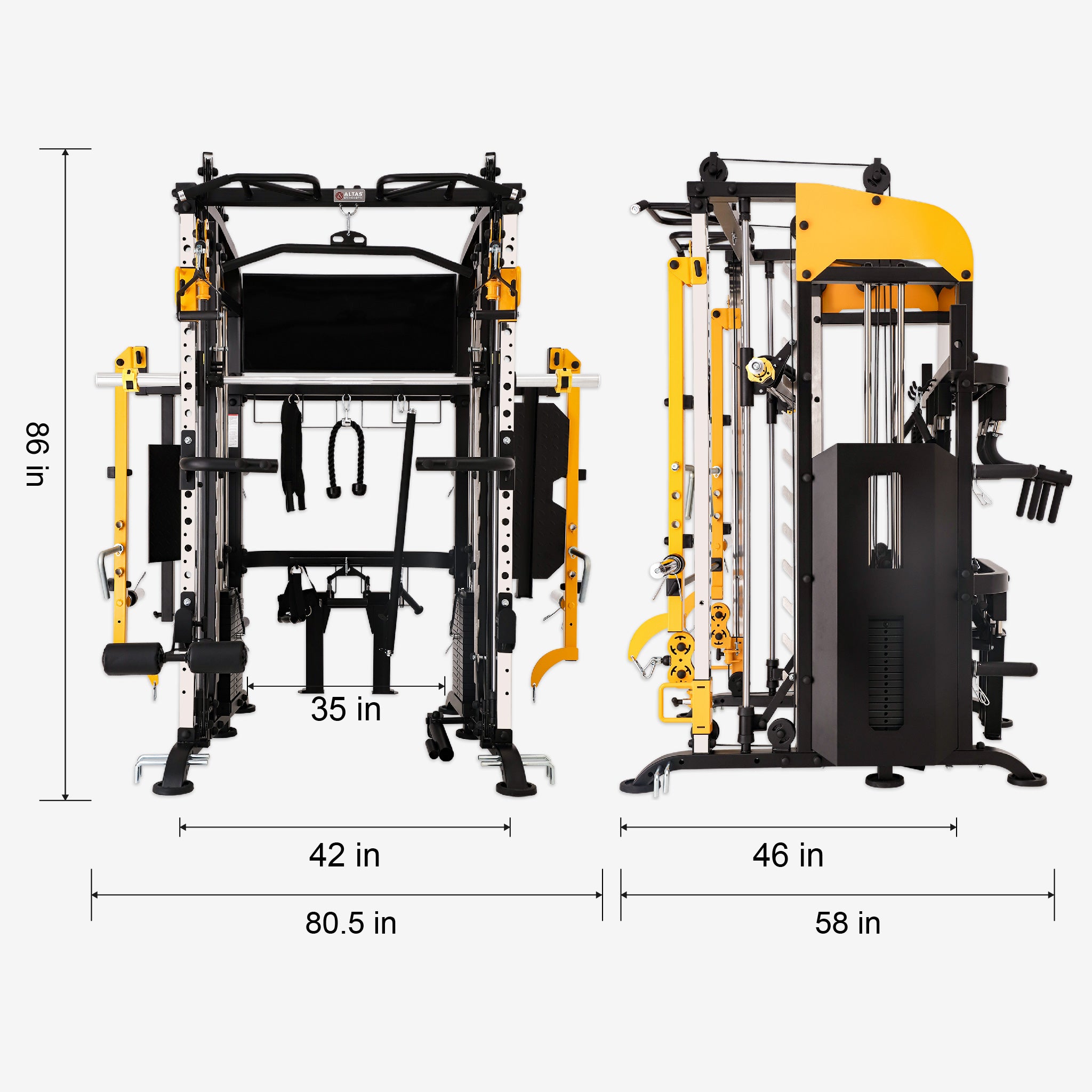
Measure the available area before buying. Consider not only the equipment’s footprint but also the room needed to use it, move around it, and store accessories.
3. Supporting consistent training
Equipment that matches your goals can make it easier to maintain a routine. For example, someone focused on strength training may prioritize adjustable resistance and equipment for compound movements, while another user may want basic tools for general fitness.
Choose equipment based on the exercises you intend to perform rather than buying every accessory that appears useful.
4. Avoiding unnecessary purchases
A common home gym challenge is deciding what to buy first. Some users purchase too many items at once, while others choose equipment that does not support their main training goals.
A practical approach is to identify your primary exercises, select equipment that supports them, and expand the setup only when you have a clear need.
5. Considering long-term costs
A home gym involves an upfront equipment cost. Depending on how often you train and what equipment you purchase, it may reduce some ongoing costs associated with commercial gym membership.
However, the total cost of ownership can include delivery, installation, accessories, maintenance, and replacement parts. Compare these costs with your actual gym usage and membership expenses rather than assuming a home gym will always cost less.
Main Types of Home Gym Equipment
Minimalist fitness equipment
<AsyncImageGroup query={["adjustable dumbbells home workout","resistance bands fitness equipment","yoga mat home exercise"]} />
Examples include resistance bands, mats, and dumbbells.
This category can be useful for users who want a compact setup or are beginning with a limited budget. The trade-off is that a small collection of portable equipment may not provide every exercise or loading option needed for more specialized strength training.
Dumbbells and adjustable benches
<AsyncImageGroup query={["adjustable dumbbells and adjustable weight bench home gym","home gym dumbbell bench setup"]} />
Dumbbells and an adjustable bench can support a variety of upper-body and lower-body exercises. Adjustable dumbbells may reduce storage needs compared with a full rack of fixed dumbbells, although the adjustment system and weight range vary by model.
Before buying, check the available resistance, adjustment increments, bench positions, and storage requirements.
Barbell and rack setups
<AsyncImageGroup query={["home gym power rack barbell weight plates","garage gym squat rack bench"]} />
A barbell, weight plates, bench, and rack can support many traditional strength exercises. This setup may suit users who want to practice free-weight movements and adjust loading over time.
It also requires careful space planning and appropriate safety equipment. Review the rack’s dimensions, capacity, safety features, and the space needed to load plates and perform exercises.
Smith machines
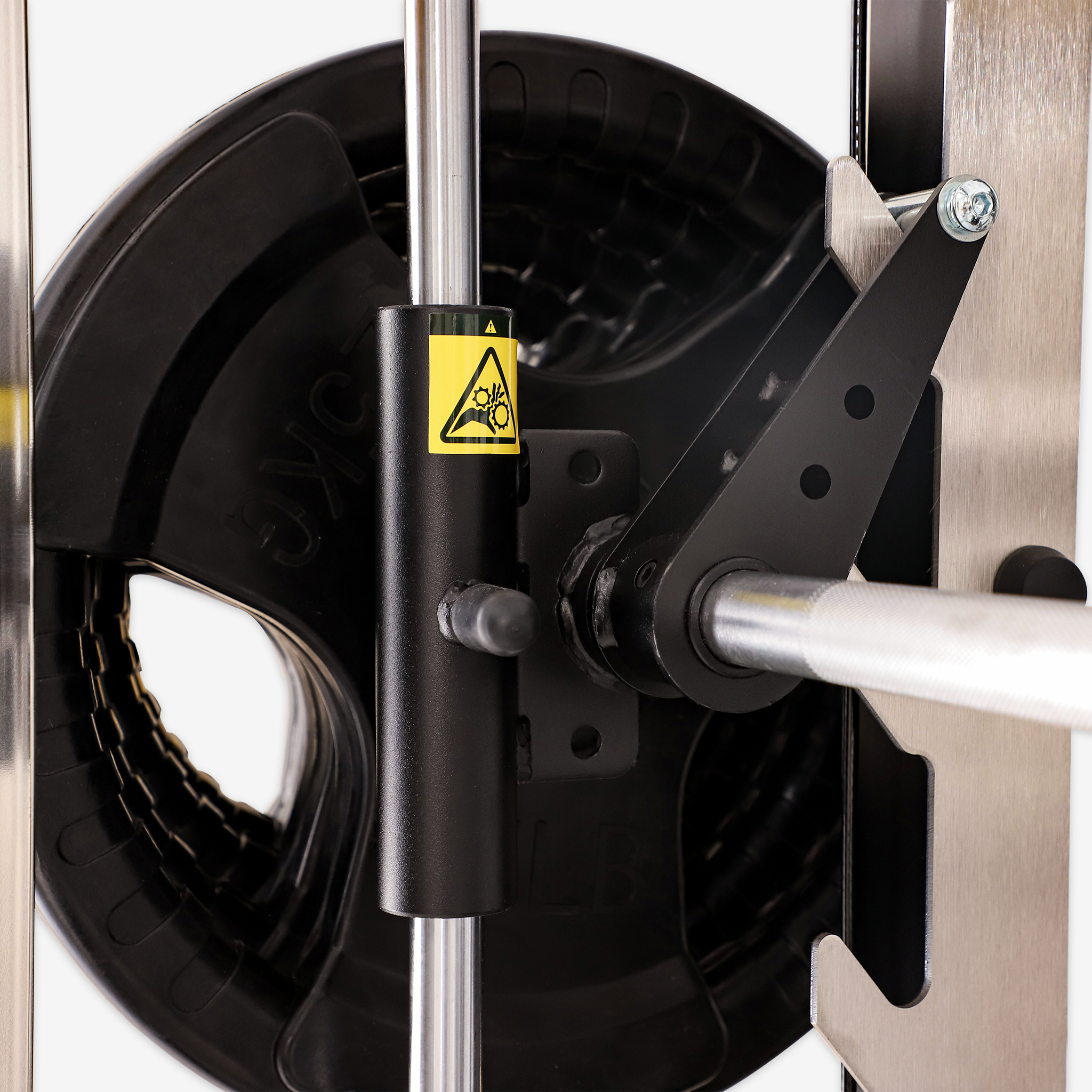
A Smith machine guides the bar along a fixed track. Depending on the model, it may support exercises such as squats, presses, and rows.
The guided bar path differs from free-weight training. Buyers should check the track design, safety mechanism, starting resistance, capacity, and available accessories.
Multi-functional home gym stations
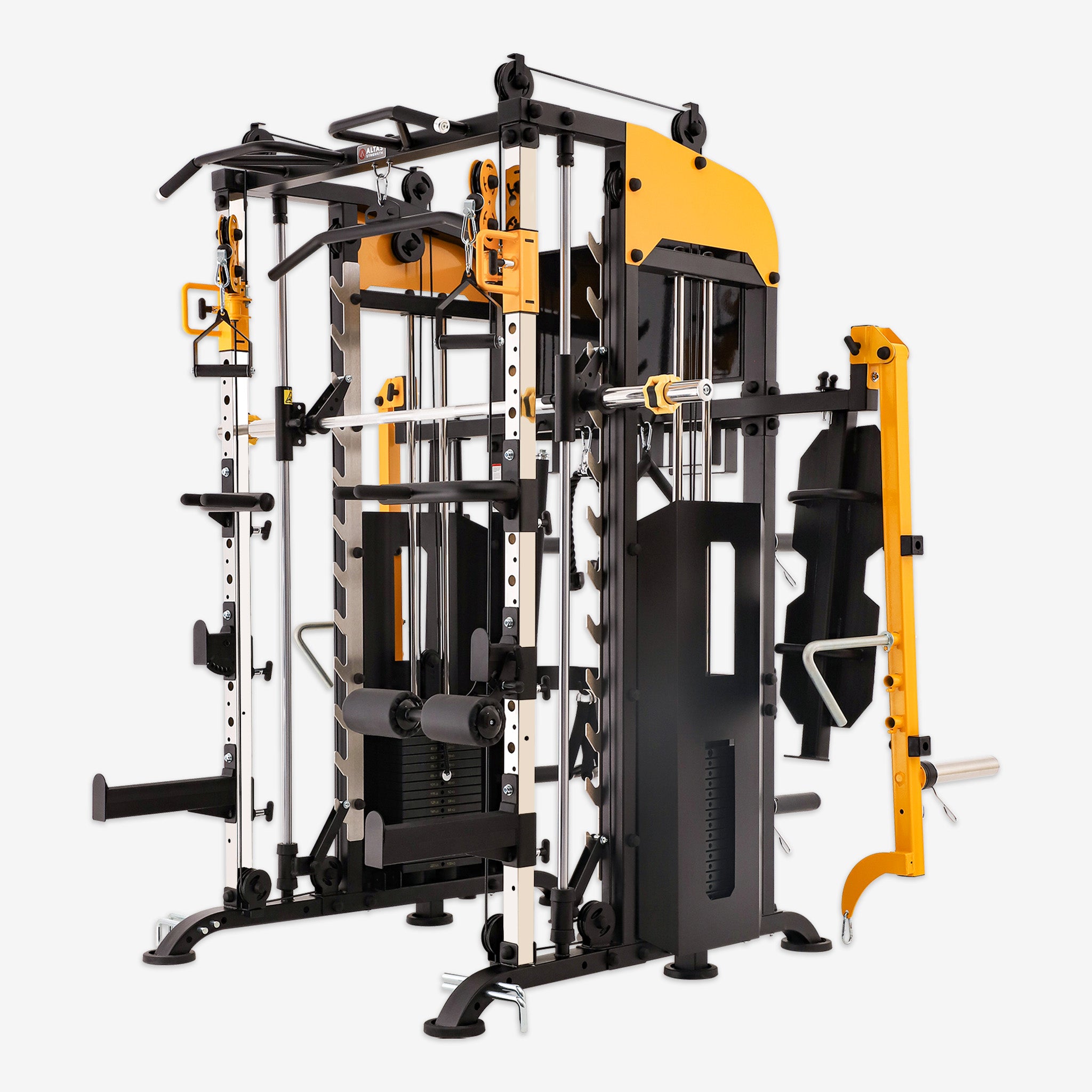
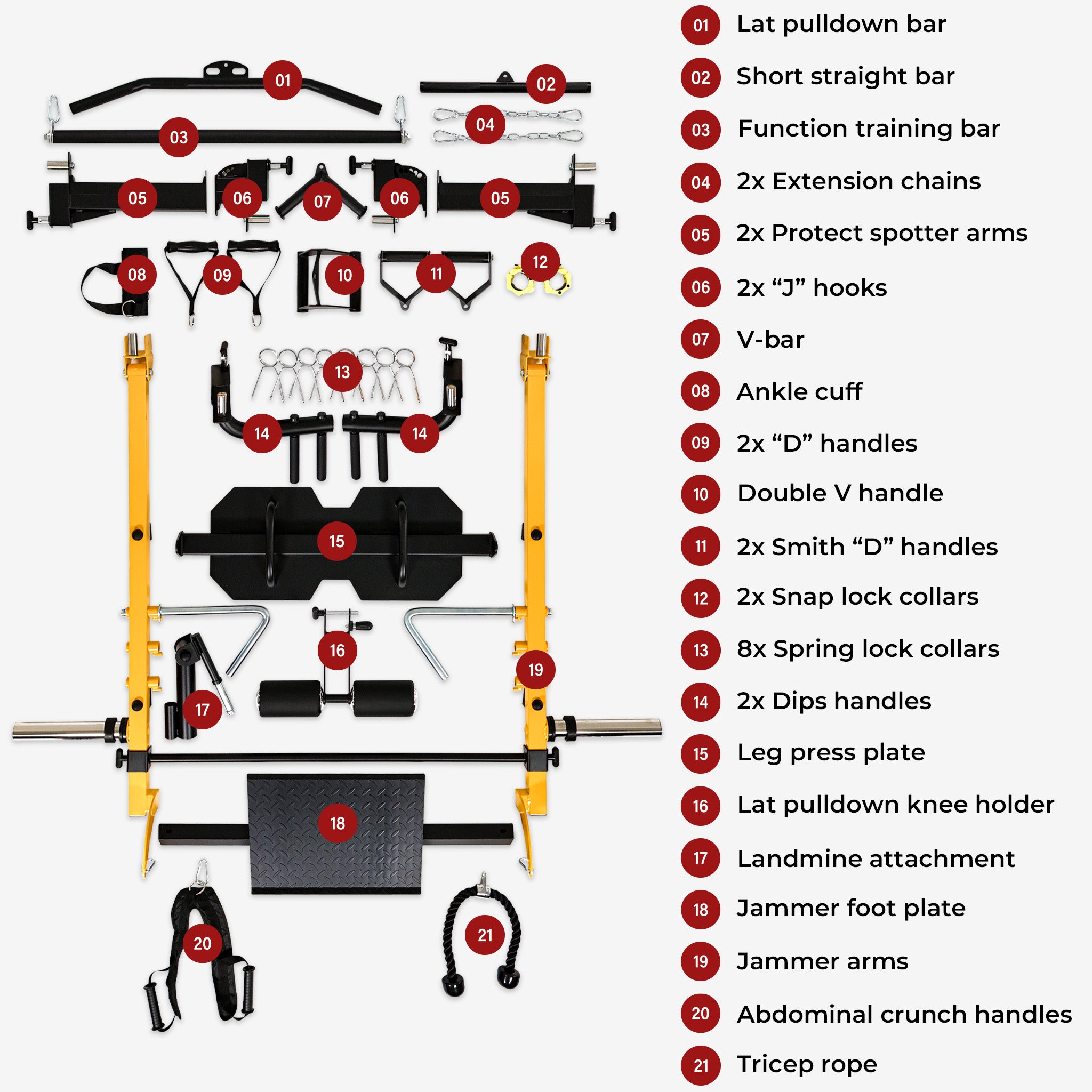
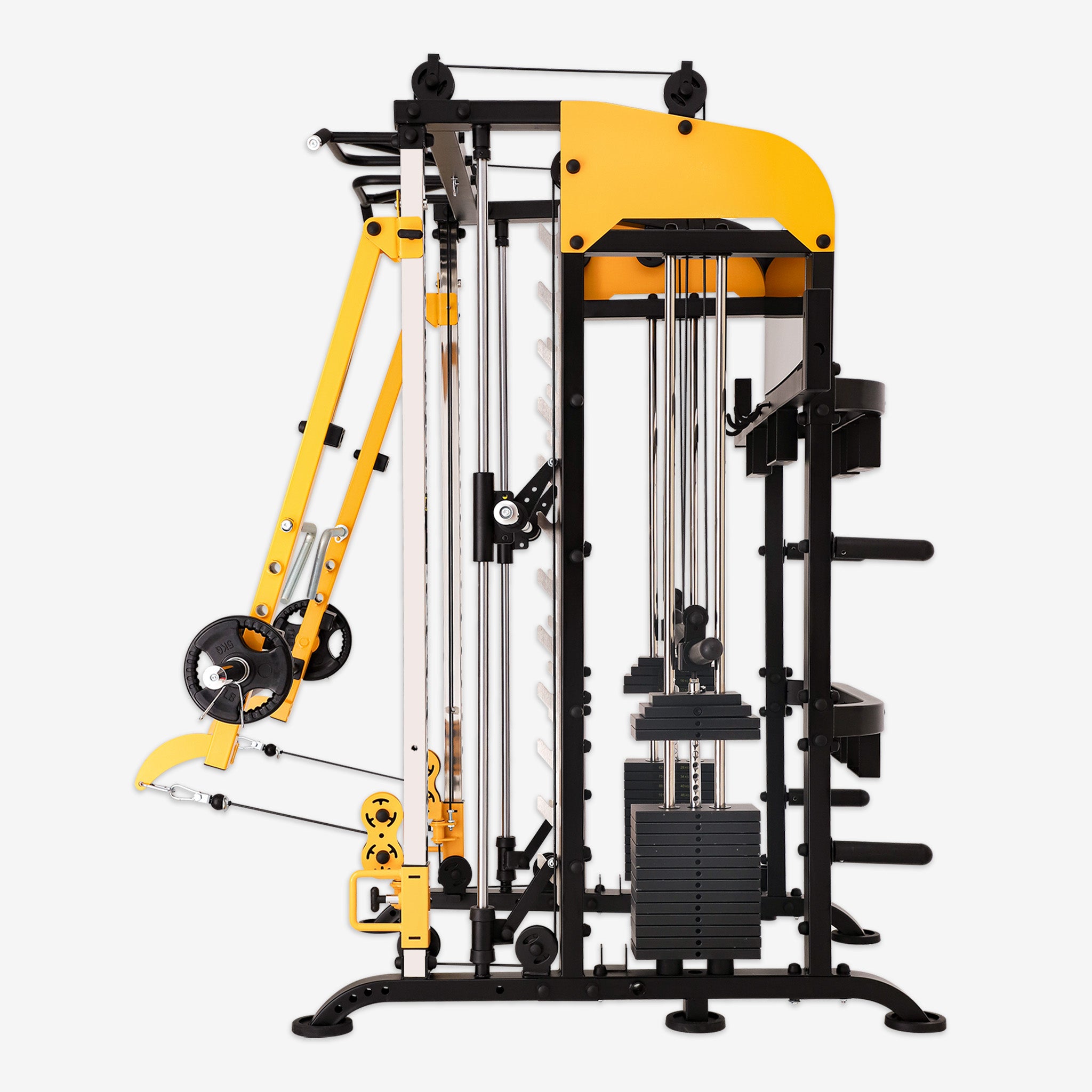
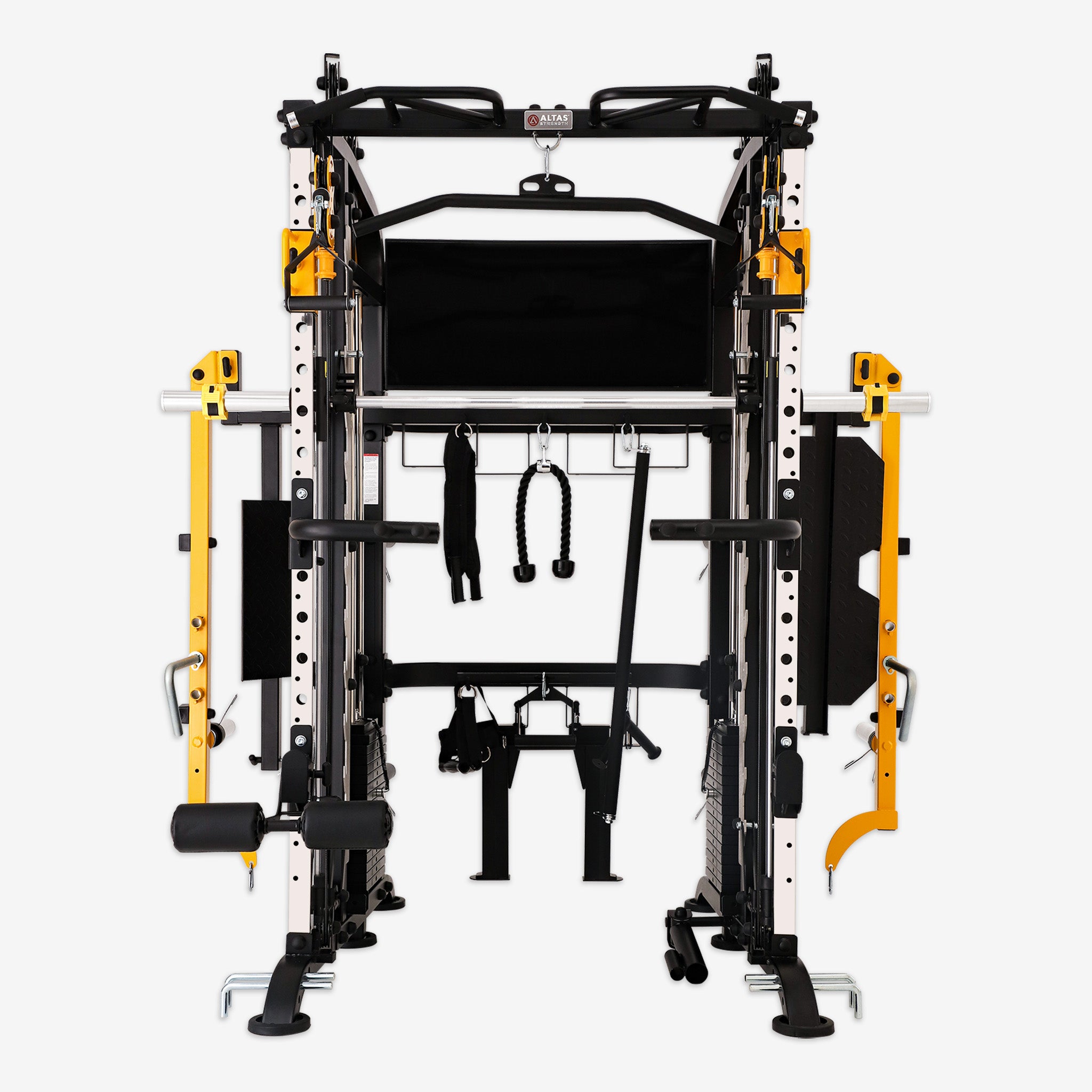
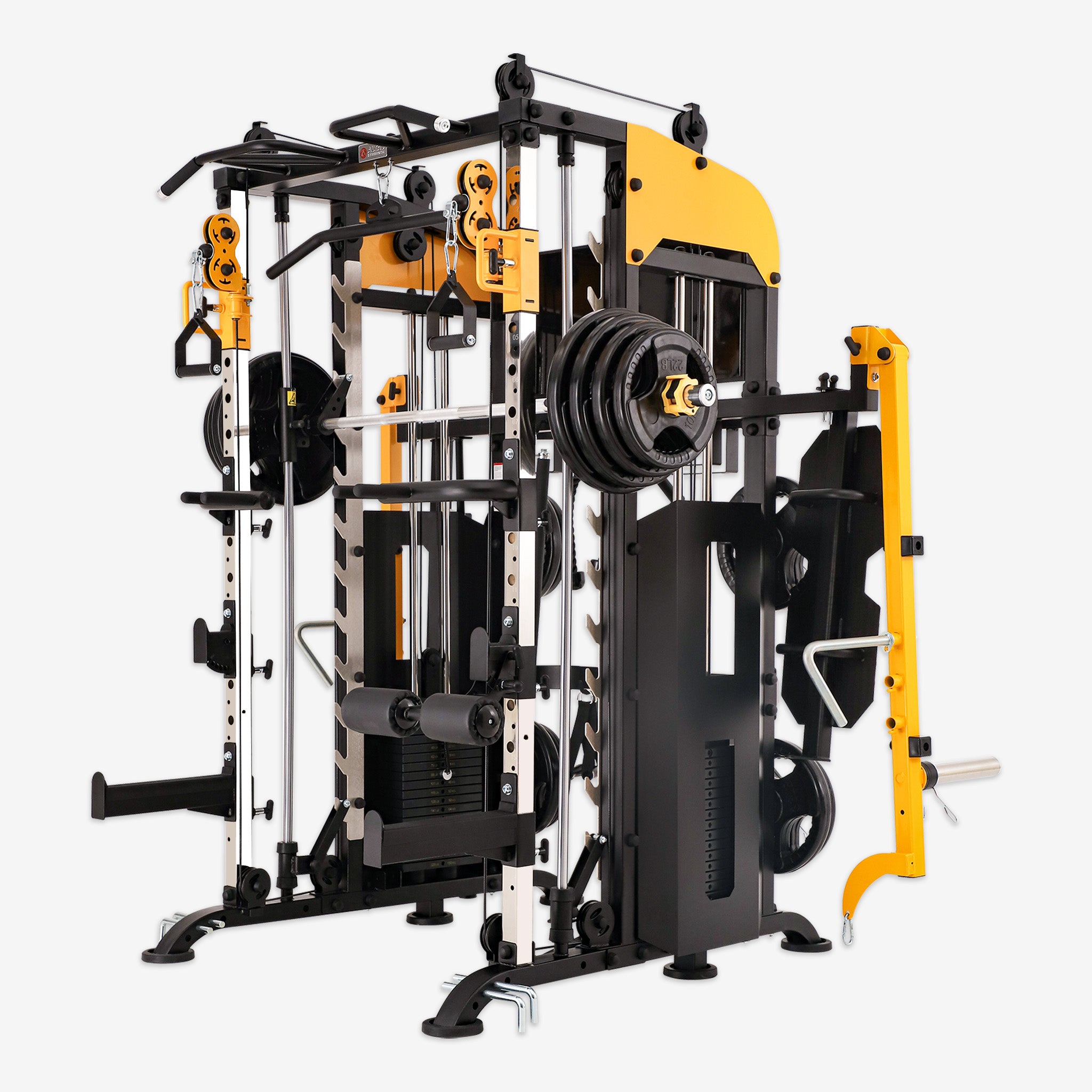
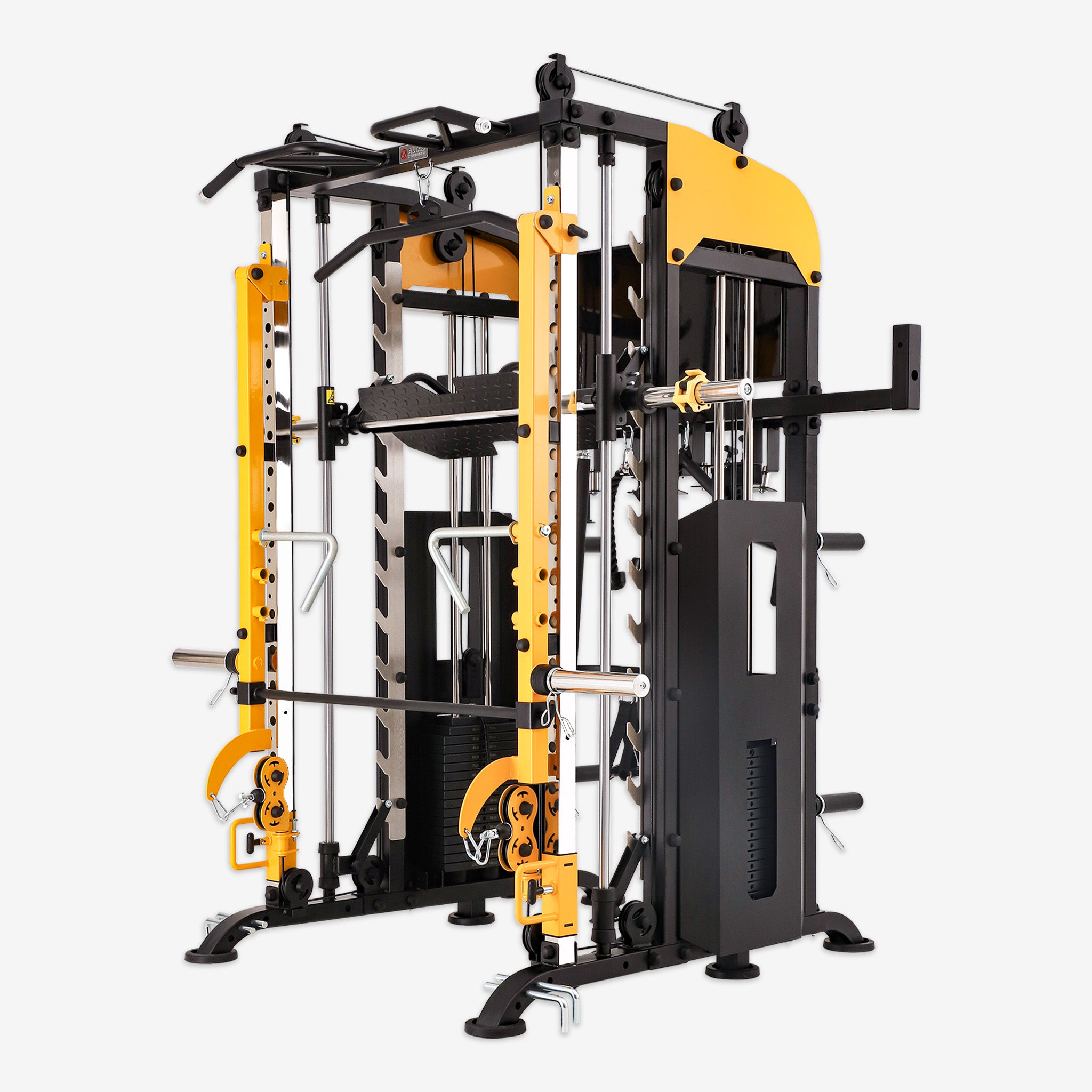
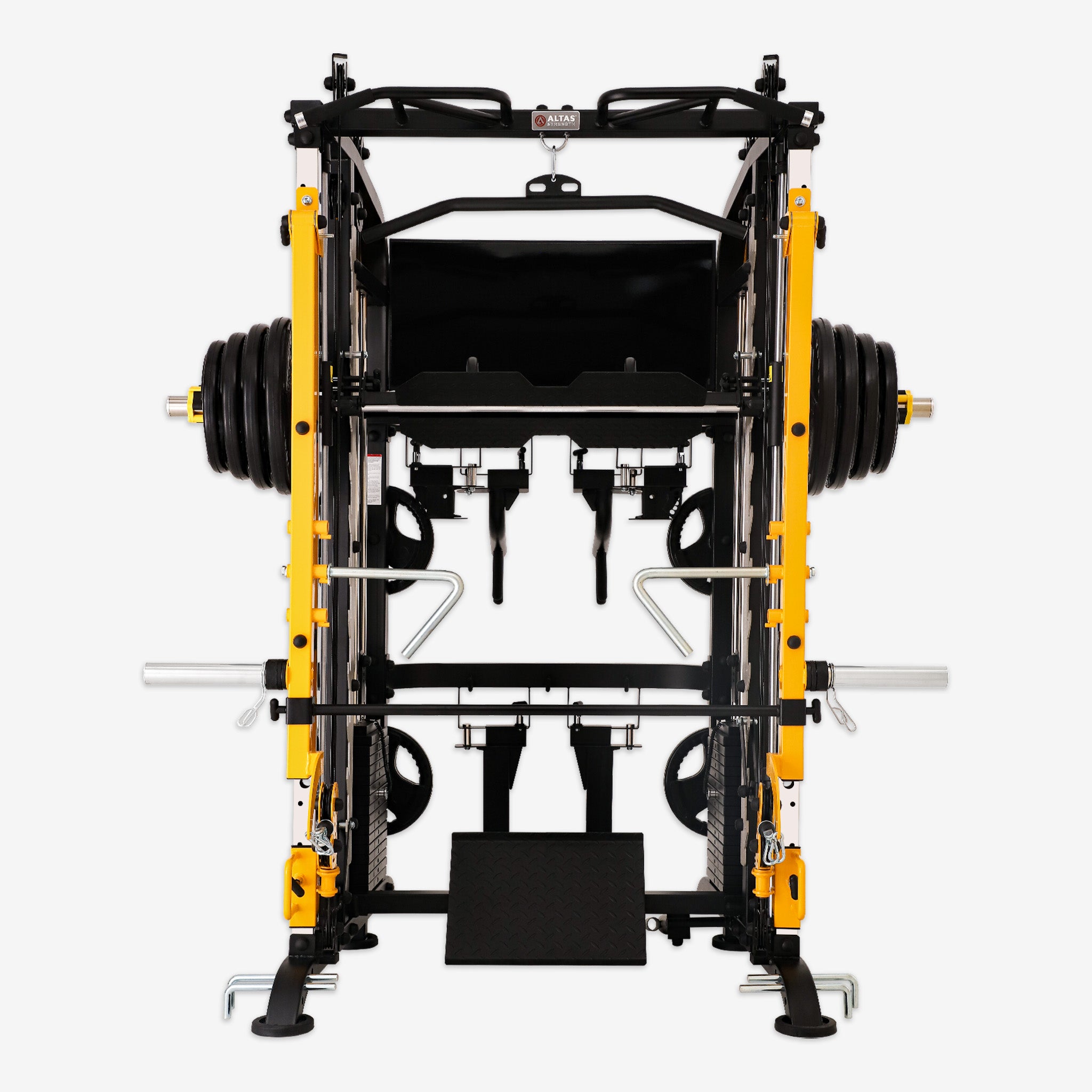
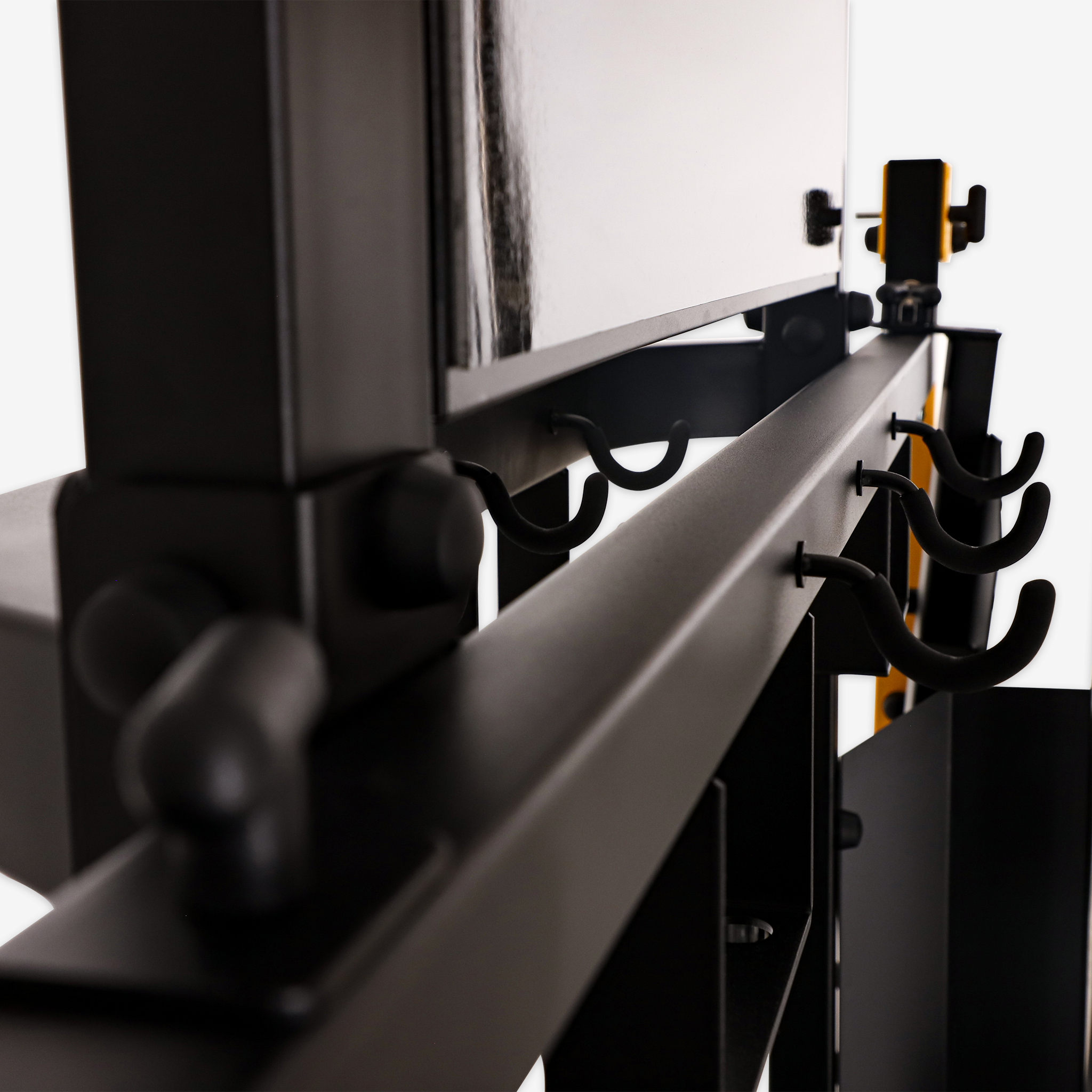
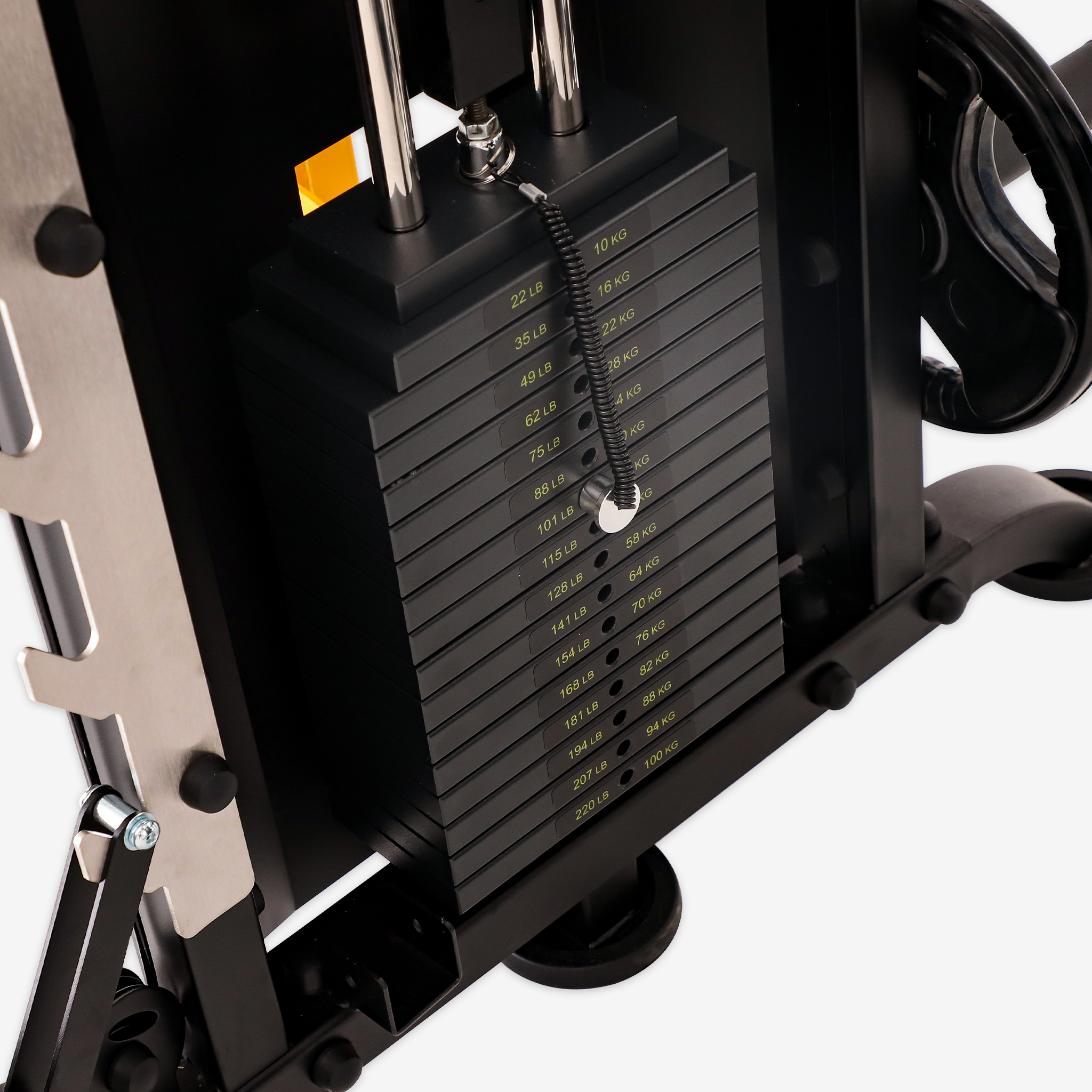
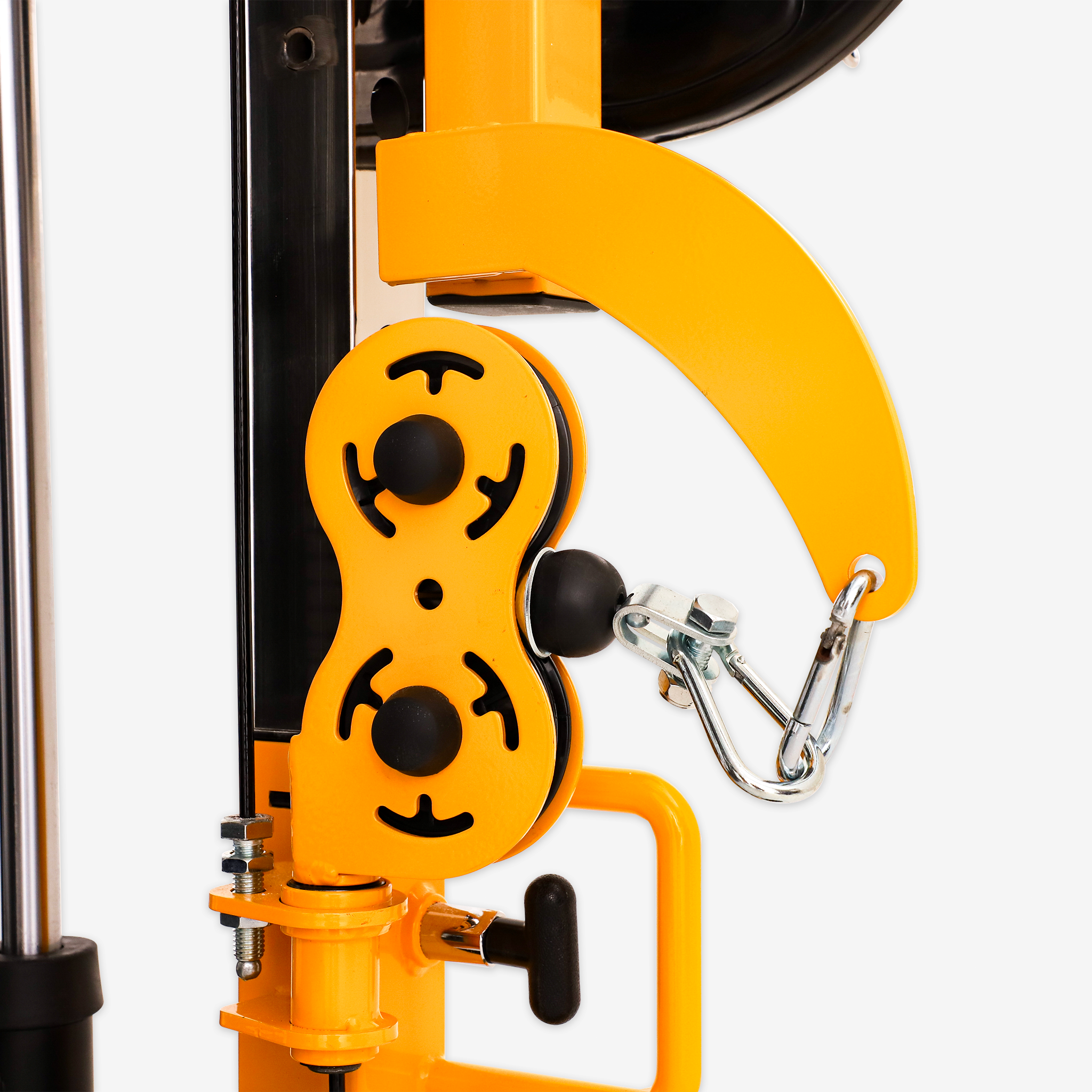
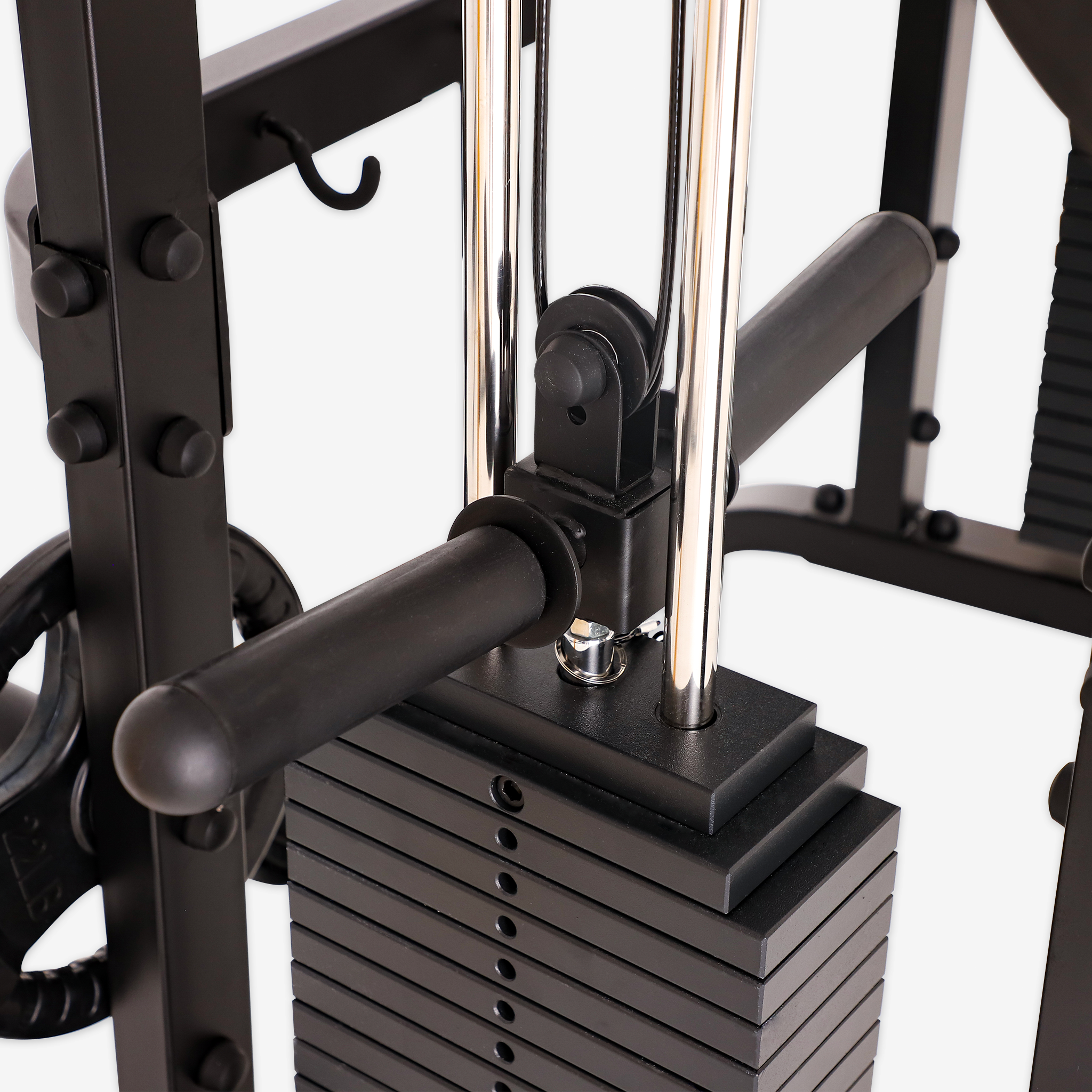
Multi-functional stations combine several exercise options in one unit. Depending on the design, they may include cable stations, guided-bar exercises, or other attachments.
These systems can reduce the need for separate machines, but their actual functions vary. Check the included equipment, available resistance, adjustment options, and overall dimensions before buying.
Cardio equipment
Treadmills, rowing machines, and other cardio equipment may suit users who want dedicated cardiovascular exercise at home.
These machines can require substantial floor space, so consider whether you will use them regularly and whether they fit alongside your other equipment.
How to Choose Home Gym Equipment
Step 1: Identify your main training goals
Start by deciding what you want your home gym to support.
-
General fitness and movement
-
Strength training
-
Muscle-building workouts
-
Cardio exercise
-
A combination of strength and cardio
-
Training for multiple household members
Your goals determine which equipment is essential and which items can wait.
Step 2: Measure your space
Measure the room or area where you plan to train. Include:
-
Equipment footprint
-
Room to get on and off machines
-
Space for the bar or cable to move
-
Plate-loading and adjustment space
-
Storage for weights and accessories
-
Ceiling height, where relevant
Do not choose equipment based only on its listed width and length. You also need enough space to use it as intended.
Step 3: Set a realistic budget
Consider the total setup cost, not just the price of the main machine.
Your budget may need to cover:
-
Equipment
-
Weight plates or other resistance
-
Bench and attachments
-
Delivery and installation
-
Flooring or storage
-
Maintenance and replacement parts
You can build a home gym gradually. Buying fewer items that directly support your routine may be more practical than purchasing a large collection of equipment at once.
Step 4: Choose between portable, single-function, and multi-functional equipment
Each category has trade-offs.
| Equipment type | Potential advantages | Considerations |
|---|---|---|
| Portable gear | Compact and easy to store | May offer fewer loading or exercise options |
| Single-function machine | Dedicated setup for a specific exercise | Can require space for one main function |
| Multi-functional station | Combines several exercise options | May be larger and more complex to assemble |
| Barbell and rack | Supports many free-weight exercises | Requires suitable space and safety setup |
| Cardio machine | Dedicated cardio exercise | May occupy substantial floor space |
Choose based on the exercises you will actually perform and the space you can dedicate to them.
Step 5: Check specifications and safety features
Before buying strength equipment, review the manufacturer’s specifications.
Check:
-
Maximum stated weight capacity
-
Starting resistance or unloaded bar weight
-
Frame dimensions
-
Adjustment options
-
Safety hooks, stops, or other protective features
-
Included accessories
-
Compatible weights and attachments
-
Assembly requirements
-
Warranty and customer support
Do not assume that similar-looking products have the same capacity or features. Confirm details for the exact model and configuration.
Step 6: Plan for future needs without overbuying
If you expect your training needs to change, consider whether the equipment can accommodate additional exercises or accessories.
Scalability can be useful, but only if the expansion options match your likely needs. A machine with many features may not be worthwhile if you will rarely use them.
Home Gym vs. Commercial Gym
A home gym and a commercial gym offer different experiences. The choice depends on your schedule, training preferences, space, budget, and need for coaching or equipment variety.
| Consideration | Home gym | Commercial gym |
|---|---|---|
| Access | Available at home when the space is accessible | Depends on business hours and location |
| Travel | No regular commute to the gym | Travel may be required |
| Equipment variety | Limited to what you purchase | May offer a wider selection of machines and weights |
| Upfront cost | Equipment purchase and setup | Usually membership or usage fees |
| Ongoing costs | Maintenance, accessories, and replacements | Membership renewals and possible additional fees |
| Privacy | Private or household environment | Shared training environment |
| Coaching | May require separate coaching arrangements | Staff or coaching services may be available |
| Space | Requires room at home | No dedicated home workout area required |
A home gym may suit people who value flexible access and have room for equipment. A commercial gym may suit users who want access to a broader equipment selection, classes, or in-person coaching.
Some people use both.
Common Home Gym Buying Mistakes
Buying equipment that does not fit the room
Large machines may be difficult to use in a small room even when the listed footprint appears manageable. Measure the working area and storage space before ordering.
Choosing equipment only by price
Price alone does not explain how a machine is built, what functions it supports, or whether it matches your needs. Compare specifications, warranty, adjustment options, and intended use.
Buying too many accessories too early
Accessories can add variety, but they are not always necessary for a beginner setup. Start with equipment that supports your planned exercises and add items as your routine develops.
Assuming every integrated machine does everything
Multi-functional equipment differs by model. Check the actual exercise functions and included attachments rather than relying only on broad product category names.
Overlooking assembly and after-sales support
Some equipment requires substantial assembly. Review the instructions, setup requirements, delivery arrangements, and warranty information before purchasing.
Treating a listed capacity as a complete measure of quality
Weight capacity is an important specification, but it does not describe every aspect of a machine. Also review the frame, adjustment system, safety features, dimensions, and manufacturer guidance.
Who May Benefit from a Home Gym?
A home gym may be worth considering for:
-
People who prefer to train at home
-
Users with a consistent exercise routine
-
Households that can share equipment appropriately
-
Strength-training beginners who want to build a basic setup gradually
-
Experienced users who know which equipment they need
-
People with enough room for their chosen equipment
It may be less suitable for:
-
People who exercise only occasionally and do not want to maintain equipment
-
Users with very limited space
-
Those who rely on in-person coaching or access to a wide range of machines
-
Competitive athletes whose training requires specialized equipment or facilities
-
Buyers who cannot accommodate the cost, setup, or maintenance of their preferred equipment
These are general considerations. A small home setup may still work well for some users, while others may prefer a commercial gym or a combination of both.
What to Check Before Buying Altas Strength Home Gym Equipment
Before choosing Altas Strength equipment, compare the exact model’s specifications with your space and training goals.
-
Training functions: Which exercises does the model support?
-
Dimensions: Does it fit the room and allow enough working space?
-
Capacity: What weight limits does the manufacturer specify?
-
Adjustability: Can the equipment be configured for your intended exercises?
-
Compatibility: Which benches, plates, or accessories are supported?
-
Included items: Which components come with the selected model or bundle?
-
Assembly: What setup requirements should you expect?
-
Warranty and support: What coverage and assistance are available?
-
Expansion options: Can you add compatible equipment later if needed?
Features vary across models and bundles. Confirm the product details before purchasing rather than assuming every home gym system includes the same functions.
Final Takeaway
The best home gym is not necessarily the largest, most expensive, or most feature-packed setup. It is the one that matches your training goals, available space, budget, and intended use.
Start by identifying the exercises you want to do, measure your workout area, and choose equipment that supports those priorities. Compare specifications, safety features, capacity, assembly requirements, and long-term costs before making a decision.
For Altas Strength home gym equipment, review each model’s actual configuration and compatibility to determine whether it fits your space and the way you plan to train.