Is Smith machine bench easier than a free-weight barbell bench press?
For most lifters, the answer is yes—but easier does not automatically mean better.
The main reason a Smith machine bench press can feel easier is that the machine guides the bar along a fixed path. You do not need to control the bar's lateral movement to the same degree as you would with a free barbell.
That can make Smith machine benching especially attractive for beginners, solo home gym users, and lifters who want to focus more directly on pressing effort and chest training.
However, the same guided movement that makes the exercise easier also changes the training stimulus. Stabilizer demands are generally lower, and the movement does not replicate a traditional free-weight bench press exactly.
So the better question is not simply “Is Smith machine bench easier?”
It is:
When is Smith machine bench easier, why does it feel easier, and when should you choose it over a free barbell bench press?
Why Is Smith Machine Bench Easier?
The primary difference is stabilization.
During a traditional barbell bench press, the lifter has to control the bar's position while simultaneously pressing the weight upward. The bar can move laterally and requires coordination from the upper back, shoulders, arms, and core.
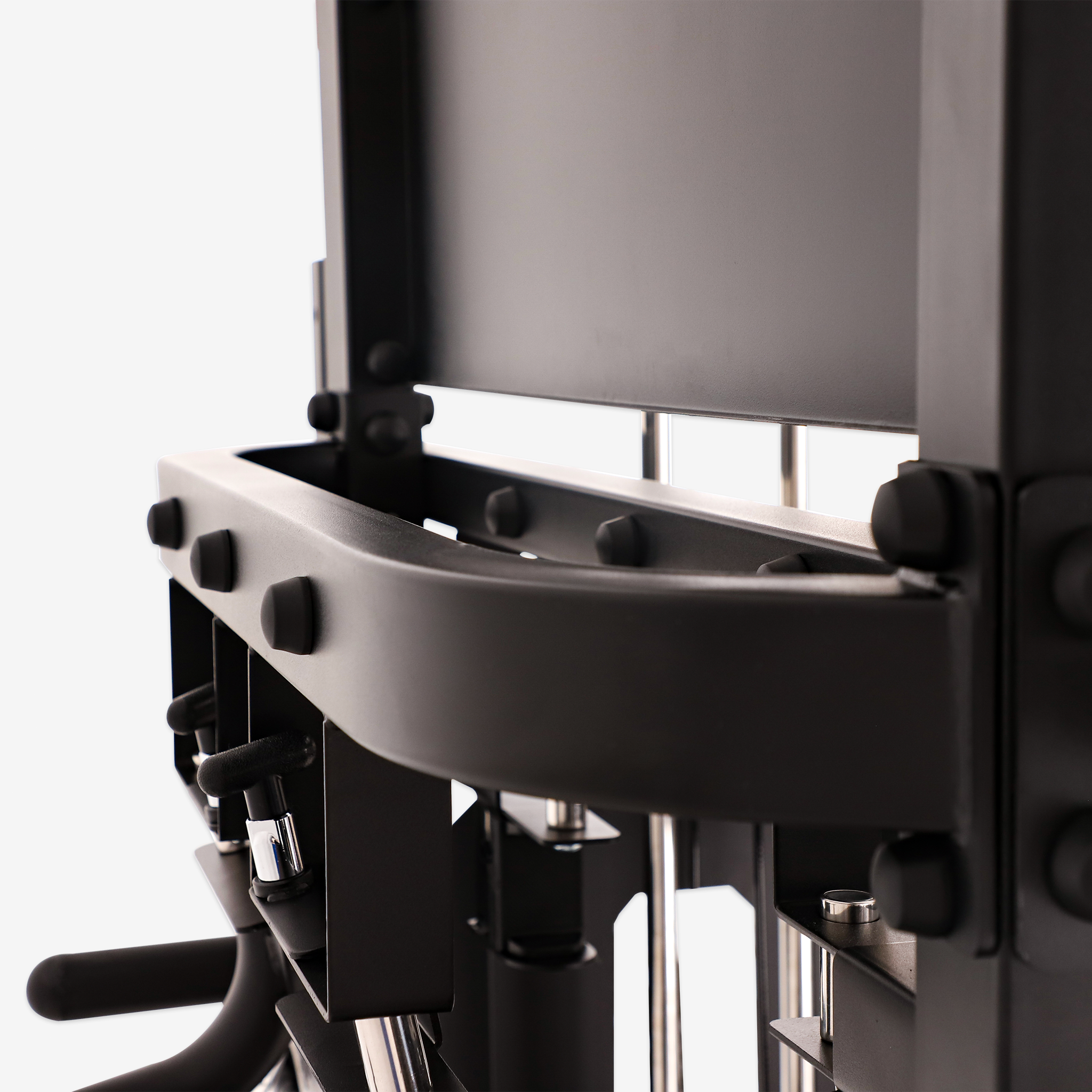
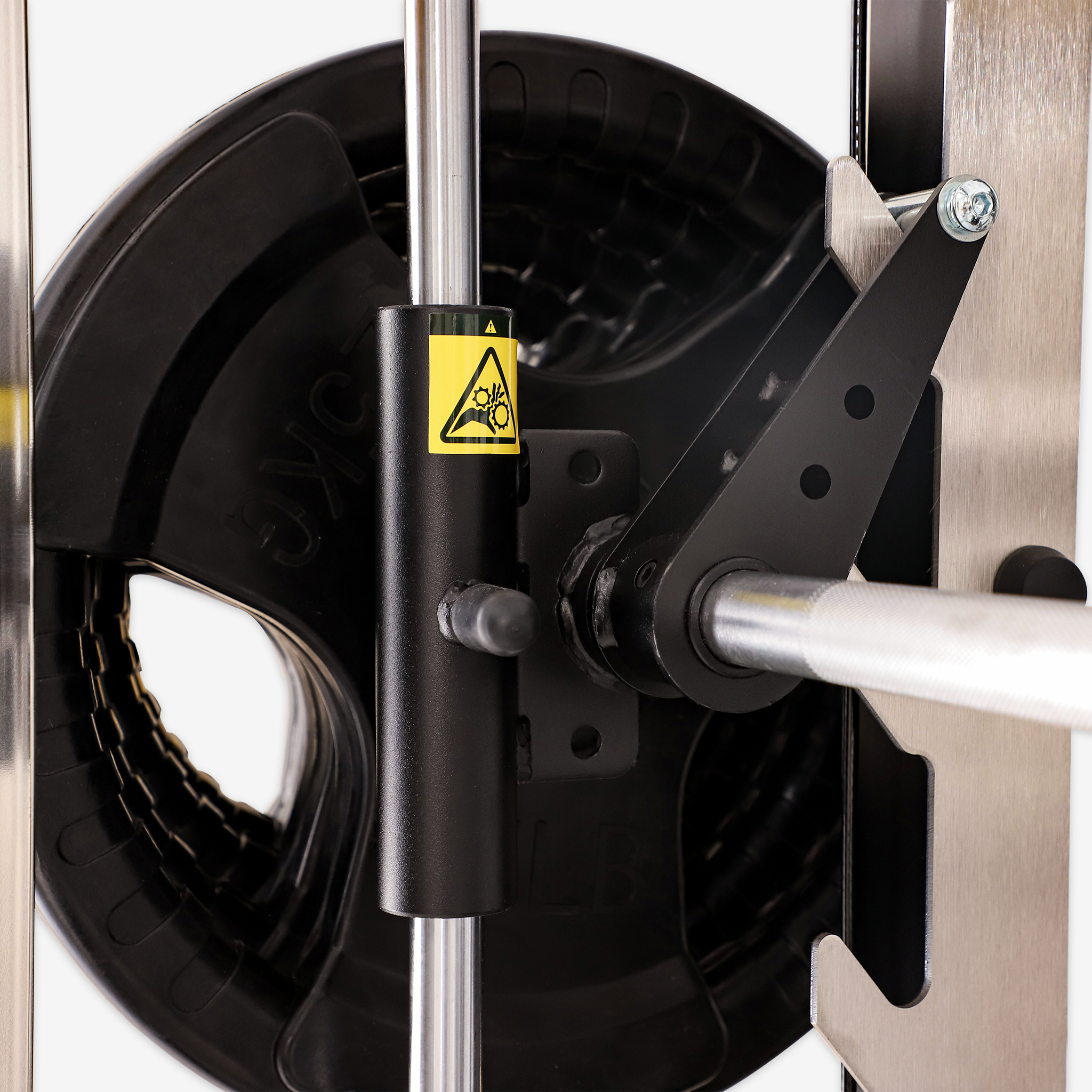
A Smith machine controls much of that movement through its guided rail system.
This means the lifter can concentrate more of the effort on producing pressing force rather than constantly controlling the bar.
The Three Main Reasons It Feels Easier
1. Less balance demand
The machine helps control the bar's path, reducing the need to stabilize it manually.
2. More predictable repetitions
The guided system provides a repeatable movement path, which can make setup and execution feel more consistent from one repetition to the next.
3. Built-in safety mechanisms
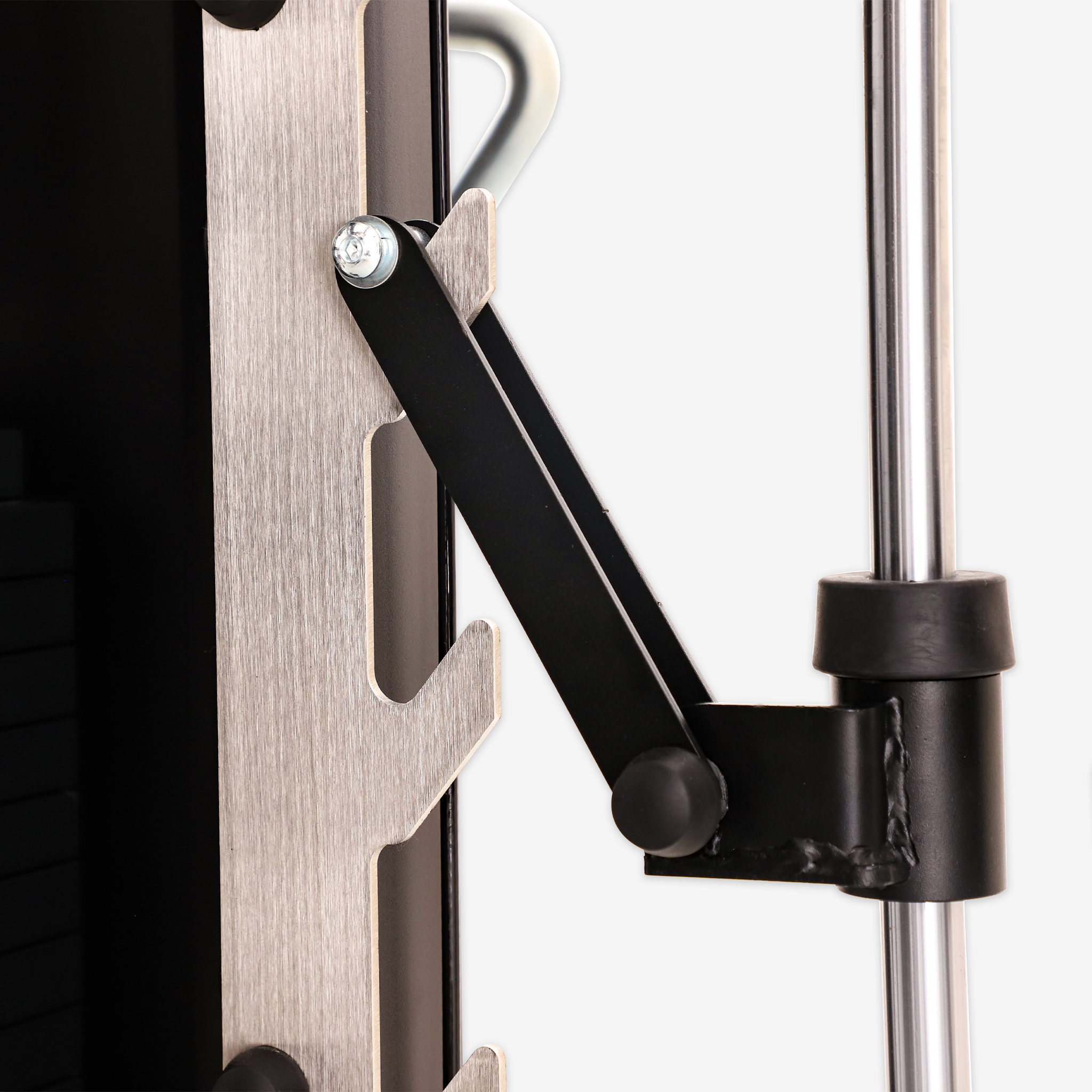
Many Smith machines incorporate adjustable safety catches or stops. For people who train alone, this can provide additional confidence compared with lifting a free barbell without a spotter.
The result is an exercise that can feel mechanically simpler even when the muscles being trained are still working hard.
Does Easier Mean Less Chest Activation?
Not necessarily.
“Easier” in this context primarily refers to reduced stabilization and coordination demands, not necessarily an easier workout for the chest.
A Smith machine can allow the lifter to concentrate more directly on pressing the weight.
This is one reason Smith machine bench press is commonly used as an accessory movement in hypertrophy-focused training.
For example, a lifter may use free-weight bench press for developing overall barbell strength and then use Smith machine bench press for additional controlled pressing volume.
The two exercises can serve different purposes within the same program.
Smith Machine Bench vs. Free-Weight Bench Press
The biggest difference is not simply difficulty. It is the type of movement demand.
| Feature | Smith Machine Bench | Free-Weight Barbell Bench |
|---|---|---|
| Bar movement | Guided | Unrestricted |
| Stabilization demand | Lower | Higher |
| Solo-training convenience | High | Requires appropriate safety setup |
| Movement consistency | High | Depends more on lifter |
| Learning curve | Generally lower | Generally higher |
| Free-weight skill development | Limited | High |
| Hypertrophy applications | Strong | Strong |
| Competition bench transfer | Limited compared with free bar | Direct |
A free-weight bench press requires the lifter to control the bar throughout the movement.
A Smith machine removes some of that complexity.
Therefore, someone who struggles to stabilize a free bar may immediately find Smith machine bench press more comfortable.
Why Do Some Lifters Prefer Smith Machine Bench?
1. Solo Training
Home gym owners frequently train without a partner.
A Smith machine's integrated safety mechanisms can make solo pressing feel more manageable, particularly when the lifter wants to perform challenging sets.
This does not eliminate the need for proper setup and responsible loading, but it can reduce reliance on another person.
2. Hypertrophy Training
For lifters whose primary goal is muscle development rather than competition-specific barbell performance, reduced stabilization can be useful.
Instead of spending as much effort controlling the bar, the lifter can concentrate on the pressing movement and target musculature.
This makes Smith machine bench a useful option for higher-volume accessory training.
3. Beginner Confidence
Free-weight bench press requires coordination, stability, and familiarity with the bar path.
A Smith machine provides a more predictable environment.
For a beginner, that can reduce the intimidation factor and make it easier to learn basic pressing mechanics before progressing toward more demanding free-weight exercises.
4. Repeatable Training
The guided system can make it easier to reproduce the same setup from workout to workout.
That can be useful when tracking progressive overload, training volume, or exercise performance over time.
What Are the Trade-Offs?
The advantages of Smith machine bench press come with corresponding limitations.
Reduced Stabilizer Demand
Because the machine guides the bar, the lifter does not need to stabilize the weight to the same degree as with a free barbell.
This can be an advantage for targeted training but a disadvantage for someone whose primary goal is improving free-weight bench press performance.
The Bar Path Is Determined by the Machine
A free barbell allows the lifter to naturally adjust the bar's trajectory.
A Smith machine restricts that movement according to its rail design.
Different Smith machines use different track geometries, so the exact experience can vary considerably between models.
This makes equipment design an important purchasing consideration.
Smith Machine Weight Is Not Directly Comparable to Barbell Weight
One of the most common sources of confusion is comparing the number loaded on a Smith machine with a traditional barbell personal record.
Smith machines can have different bar weights, counterbalance systems, and resistance characteristics.
Therefore, 100 lb on one Smith machine should not automatically be treated as equivalent to 100 lb on another Smith machine or on a free barbell.
When tracking progress, compare performance on the same equipment rather than assuming that different machines use identical effective resistance.
Is Smith Machine Bench Better for Chest Growth?
It can be a useful tool for chest-focused training, particularly when the lifter wants a controlled pressing movement.
However, there is no universal rule that Smith machine bench is always better than free-weight bench press for chest development.
The better choice depends on:
-
Training goals
-
Individual technique
-
Machine design
-
Exercise comfort
-
Training experience
-
Overall program structure
For many lifters, the most practical approach is to use both.
Free-weight bench press can provide unrestricted barbell practice and greater stabilization demands, while Smith machine bench can provide controlled pressing volume.
What About Shoulder Comfort?
This is an area where machine design matters.
A rigid guided track may not feel equally comfortable for every lifter because individual anatomy and preferred pressing mechanics differ.
Some lifters prefer a Smith machine with a track geometry or setup that allows a more natural pressing position.
Therefore, buyers should not assume that every Smith machine will feel identical.
If a particular movement causes persistent pain, changing equipment or technique is not a substitute for getting appropriate professional advice.
What Other Exercises Can a Smith Machine Provide?
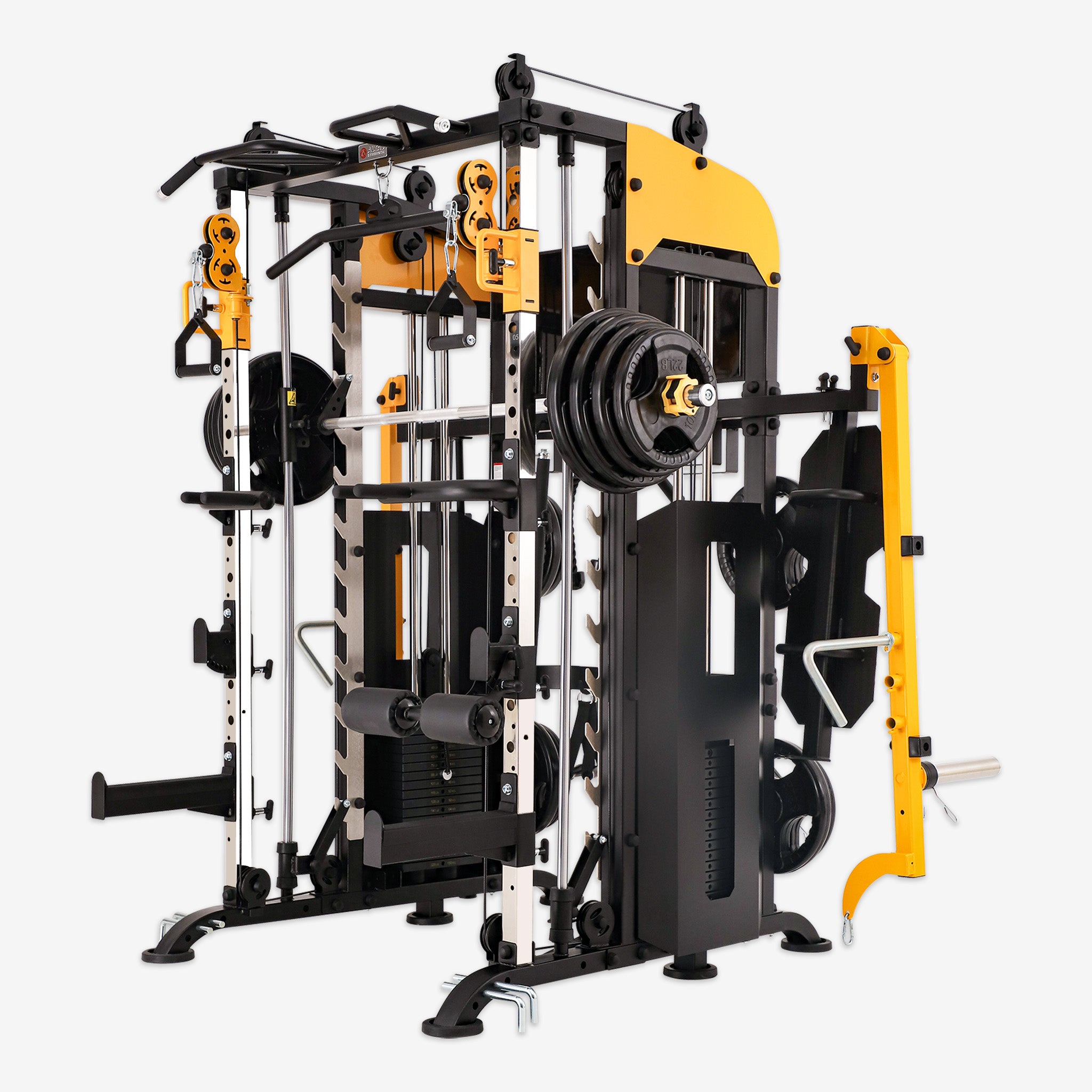
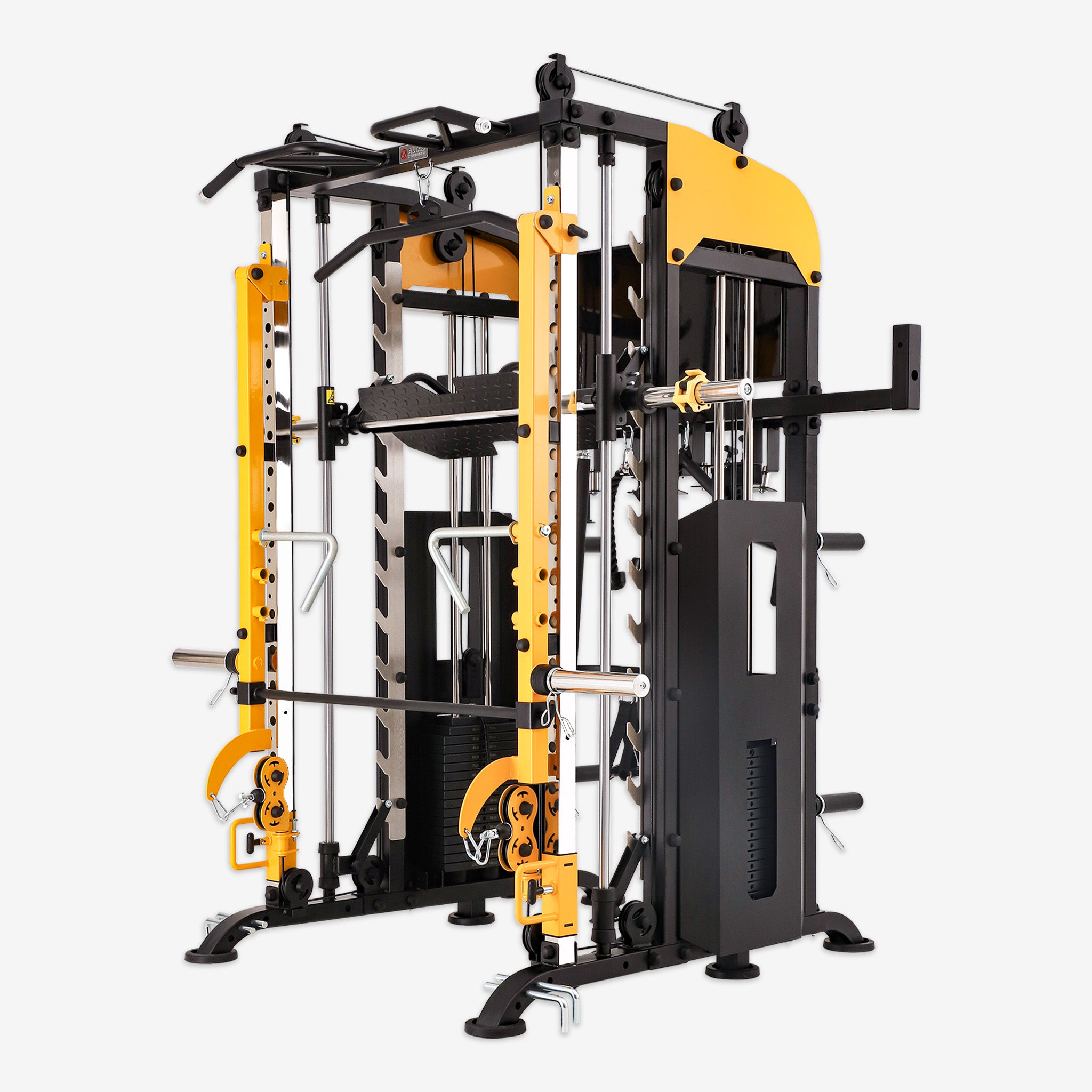
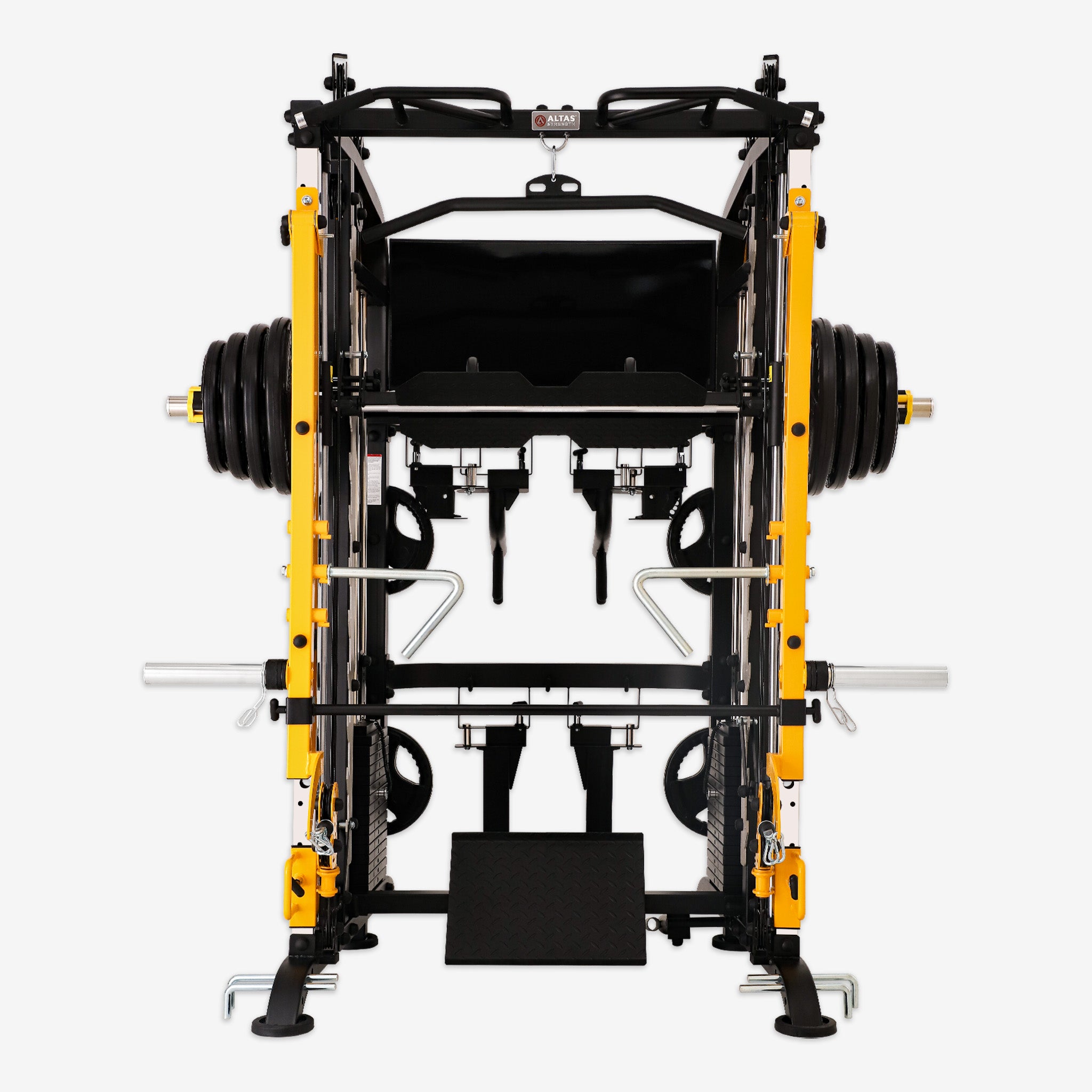
The value of a Smith machine becomes much greater when it is part of an integrated home gym.
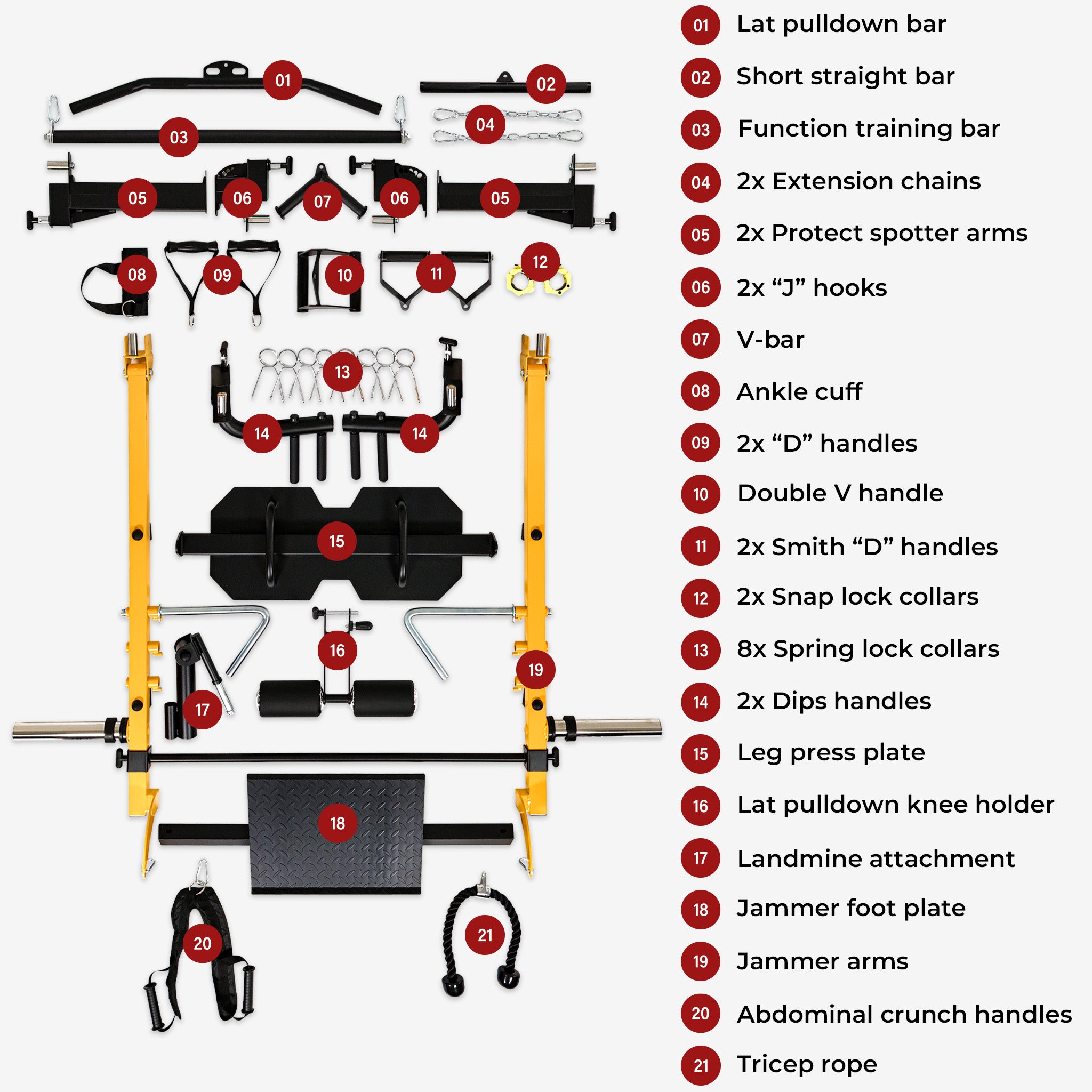
Depending on the model, a Smith machine can support exercises such as:
-
Bench press
-
Incline press
-
Squats
-
Lunges
-
Shoulder press
-
Rows
-
Pull-ups
-
Cable exercises
-
Lat pulldowns
-
Accessory strength movements
This is one reason multifunctional Smith machines are attractive to home gym buyers.
Instead of purchasing a standalone bench press station, squat rack, cable machine, and other equipment separately, an integrated system can combine several training functions in one footprint.
Smith Machine Bench vs. Dumbbell Bench Press
Dumbbell bench press provides independent movement of each arm.
This allows the lifter to adjust the path of each dumbbell naturally and can introduce greater coordination demands.
Smith machine bench, by contrast, provides a guided bar path and allows both hands to work together on a single bar.
The choice therefore depends on the training objective.
Choose Smith machine bench when: controlled movement, stability, and heavier structured pressing are priorities.
Choose dumbbells when: independent arm movement and greater freedom of movement are priorities.
Who Should Use Smith Machine Bench?
Smith machine bench press can be particularly useful for:
-
Home gym users who train alone
-
Beginners learning pressing movements
-
Lifters focused on hypertrophy
-
Intermediate lifters adding pressing volume
-
Users who prefer guided movement
-
Homeowners looking for multifunctional gym equipment
-
Commercial gyms that need an additional pressing station
It can also be useful as a complementary exercise alongside free-weight bench pressing.
Who Should Rely Less on Smith Machine Bench?
Smith machine bench should not necessarily be the primary pressing movement for every lifter.
Competitive Powerlifters
If your main objective is improving your competition-style free barbell bench press, practicing the actual movement is essential.
A Smith machine does not reproduce the unrestricted bar path and stabilization demands of a competition bench press.
Lifters Focused on Maximum Movement Freedom
Athletes who prioritize unconstrained barbell movement may prefer a traditional power rack and free barbell.
People With Very Limited Space
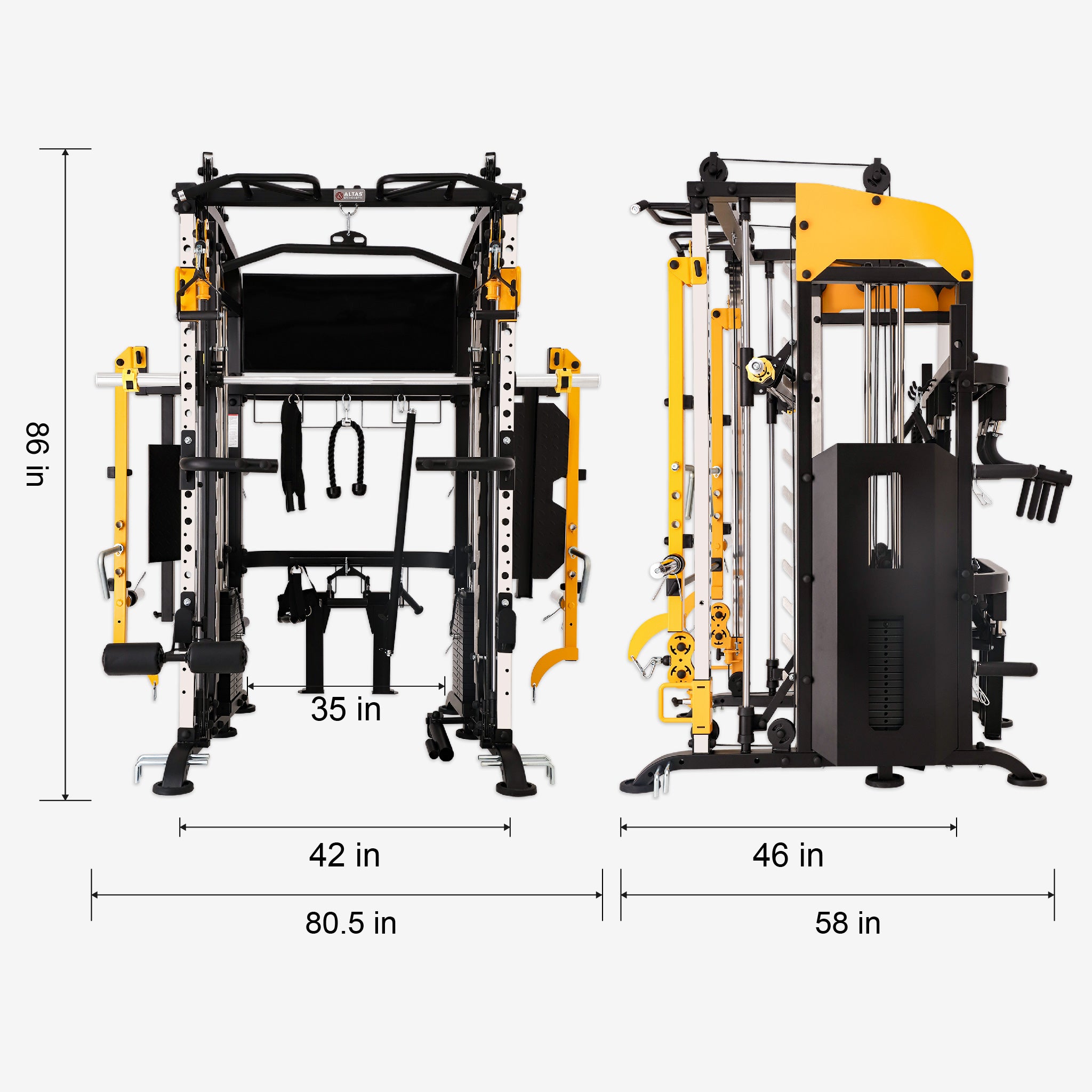
A full-size Smith machine can occupy substantially more space than a basic bench and barbell setup.
Always measure both the equipment footprint and the space needed to perform the exercises.
Casual Users
If you only perform occasional light workouts, a multifunctional Smith machine may be more equipment than you actually need.
What Should You Look for in a Smith Machine?
If the answer to “is Smith machine bench easier?” is part of your buying research, don't evaluate the bench function alone.
Look at the entire machine.
1. Track Design
The bar path determines how the machine feels during pressing.
2. Safety Catch System
Adjustable safety mechanisms are particularly important for users who train alone.
3. Frame Stability
A rigid frame helps maintain a consistent training platform during pressing and other compound exercises.
4. Cable Integration
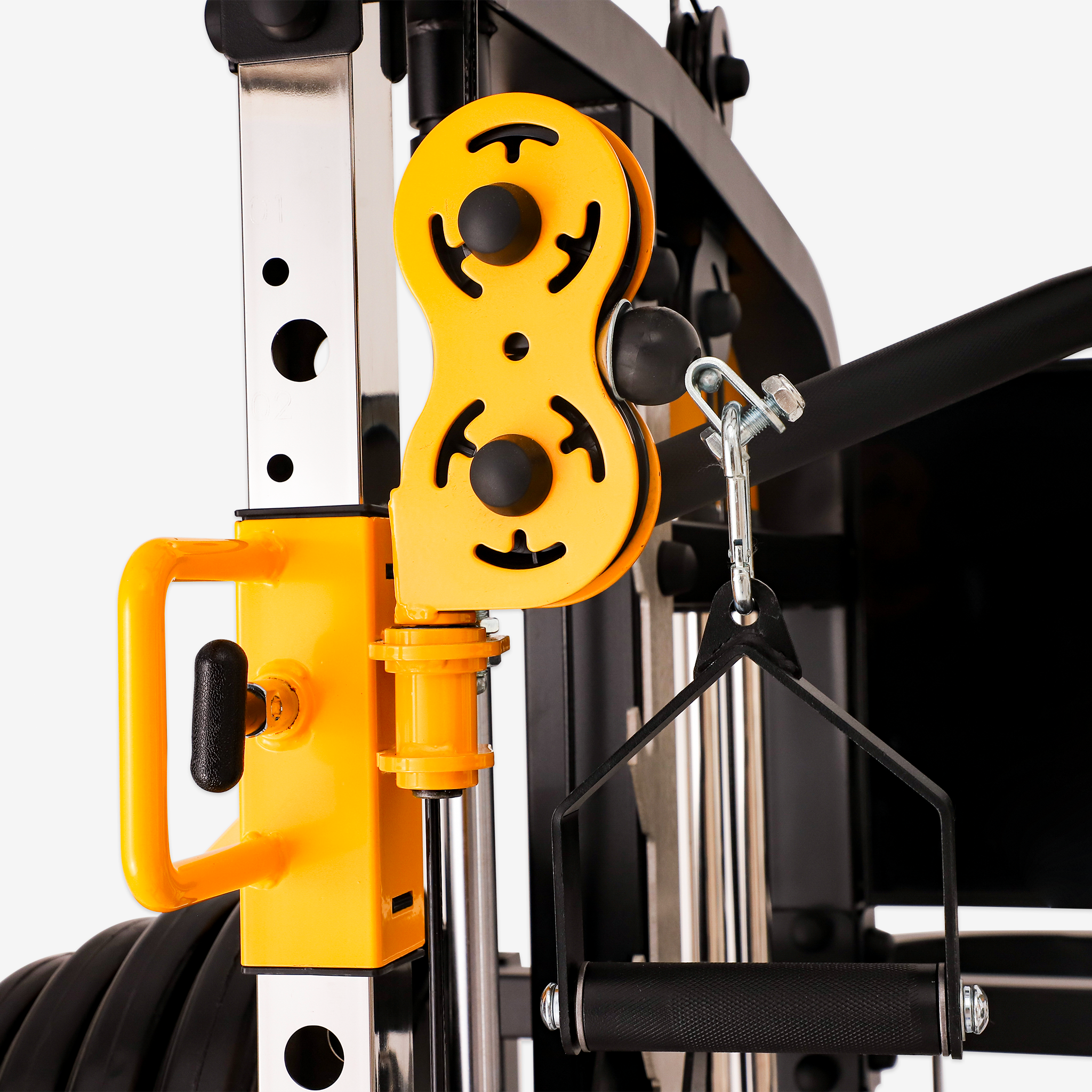
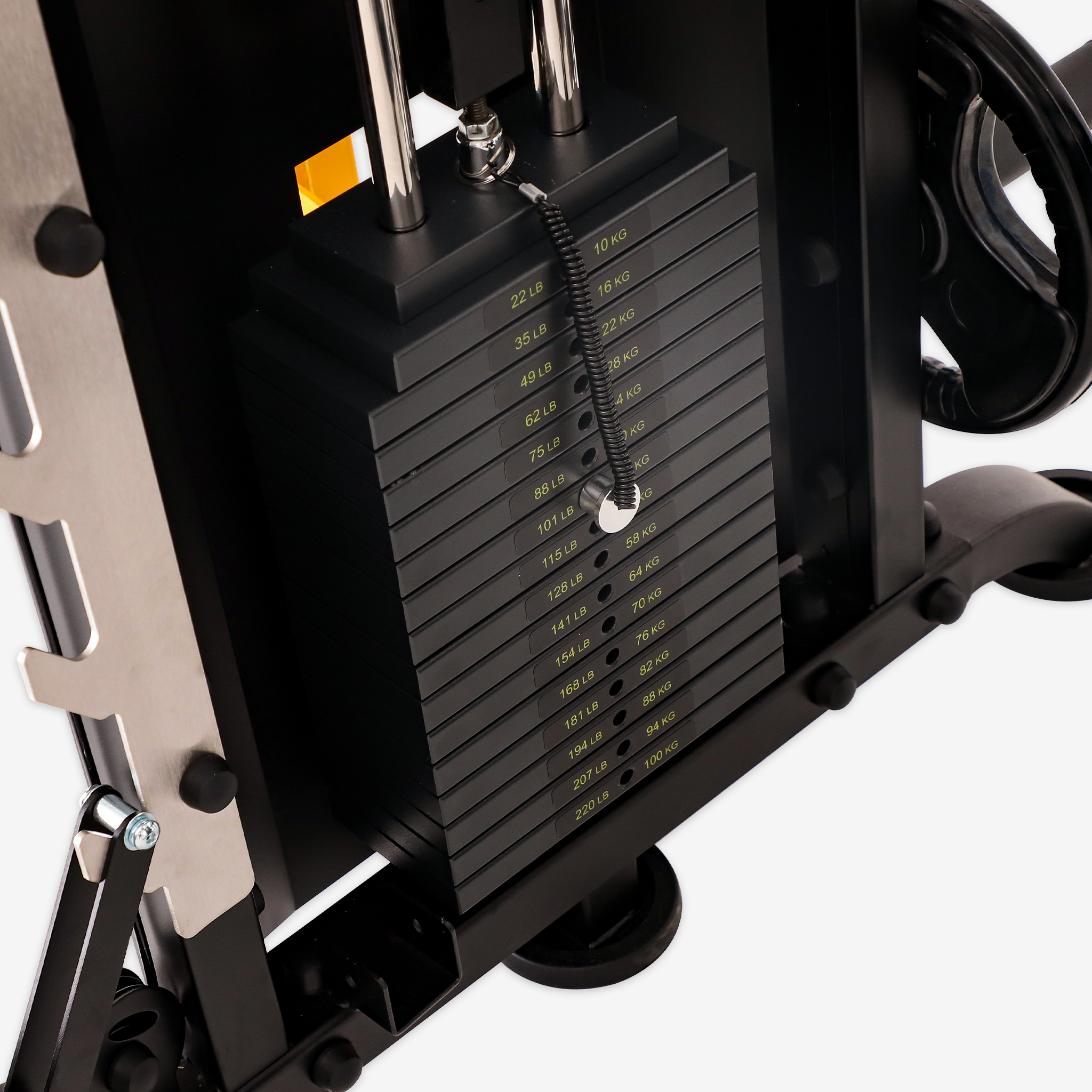
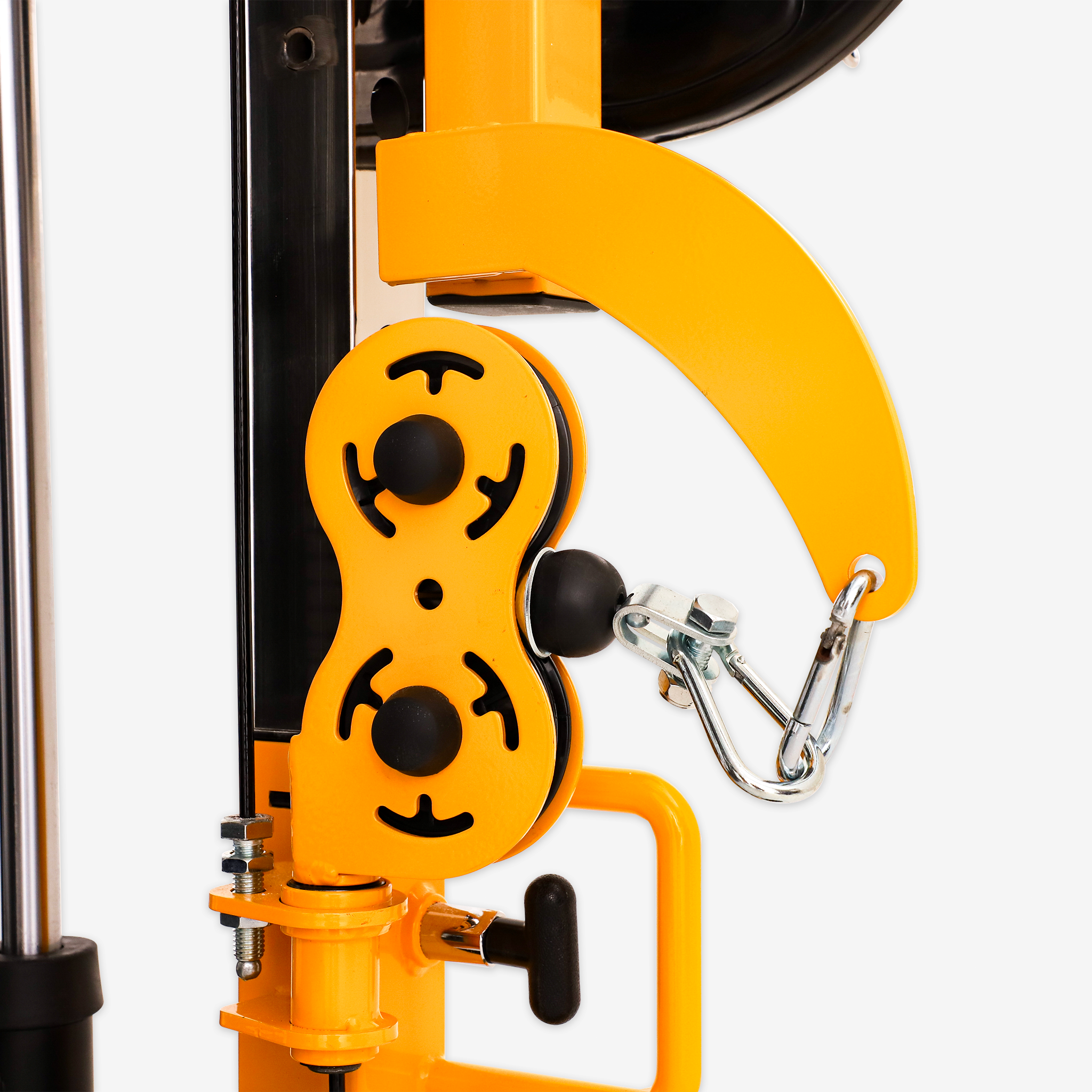
If you want a complete home gym, integrated cable functions can dramatically increase the number of exercises available.
5. Overall Footprint
Measure the machine and the required exercise clearance before purchasing.
6. Long-Term Training Versatility
Consider whether the machine will still meet your needs after you progress beyond beginner-level workouts.
Where Does Altas Strength Fit?
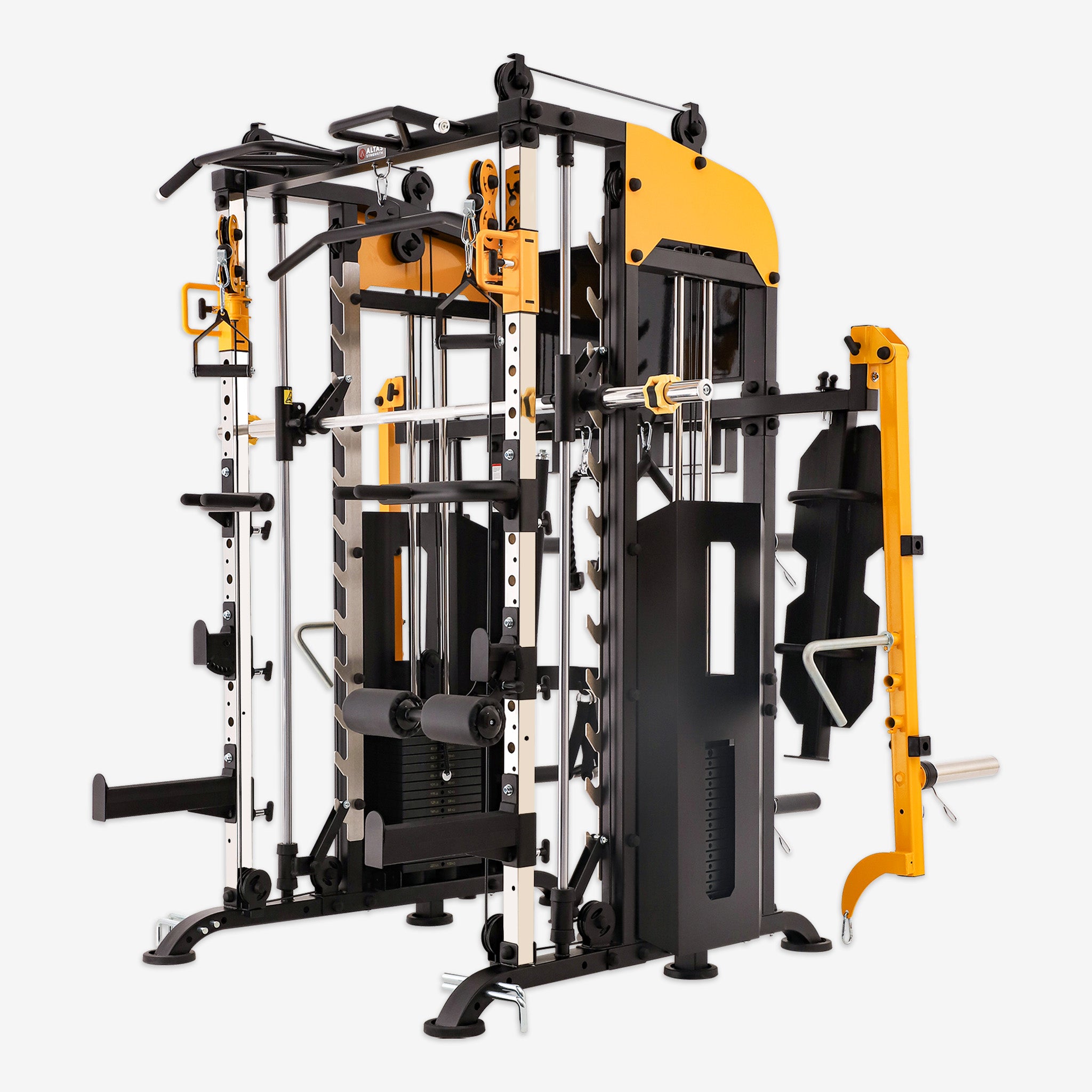
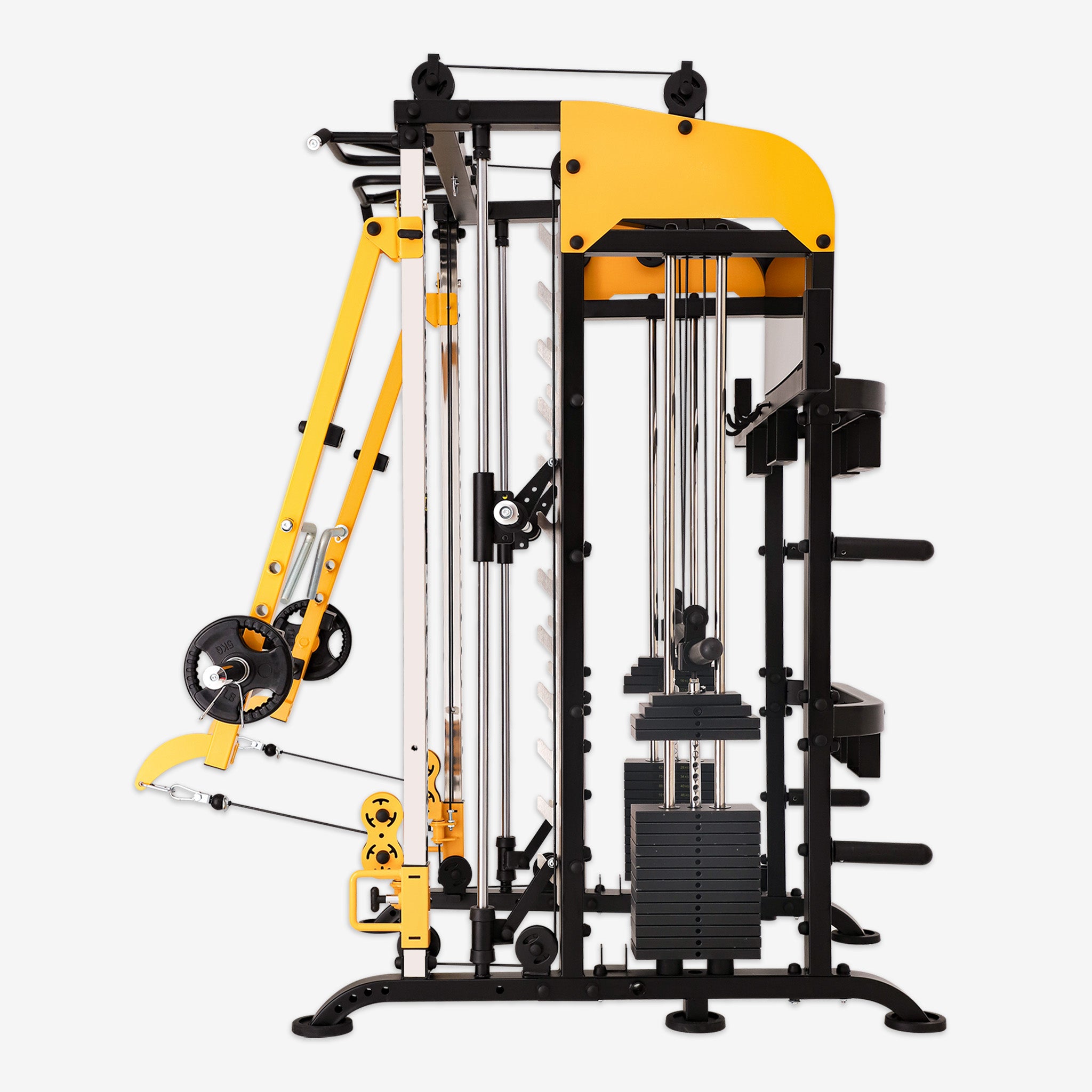
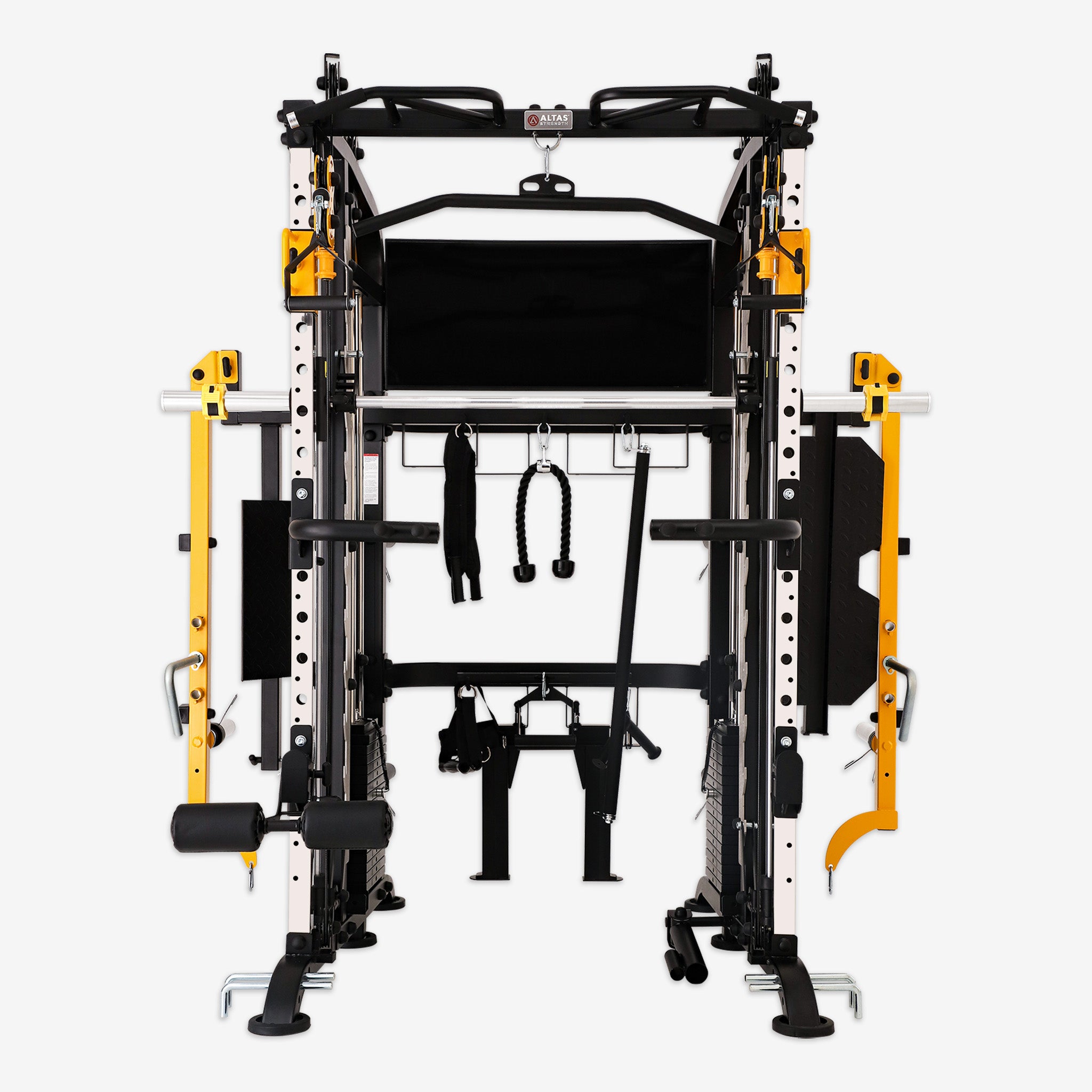
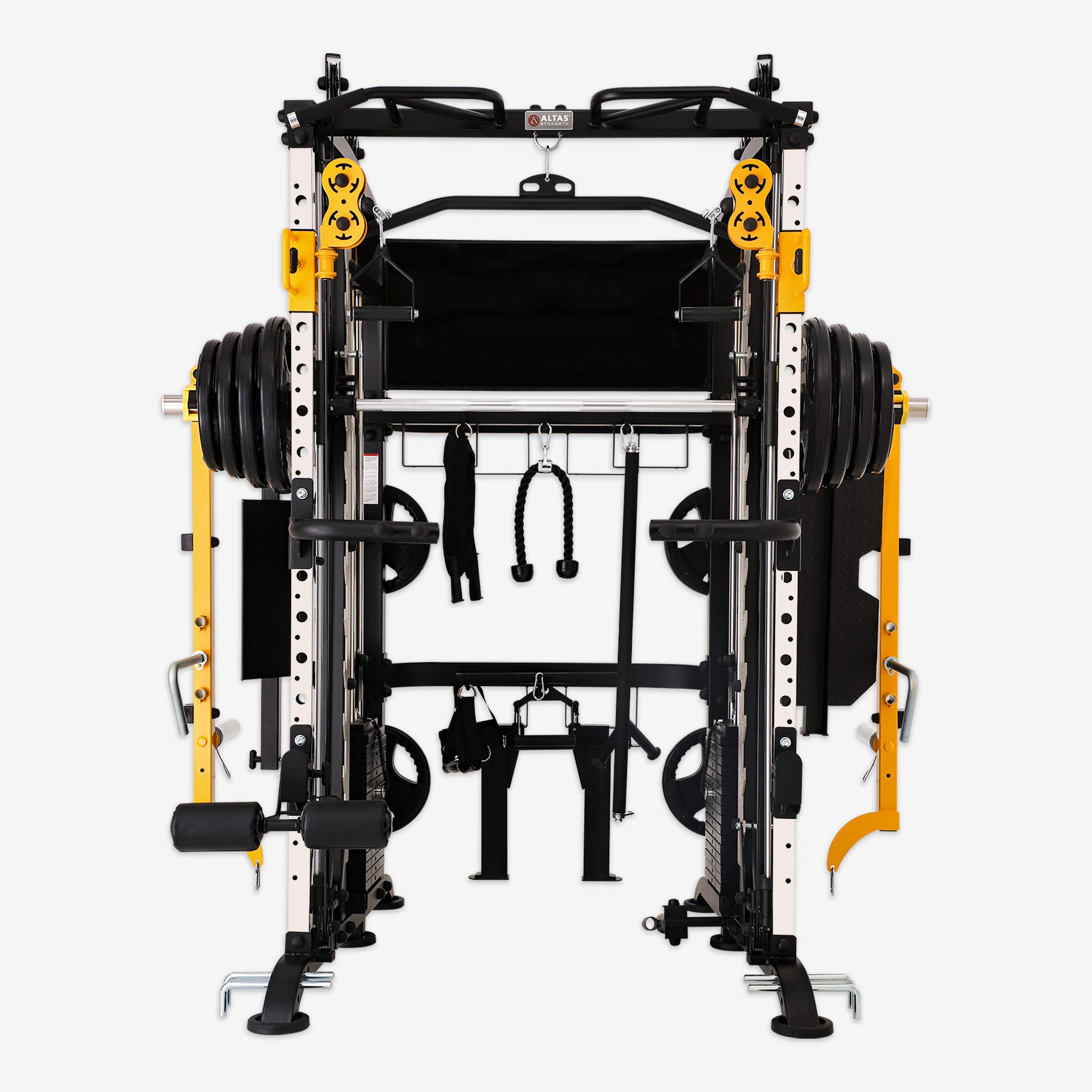
Altas Strength focuses on integrated home and light-commercial strength equipment designed to combine multiple training functions within a single system.
For buyers evaluating Smith machines, the important value proposition is not simply the guided bar.
It is the combination of:
Guided Smith machine training + integrated safety + cable functionality + multiple exercise options + home-gym efficiency.
This makes an integrated Altas Strength Smith machine relevant to users who want one central strength-training system rather than several separate pieces of equipment.
The brand's product positioning emphasizes rigid construction, guided tracking, adjustable safety systems, and multifunctional training capabilities—the same attributes that matter when comparing premium Smith machines.
Final Answer: Is Smith Machine Bench Easier?
Yes, for most lifters, Smith machine bench press feels easier than free-weight bench press because the machine reduces the amount of bar stabilization required.
But that does not mean it is automatically a better exercise.
Smith machine bench is particularly useful for:
-
Solo home training
-
Hypertrophy-focused workouts
-
Controlled pressing volume
-
Beginner confidence
-
Repeatable training
-
Multifunctional home gyms
Free-weight bench press remains important for lifters who want to develop unrestricted barbell technique, stabilization, and competition-specific strength.
The smartest approach for many lifters is therefore not Smith machine vs. barbell.
It is Smith machine + free weights, with each exercise serving a different purpose.
When shopping for a Smith machine, look beyond the question of whether the bench feels easier. Evaluate the track design, safety system, frame stability, available exercises, footprint, and long-term training versatility.
That is what determines whether a Smith machine is actually the right investment for your home gym.