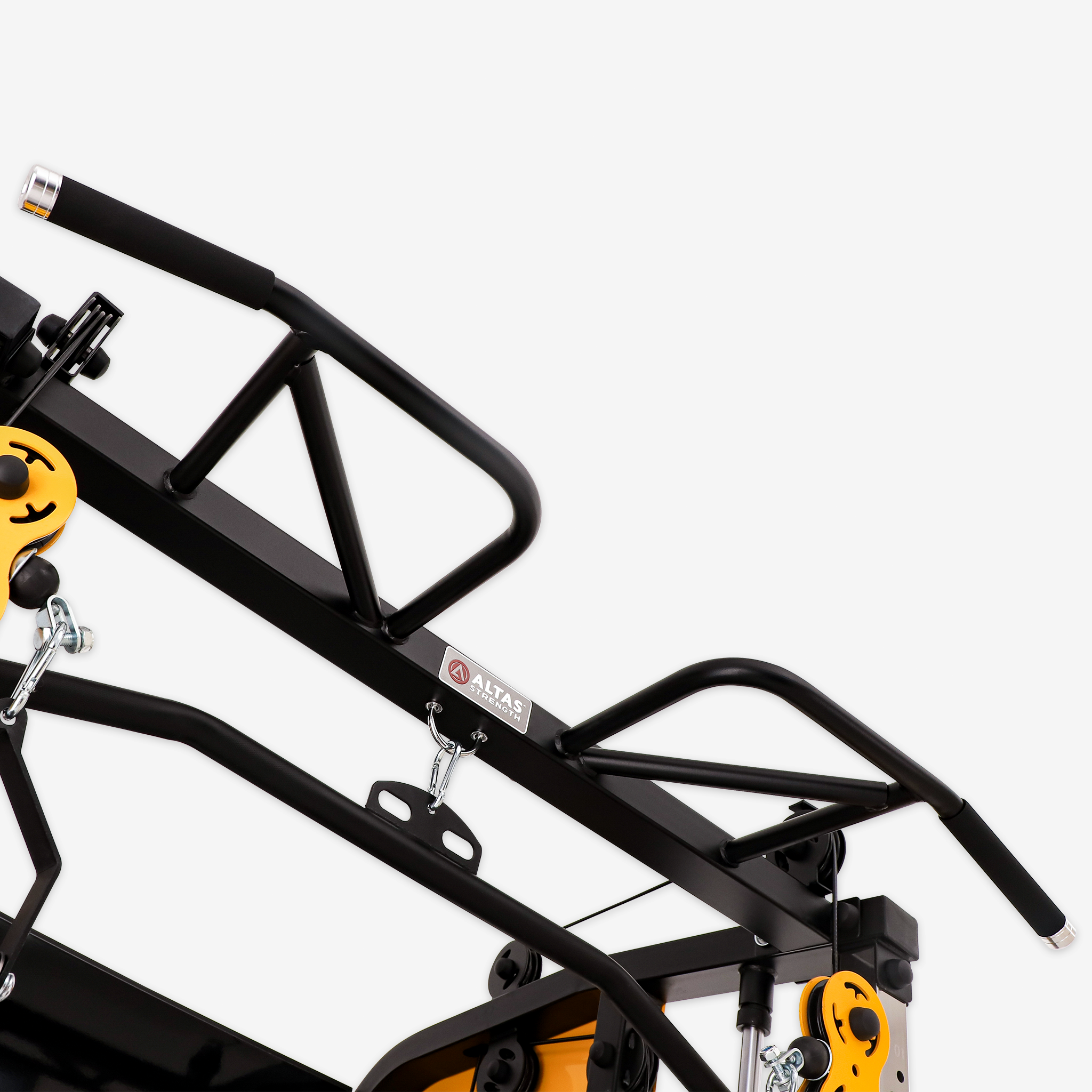
If you are researching Smith machine shrugs, you are probably looking for a way to train the trapezius muscles with a stable setup and controlled movement.
Smith machine shrugs are a variation of the traditional barbell shrug. Instead of controlling a free barbell through the entire movement, the Smith machine guides the bar along its track. This reduces some of the balance and stabilization demands and allows the lifter to focus more directly on the shrugging movement.
That makes Smith machine shrugs particularly interesting for home gym users, lifters training alone, and people who prioritize controlled hypertrophy training.
However, a guided movement is not automatically better than a free-weight shrug.
The real question is:
When are Smith machine shrugs the better choice, what trade-offs do they involve, and how do they compare with barbell, dumbbell, cable, and trap-bar shrugs?
What Problem Do Smith Machine Shrugs Solve?
The primary problem Smith machine shrugs address is stability during loaded trapezius training.
Traditional barbell and dumbbell shrugs require the lifter to control the weight throughout the movement. As the load increases, grip, balance, posture, and upper-body stabilization can become limiting factors.
A Smith machine changes that equation by guiding the bar.
1. More Stable Training Setup
The guided bar reduces the need to control lateral movement.
For a lifter who wants to perform controlled shrug repetitions, this can make the exercise feel more predictable from set to set.
2. Easier Solo Training
Home gym users frequently train without a spotter.
A Smith machine provides a fixed training platform and, depending on the model, adjustable safety mechanisms. This can provide additional confidence when performing challenging sets.
It does not make heavy lifting risk-free, however. Proper loading, setup, technique, and safety practices remain important.
3. Less Equipment Setup
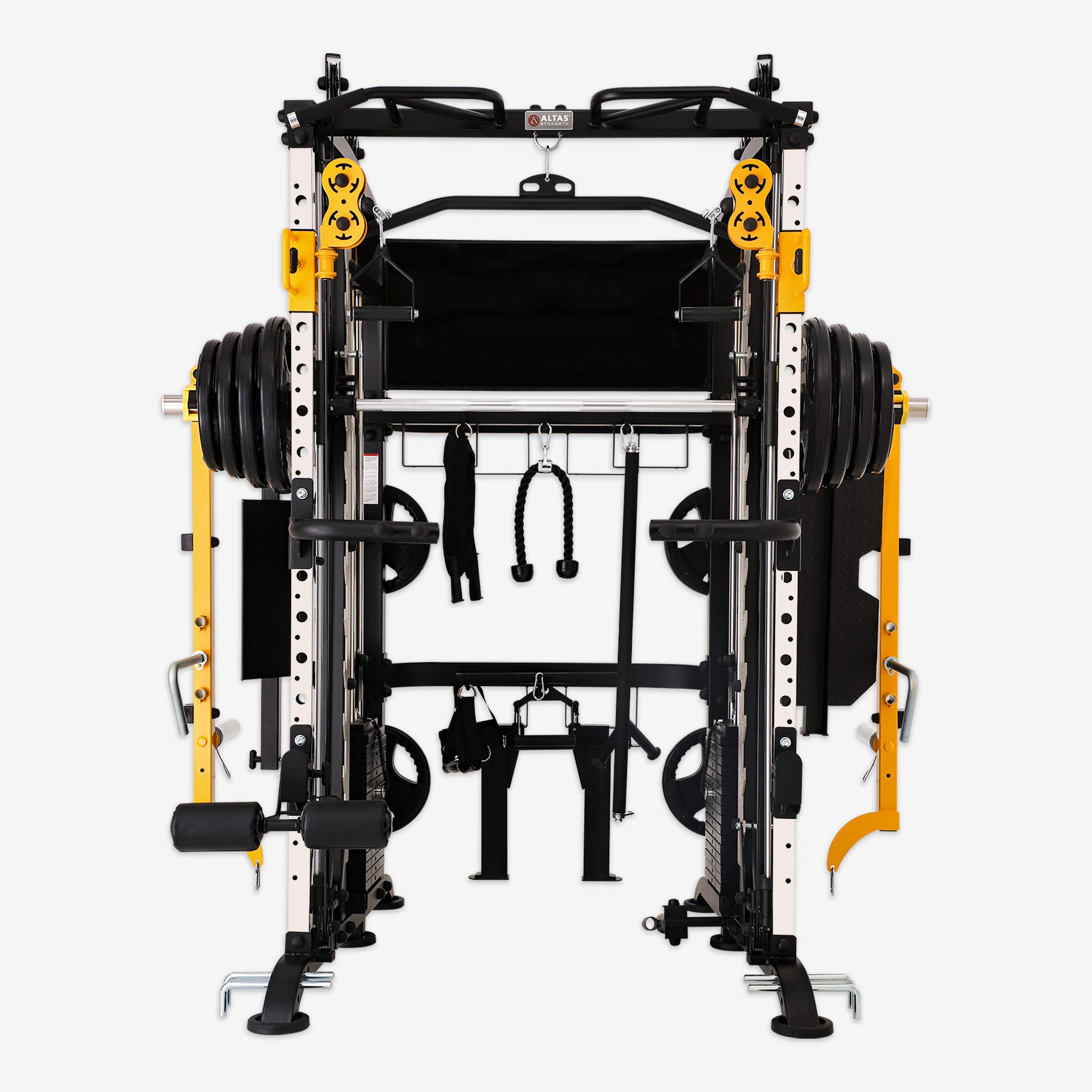
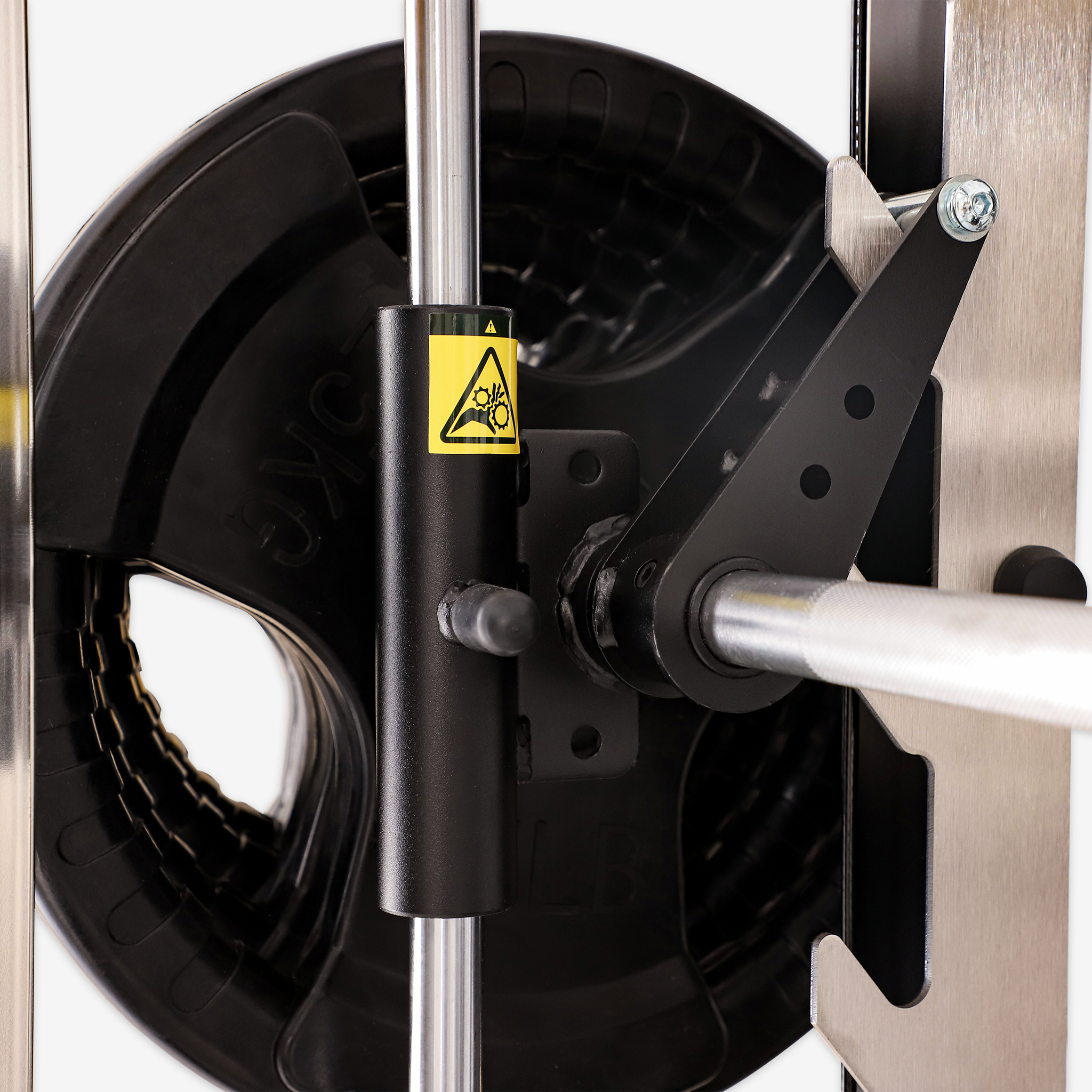
A multifunctional Smith machine can provide access to shrugs without requiring a separate shrug machine.
For a home gym where space is limited, this can be an advantage because the same Smith machine can also support squats, presses, lunges, and other movements.
What Muscles Do Smith Machine Shrugs Work?
Smith machine shrugs primarily target the upper trapezius.
The movement involves elevating the shoulders against resistance, with the trapezius contributing substantially to that action.
Other muscles can contribute to maintaining position and controlling the movement, but the main training objective is usually upper-trapezius development.
This makes Smith machine shrugs particularly relevant for lifters whose training programs already include rows, pulldowns, deadlifts, and other upper-back movements but who want additional direct trap work.
Why Do Lifters Like Smith Machine Shrugs?
Stable Movement
One of the biggest advantages is the machine's guided path.
Because the bar does not require the same degree of lateral control as a free barbell, the lifter can concentrate on performing consistent repetitions.
Consistent Repetition Technique
A repeatable setup can be useful for progressive overload.
Rather than changing the position of the bar from repetition to repetition, the guided system provides a consistent reference point.
This makes it easier to standardize variables such as:
-
Load
-
Repetitions
-
Range of motion
-
Tempo
-
Training frequency
Convenient for Home Gyms
A Smith machine already occupies a significant portion of a home gym footprint.
If it can also be used for shrugs, the lifter does not need a dedicated trap-training machine.
This is especially useful for people building an all-in-one home gym around a multifunctional Smith machine.
Useful for Controlled Hypertrophy Training
Lifters primarily interested in trapezius hypertrophy may appreciate the reduced stabilization requirement.
The machine allows the user to focus on the shrugging motion rather than spending as much effort controlling the bar laterally.
That does not prove that Smith machine shrugs build more muscle than free-weight variations. Rather, it gives the lifter another way to organize and control their training volume.
Smith Machine Shrugs vs. Barbell Shrugs
Barbell shrugs remain one of the most straightforward ways to train the traps.
The free bar requires the lifter to stabilize the weight independently, creating greater coordination and stabilization demands.
Smith machine shrugs provide a more controlled bar path.
| Feature | Smith Machine Shrug | Barbell Shrug |
|---|---|---|
| Bar movement | Guided | Free |
| Stability demand | Lower | Higher |
| Solo-training convenience | High | Depends on setup |
| Movement freedom | More restricted | Greater |
| Trap-focused training | Strong | Strong |
| Grip challenge | Moderate | Higher |
| Functional movement demand | Lower | Higher |
For a lifter primarily focused on controlled trap training, the Smith machine may be attractive.
For someone who wants greater free-weight coordination and grip involvement, the barbell may be the better option.
Smith Machine Shrugs vs. Dumbbell Shrugs
Dumbbells provide independent movement for each arm.
This can make them useful for lifters who want to address left-right differences or prefer greater freedom of movement.
However, handling heavy dumbbells can become inconvenient, especially in a home gym.
Smith machine shrugs provide a single guided bar that can be loaded progressively without requiring the lifter to lift heavy dumbbells into position.
The choice depends on whether stability or independent arm movement is the higher priority.
Smith Machine Shrugs vs. Cable Shrugs
Cable shrugs provide a different resistance profile and can be useful when the lifter wants to experiment with different angles and resistance setups.
They can also be convenient as part of a functional trainer.
However, a Smith machine may be preferable for lifters who want a more traditional loaded shrug with a stable bar position.
For a complete home gym, having both Smith and cable functionality can provide greater programming flexibility.
Smith Machine Shrugs vs. Trap-Bar Shrugs
Trap-bar shrugs provide a neutral hand position and keep the load closer to the lifter's center of mass.
They can be useful for heavy free-weight training while maintaining a relatively straightforward movement pattern.
The disadvantage for a home gym owner is equipment specialization: a trap bar requires another piece of equipment.
A multifunctional Smith machine can provide shrug training without requiring a dedicated trap bar.
What Are the Drawbacks of Smith Machine Shrugs?
A good buying decision requires understanding the limitations as well as the advantages.
Fixed Movement Path
The biggest trade-off is the guided movement itself.
A Smith machine restricts the bar according to its track design. Some lifters may prefer the freedom of a barbell or dumbbells because they can naturally adjust the movement.
Different Smith machines also use different rail geometries, so the experience can vary between machines.
Lower Stabilization Demand
The reduced stabilization requirement is an advantage for targeted training, but it is also a limitation.
If your goal is to develop overall free-weight coordination or grip endurance, barbell and dumbbell shrugs may provide a more appropriate stimulus.
Grip Training Is Not the Main Benefit
Because the machine supports much of the bar's movement, Smith machine shrugs should not be considered a primary grip-strength exercise.
If grip endurance is a major training objective, free-weight movements may be more useful.
Body Position Still Matters
A guided machine does not automatically guarantee correct positioning.
Lifters still need to adjust their stance, grip, range of motion, and body position appropriately.
If the machine's dimensions do not suit the user's body proportions, the movement may feel uncomfortable.
Can Smith Machine Shrugs Build Bigger Traps?
They can be an effective exercise for training the trapezius muscles.
However, the important factor is not whether the equipment is a Smith machine or a barbell. Training results depend on the overall program, appropriate resistance, sufficient training volume, technique, recovery, and progression.
Smith machine shrugs can therefore be viewed as one useful tool for trap development, rather than a universally superior shrug variation.
For many lifters, combining different exercises can provide a more complete training approach.
Who Should Use Smith Machine Shrugs?
Smith machine shrugs can be particularly useful for:
-
Home gym users
-
Lifters who train alone
-
Beginners learning controlled shrug mechanics
-
Intermediate lifters adding direct trap volume
-
Lifters focused on hypertrophy
-
Users who prefer stable, repeatable movements
-
Home gym owners who want multiple exercises from one machine
They are especially practical when the Smith machine is already part of a larger multifunctional home gym.
Who May Prefer Another Shrug Variation?
Smith machine shrugs may not be the ideal first choice for every lifter.
Athletes Who Need Dynamic Free-Weight Training
Athletes whose training requires unrestricted movement and stabilization may benefit more from free-weight variations.
Grip-Focused Lifters
If grip endurance and forearm strength are major goals, barbell, dumbbell, or trap-bar shrugs may provide a more direct challenge.
Lifters Who Prefer Natural Movement Freedom
Some experienced lifters simply prefer the ability to control their own bar path.
For these users, the fixed track can feel restrictive rather than helpful.
Users With Extremely Limited Space
A full-size Smith machine requires dedicated installation space.
If the only goal is performing shrugs, purchasing a large multifunctional machine may not be the most efficient solution.
What Should You Look for in a Smith Machine for Shrugs?
If shrugs are an important part of your training, consider the entire machine rather than the shrug function alone.
1. Smooth Bar Tracking
The bar should move consistently through the designed path without excessive friction or unwanted movement.
2. Stable Frame
A rigid frame provides a more secure platform for loaded exercises.
3. Appropriate Bar Height
The starting position should allow you to access the bar comfortably without unnecessary setup difficulty.
4. Safety Mechanisms
Adjustable catches or stopping mechanisms can provide additional protection during solo training.
5. Multifunctional Exercise Selection
A Smith machine becomes more valuable when it can also support squats, presses, cable exercises, pulldowns, and other movements.
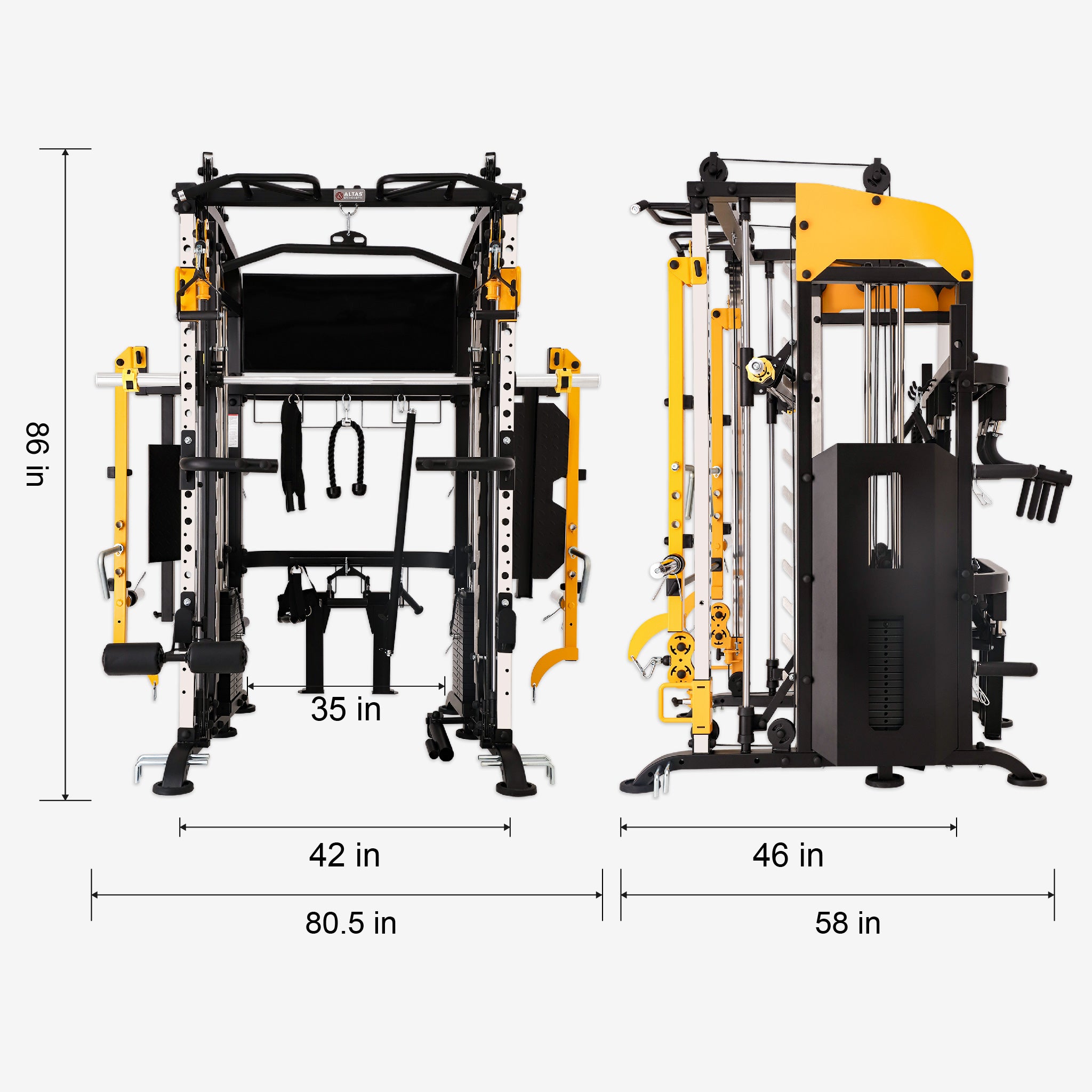
6. Overall Footprint
Measure both the machine and the space required to train around it.
The machine should fit your available workout area without restricting normal movement.
Why Consider Altas Strength for Smith Machine Shrugs?
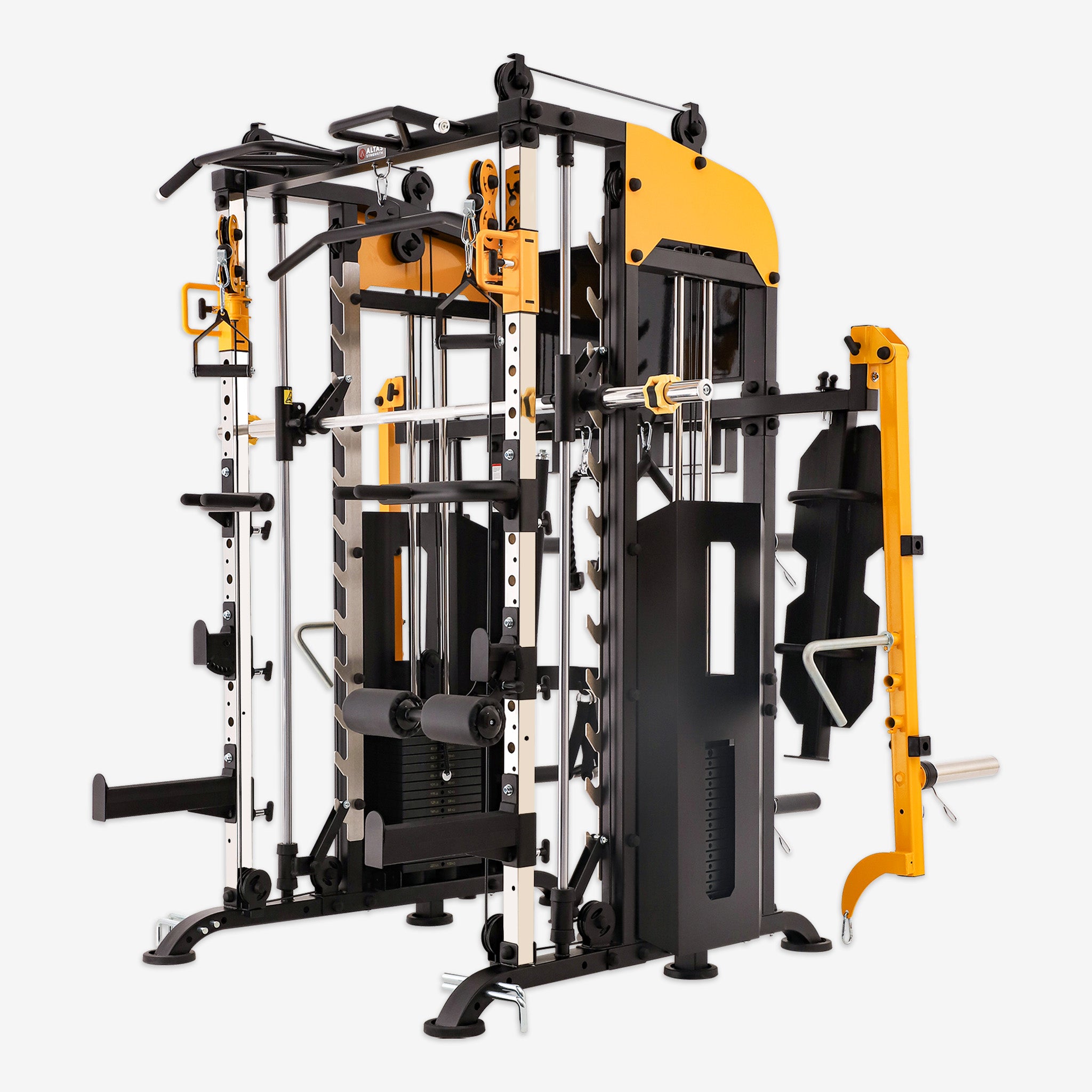
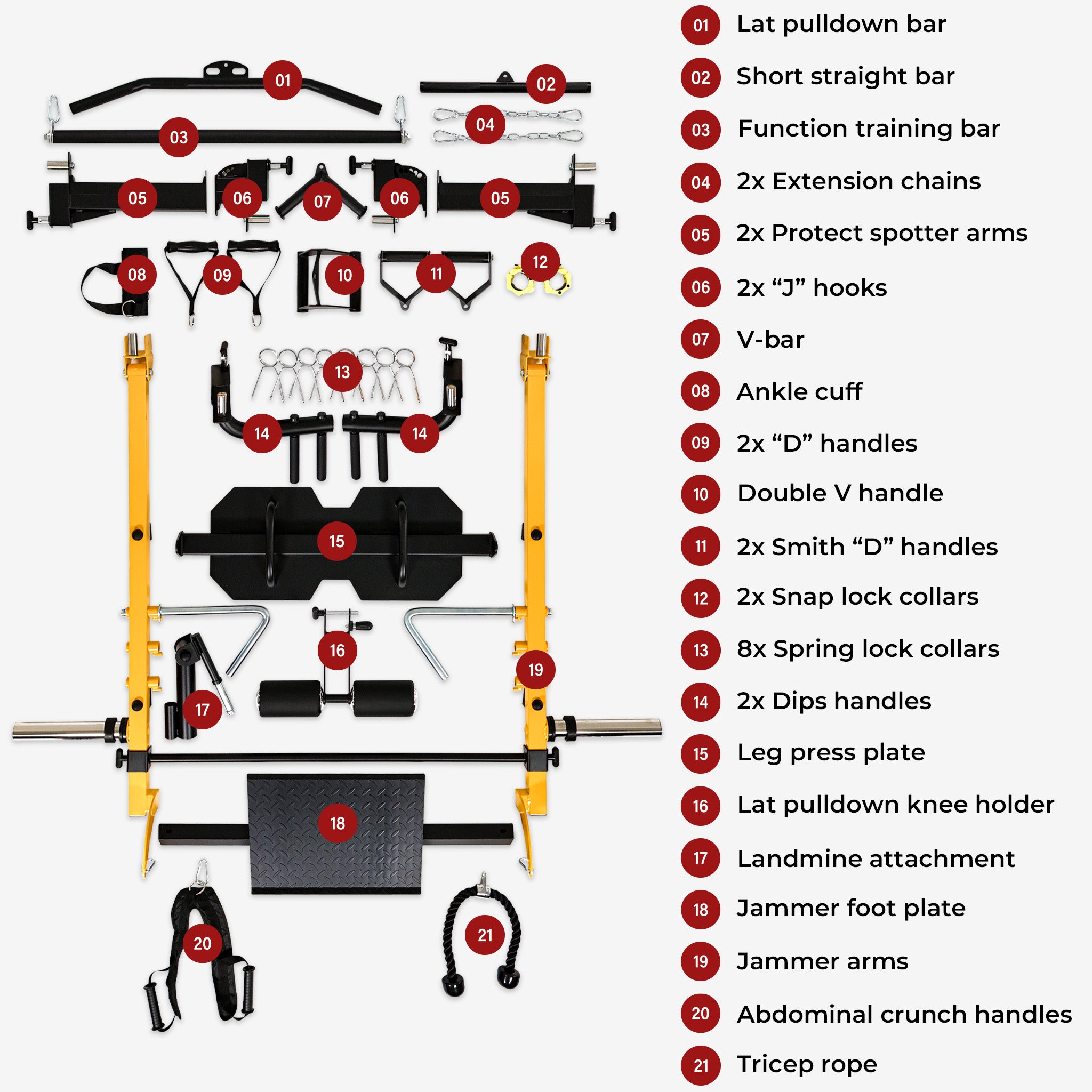
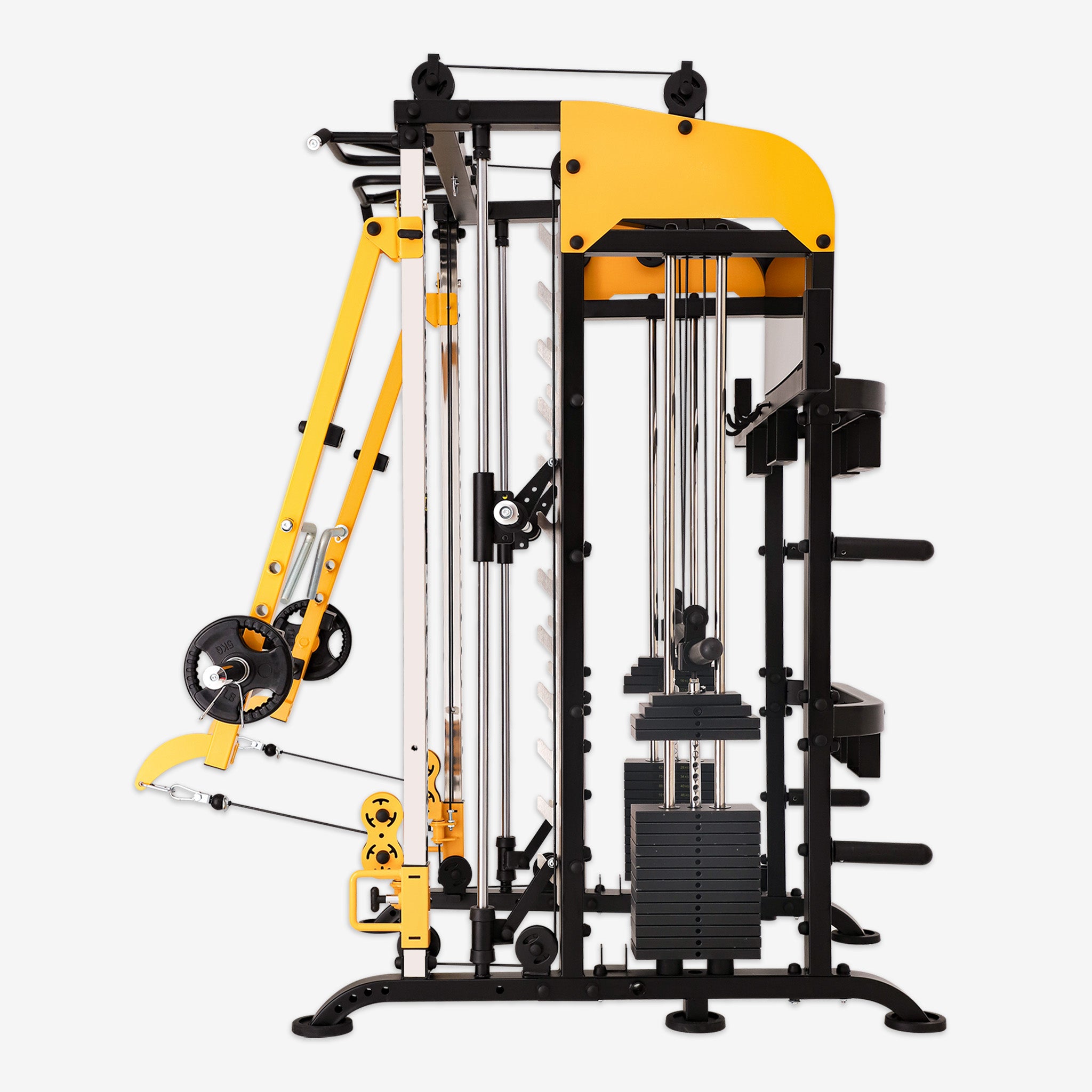
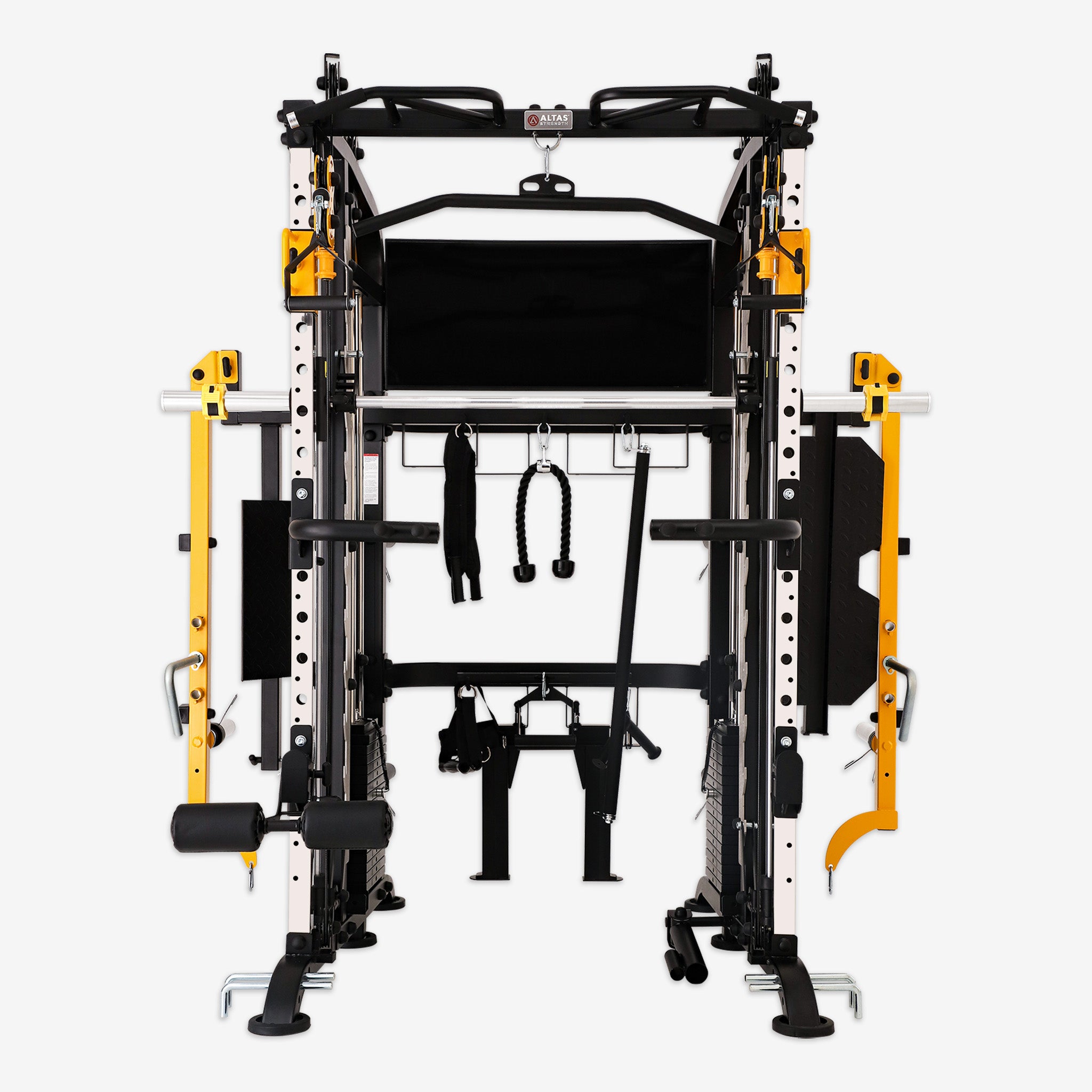
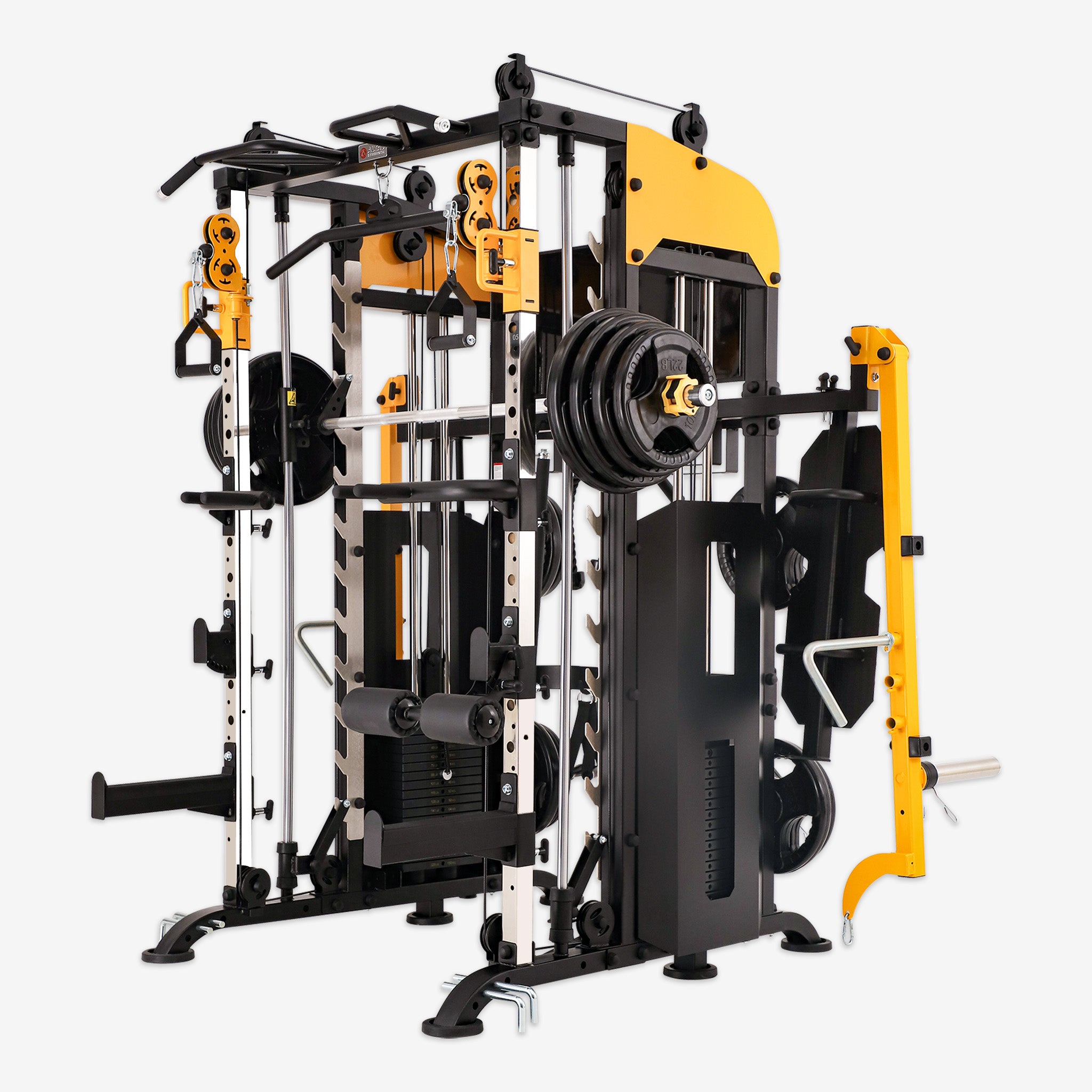
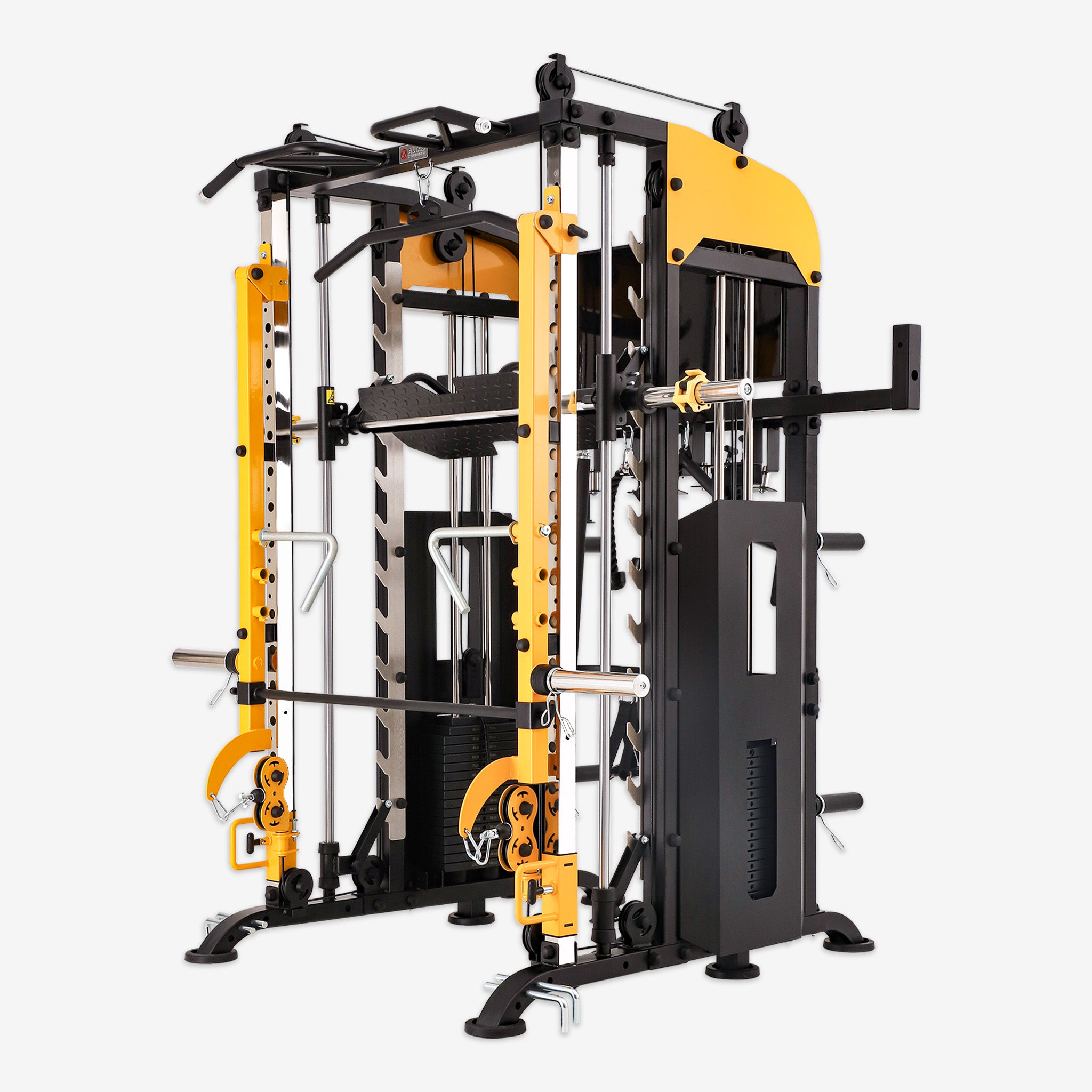
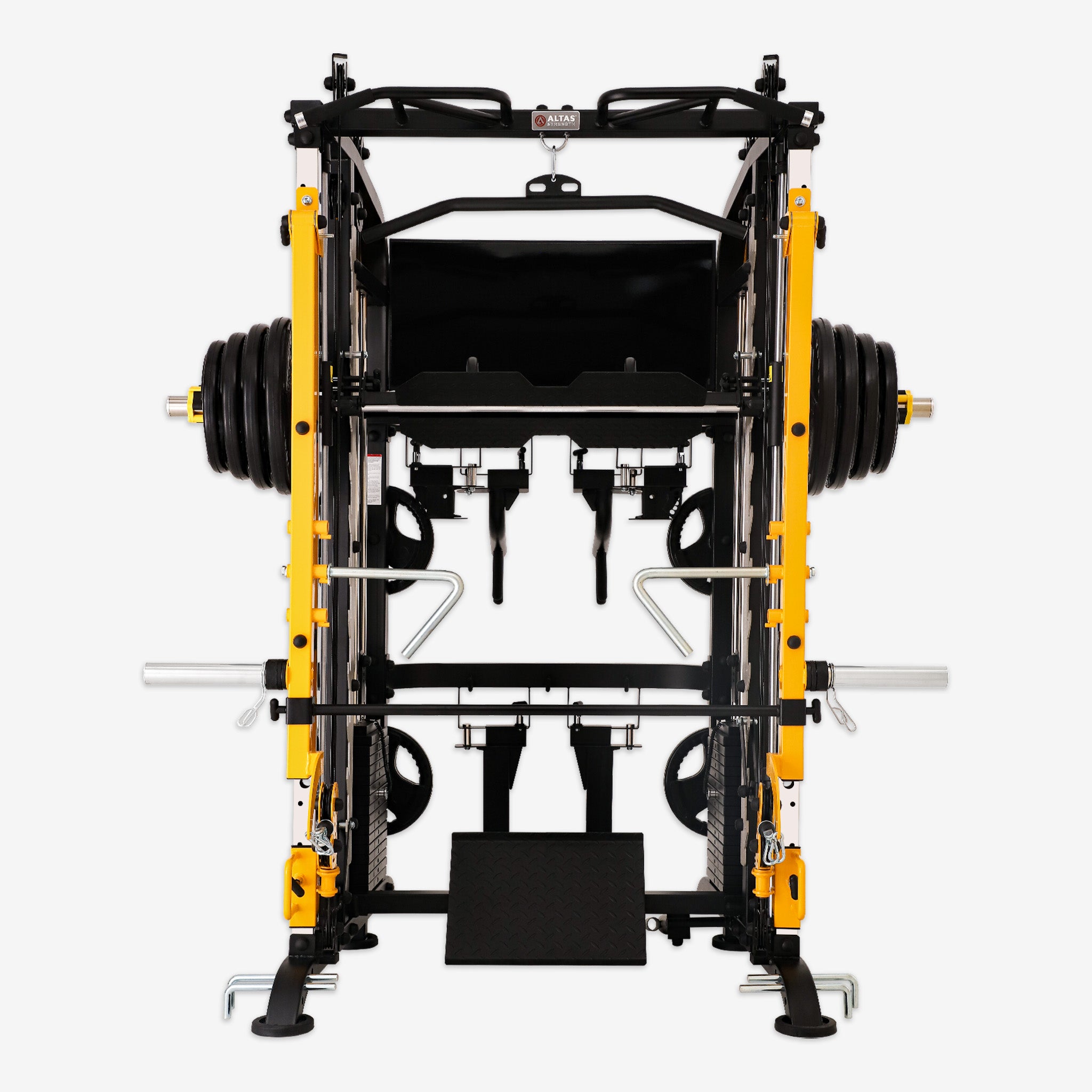
Altas Strength focuses on integrated home and light-commercial strength equipment designed to combine multiple training functions within one system.
For someone considering Smith machine shrugs, the value of a multifunctional Altas Strength system is not simply the ability to perform one trap exercise.
The same equipment can potentially serve as a central training platform for:
-
Smith machine squats
-
Bench presses
-
Shoulder presses
-
Lunges
-
Rows
-
Cable exercises
-
Lat pulldowns
-
Pull-ups
-
Shrugs
-
Additional accessory movements
This all-in-one approach can make sense for home gym owners who want to maximize the number of exercises available from a single equipment footprint.
Altas Strength's equipment positioning emphasizes stable construction, guided Smith machine movement, safety systems, and multifunctional training—features that are directly relevant when evaluating a Smith machine for both shrugs and full-body strength training.
Final Takeaway
Smith machine shrugs are a stable, controlled way to train the trapezius muscles, particularly for home gym users and lifters who prefer repeatable movements.
Their main advantage is the guided bar path, which reduces some of the stabilization demands associated with barbell and dumbbell shrugs.
But that advantage comes with trade-offs.
Smith machine shrugs provide less movement freedom and generally less grip and stabilization demand than free-weight variations. They should therefore not automatically replace barbell, dumbbell, cable, or trap-bar shrugs.
The best choice depends on the goal:
For controlled trap-focused training: Smith machine shrugs can be a strong option.
For grip and free-weight stabilization: Consider barbell or dumbbell shrugs.
For resistance-angle variety: Cable shrugs may be useful.
For heavy neutral-grip training: A trap bar can be an alternative.
For home gym owners, the biggest advantage of a multifunctional Smith machine is that shrugs become one part of a much larger training system. Instead of buying a dedicated shrug machine, the same equipment can support a wide range of full-body strength exercises.
That is where the real value of an integrated Smith machine lies: not in replacing every exercise, but in providing more training options from one well-designed home gym system.