If you are searching for a Smith shoulder press, you may be looking for a way to train your shoulders with more stability, consistency, and control than a traditional free-weight overhead press provides.
The Smith machine changes the pressing experience by guiding the bar along a defined track. Instead of controlling the bar's movement in multiple directions, the lifter can concentrate more of the effort on pressing the resistance.
For home gym users, beginners, and lifters who train alone, this can make the Smith shoulder press an attractive alternative to a free barbell or dumbbell shoulder press.
But a guided movement also creates trade-offs.
The key question is not simply whether a Smith shoulder press is better than free weights. It is:
Who benefits most from the controlled movement, what does the machine sacrifice, and when does a Smith shoulder press make sense as part of a complete strength-training program?
What Does a Smith Shoulder Press Solve?
The main problem a Smith shoulder press addresses is controlled overhead pressing without requiring the same level of bar stabilization as free weights.
Traditional barbell and dumbbell shoulder presses require the lifter to control the resistance while maintaining balance and torso position. This can make the exercise more technically demanding, particularly for beginners or people training without a partner.
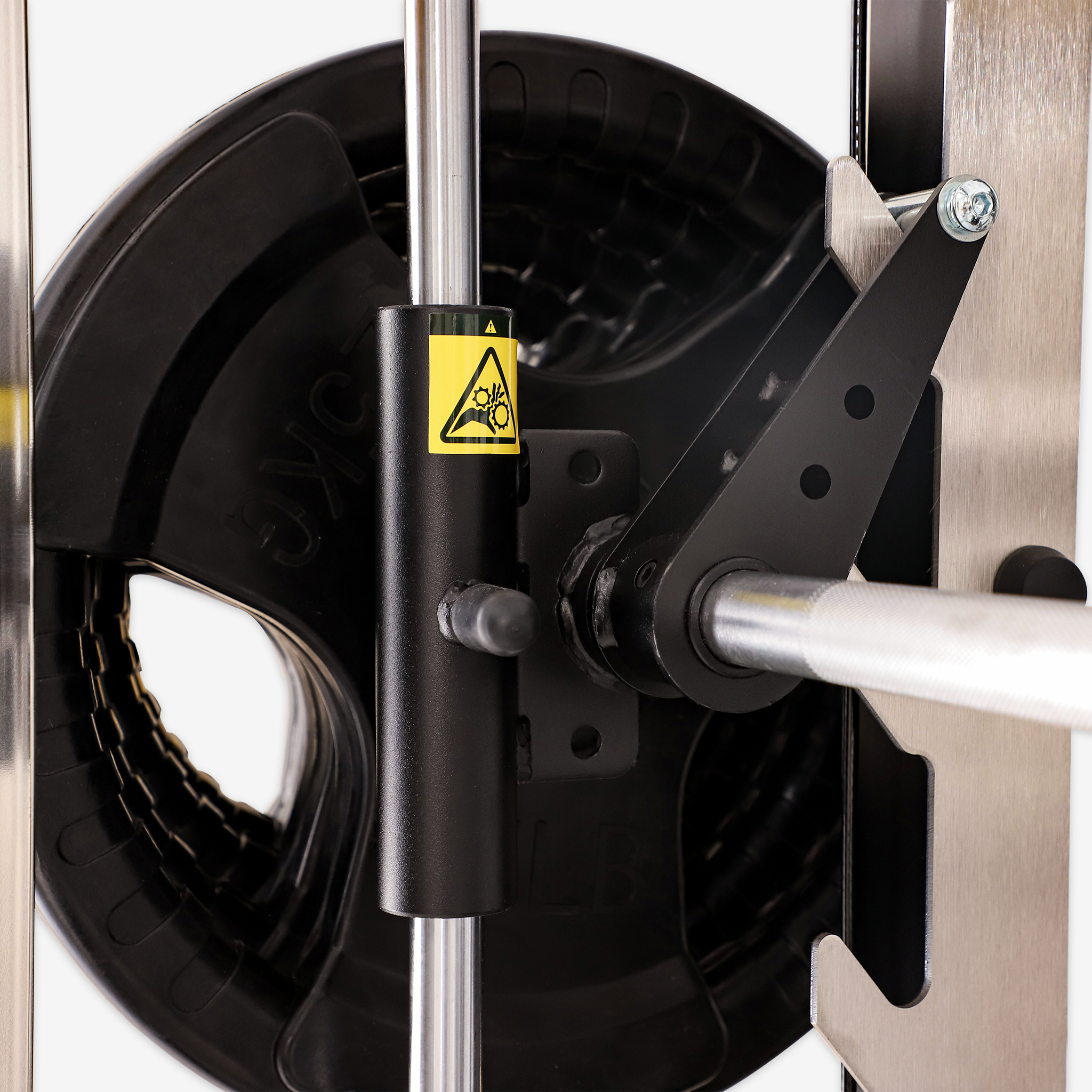
A Smith machine provides a guided bar path.
That can create several practical advantages.
1. More Stable Solo Training
Home gym users often train alone.
A Smith machine with properly positioned safety catches can provide an additional layer of protection during pressing exercises. The guided bar also reduces the possibility of the bar moving laterally during a repetition.
This does not make overhead pressing risk-free. Correct setup, appropriate loading, and proper technique remain essential.
2. More Consistent Movement
Free-weight pressing requires the lifter to stabilize the bar during every repetition.
A Smith machine controls much of that movement, making the exercise more repeatable.
For someone tracking progressive overload, this can make it easier to compare performance between workouts.
3. Focused Shoulder Training
Because the machine reduces some stabilization requirements, lifters may find it easier to concentrate on the pressing muscles.
The deltoids remain the primary target of the shoulder press, while the triceps and other muscles continue to contribute.
The machine does not magically isolate the shoulders, but the reduced balance requirement can change where the lifter feels the exercise and how they distribute their effort.
What Muscles Does a Smith Shoulder Press Work?
The Smith shoulder press primarily trains the deltoids, particularly the anterior deltoid during an overhead pressing motion.
The triceps also contribute significantly to elbow extension.
Other muscles help stabilize and position the torso and shoulder complex, although the stabilization demands are generally different from those of a free-weight press.
This makes the Smith shoulder press a useful option for lifters who want direct overhead pressing volume without making free-weight stabilization the central challenge of the exercise.
Why Do Users Choose a Smith Shoulder Press?
Several features make guided shoulder pressing attractive to home gym users.
Controlled Bar Path
The guided track reduces lateral movement and gives the lifter a predictable pressing path.
This can be particularly useful for people who find free-weight overhead pressing difficult to control.
Beginner-Friendly Setup
Beginners often have to learn several skills simultaneously during a free-weight shoulder press: grip positioning, bar control, torso stability, and overhead movement.
A Smith machine removes some of that complexity.
That can make it easier to focus on basic pressing technique and gradually increase resistance.
Solo Workout Convenience
A properly configured Smith machine can be convenient for people who do not have a regular training partner.
The combination of guided movement and adjustable safety mechanisms can increase confidence when performing challenging sets.
Repeatable Progressive Overload
Because the machine provides a consistent movement path, lifters can more easily standardize their setup.
This can be useful when progressively increasing training load over time.
The important point is to track progress on the same machine rather than assuming that the resistance feels identical across different Smith machine models.
Smith Shoulder Press vs. Free-Weight Barbell Press
The free barbell overhead press remains an important strength-training exercise because it requires the lifter to stabilize the weight independently.
The Smith shoulder press takes a more controlled approach.
| Feature | Smith Shoulder Press | Barbell Shoulder Press |
|---|---|---|
| Bar movement | Guided | Free |
| Stabilization demand | Lower | Higher |
| Movement consistency | High | Depends on lifter |
| Solo training convenience | High | Requires appropriate safety setup |
| Learning curve | Generally lower | Generally higher |
| Functional stabilization | Lower | Higher |
| Progressive overload | Straightforward | Straightforward |
| Movement freedom | More restricted | Greater |
Neither option is universally superior.
If your primary goal is free-weight strength and athletic movement, the barbell may be more appropriate.
If your priorities are controlled pressing, solo training, and repeatable shoulder-focused volume, a Smith machine can be a useful alternative or complement.
Smith Shoulder Press vs. Dumbbell Shoulder Press
Dumbbells provide independent movement for each arm.
This allows the lifter to make small adjustments to the natural path of each shoulder and can be useful for addressing differences between the two sides.
The trade-off is increased stabilization and coordination requirements.
A Smith shoulder press connects both sides through one guided bar, creating a more predictable movement.
Therefore:
Choose dumbbells when independent arm movement and free movement are priorities.
Choose Smith machine pressing when stability and repeatability are more important.
Smith Shoulder Press vs. Selectorized Shoulder Press Machines
Selectorized shoulder press machines usually provide a dedicated pressing motion with simple pin-based weight adjustments.
They can be extremely convenient, particularly in commercial gyms.
A Smith machine, however, can offer greater exercise versatility depending on the configuration.
The same machine may support squats, bench presses, lunges, rows, and other movements.
For home gym buyers, this multifunctionality can make a Smith machine more attractive than purchasing a dedicated shoulder press machine.
What Are the Drawbacks of a Smith Shoulder Press?
The guided movement is also the machine's biggest limitation.
Fixed Bar Path
A free barbell allows the lifter to naturally adjust the bar trajectory.
A Smith machine restricts that movement according to its rail design.
Different Smith machines use different track geometries, so two machines can feel noticeably different during the same exercise.
This makes track design an important consideration when purchasing a Smith machine.
Lower Stabilizer Demand
Because the machine controls much of the bar movement, the lifter does not have to stabilize the resistance to the same extent as with a barbell or dumbbell press.
That can be useful for targeted training but less useful for someone specifically trying to develop free-weight stabilization.
Limited Unilateral Training
A traditional Smith machine uses one connected bar.
This means it generally does not provide the independent left-right movement available from dumbbells or an iso-lateral shoulder press machine.
Lifters specifically looking for unilateral pressing may therefore prefer another option.
Body-Size Compatibility
A machine's dimensions and bar path may not feel equally comfortable for every user.
Arm length, torso position, seat or bench height, and the machine's track geometry can all affect the pressing experience.
This is one reason buyers should consider adjustability and machine dimensions rather than assuming every Smith shoulder press will feel the same.
Is a Smith Shoulder Press Good for Building Shoulders?
It can be.
The Smith shoulder press provides a stable platform for progressive overhead pressing and can be incorporated into a shoulder hypertrophy program.
However, equipment alone does not determine muscle growth.
Training volume, resistance, technique, recovery, exercise selection, and progressive overload all influence results.
For many lifters, the Smith shoulder press works best as one component of a broader shoulder program, rather than the only pressing movement.
Who Should Use a Smith Shoulder Press?
A Smith shoulder press can be particularly suitable for:
-
Home gym users who train alone
-
Beginners learning overhead pressing
-
Lifters focused on shoulder hypertrophy
-
Intermediate lifters adding controlled pressing volume
-
Users who prefer guided movement
-
Lifters who want repeatable exercise mechanics
-
Homeowners building a multifunctional strength-training system
It can also work well in commercial gyms as an additional pressing station when several members need access to shoulder-training equipment.
Who May Prefer Another Shoulder Press?
A Smith shoulder press is not ideal for every training objective.
Advanced Functional Fitness Athletes
Athletes who specifically need unrestricted movement and whole-body stabilization may benefit more from free-weight pressing.
Competitive Strength Athletes
If your goal is improving a specific free-weight overhead press, you need to practice the actual free-weight movement.
Lifters Needing Unilateral Training
Dumbbells and iso-lateral machines are better suited to independent left-right pressing.
Users Who Want Maximum Movement Freedom
Some lifters simply prefer controlling the bar path themselves.
For these users, a fixed Smith track can feel restrictive rather than helpful.
Buyers Looking for Dozens of Different Exercises
A dedicated Smith shoulder press setup may not be the best choice if the main requirement is maximum exercise variety from one machine. A multifunctional home gym system may provide better overall value.
What Should You Look for When Buying a Smith Machine?
If shoulder pressing is one of your main priorities, evaluate the complete machine rather than looking only at the bar.
1. Track Design
The Smith machine's rail geometry directly affects the pressing experience.
2. Safety System
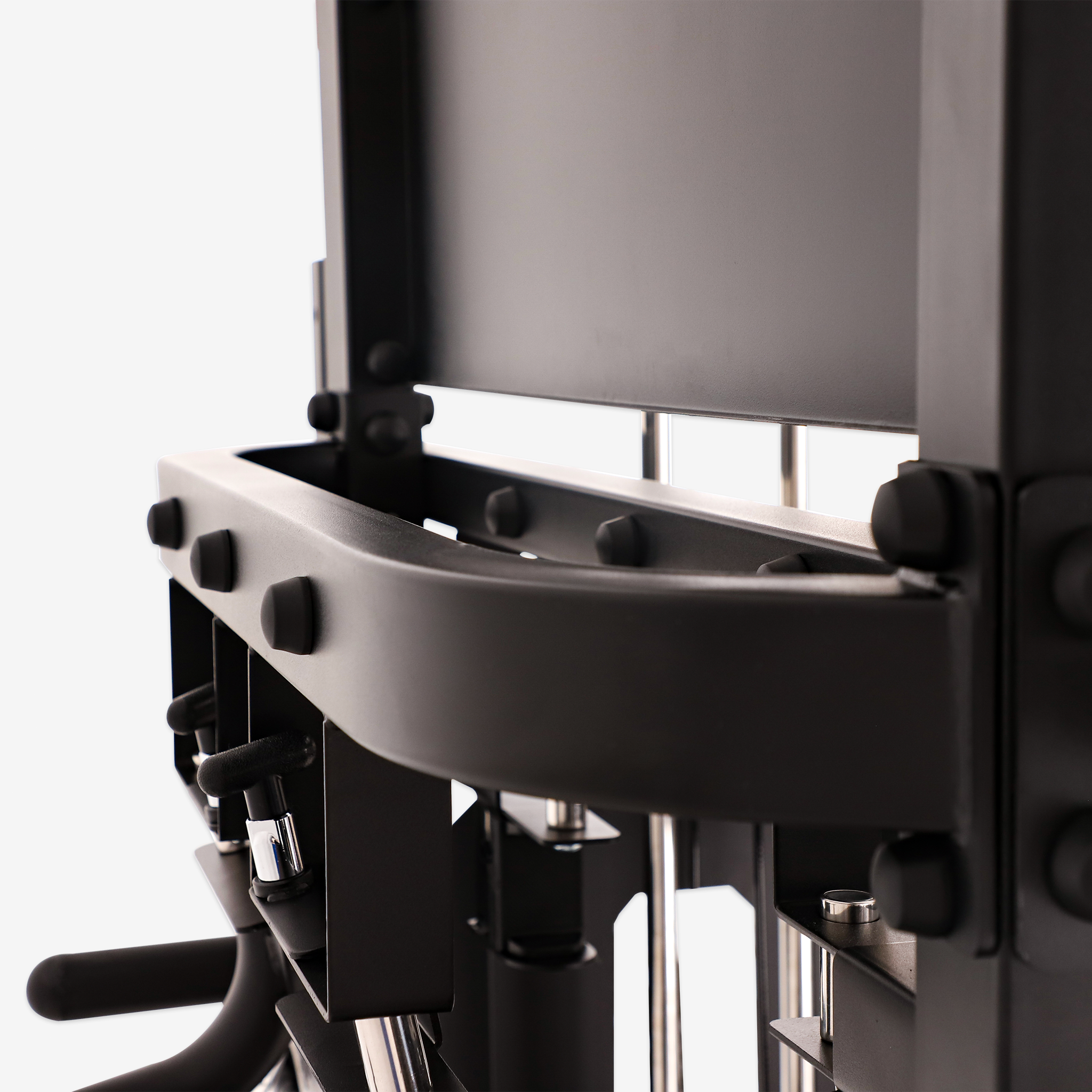
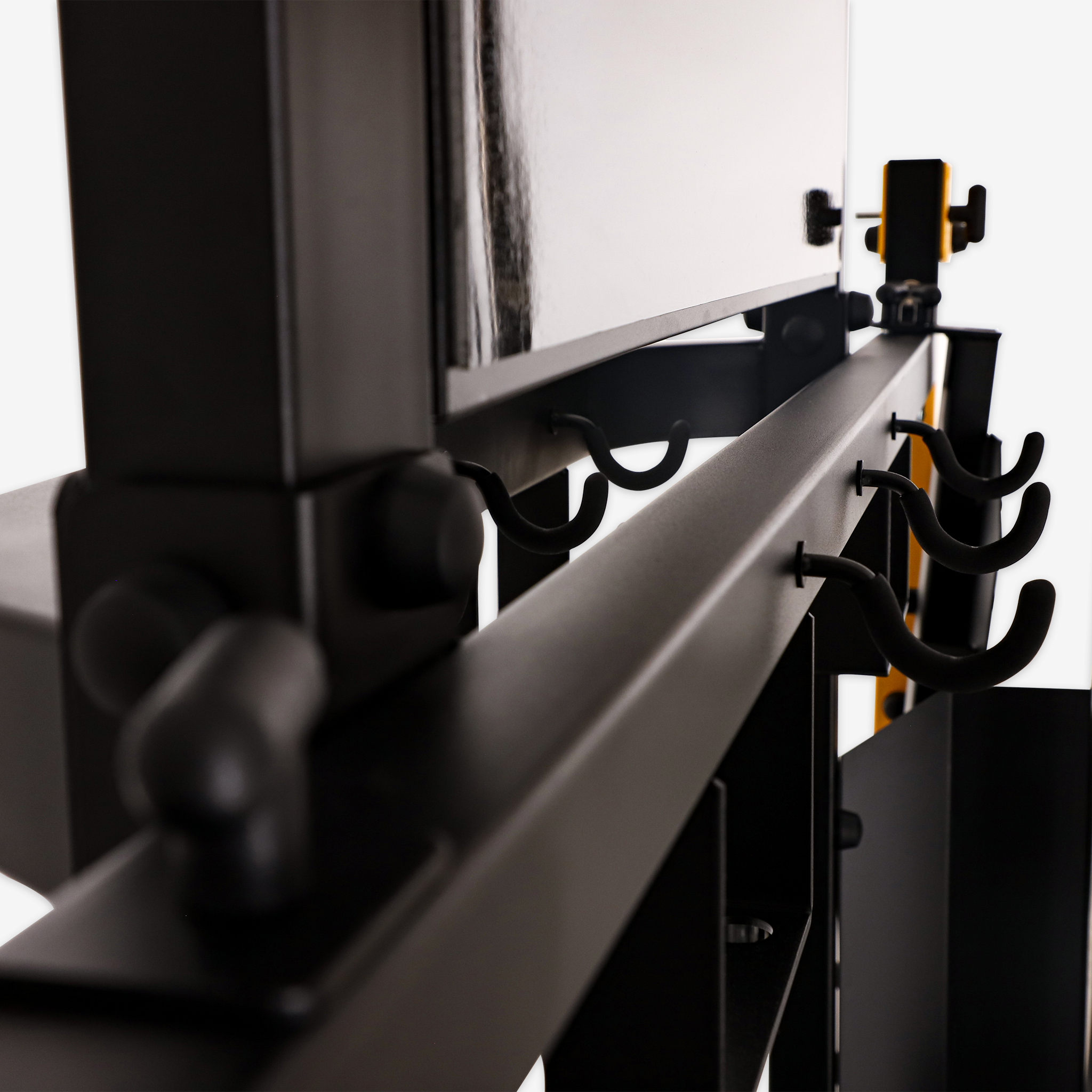
Look for easily adjustable safety catches and a reliable locking mechanism.
3. Frame Stability
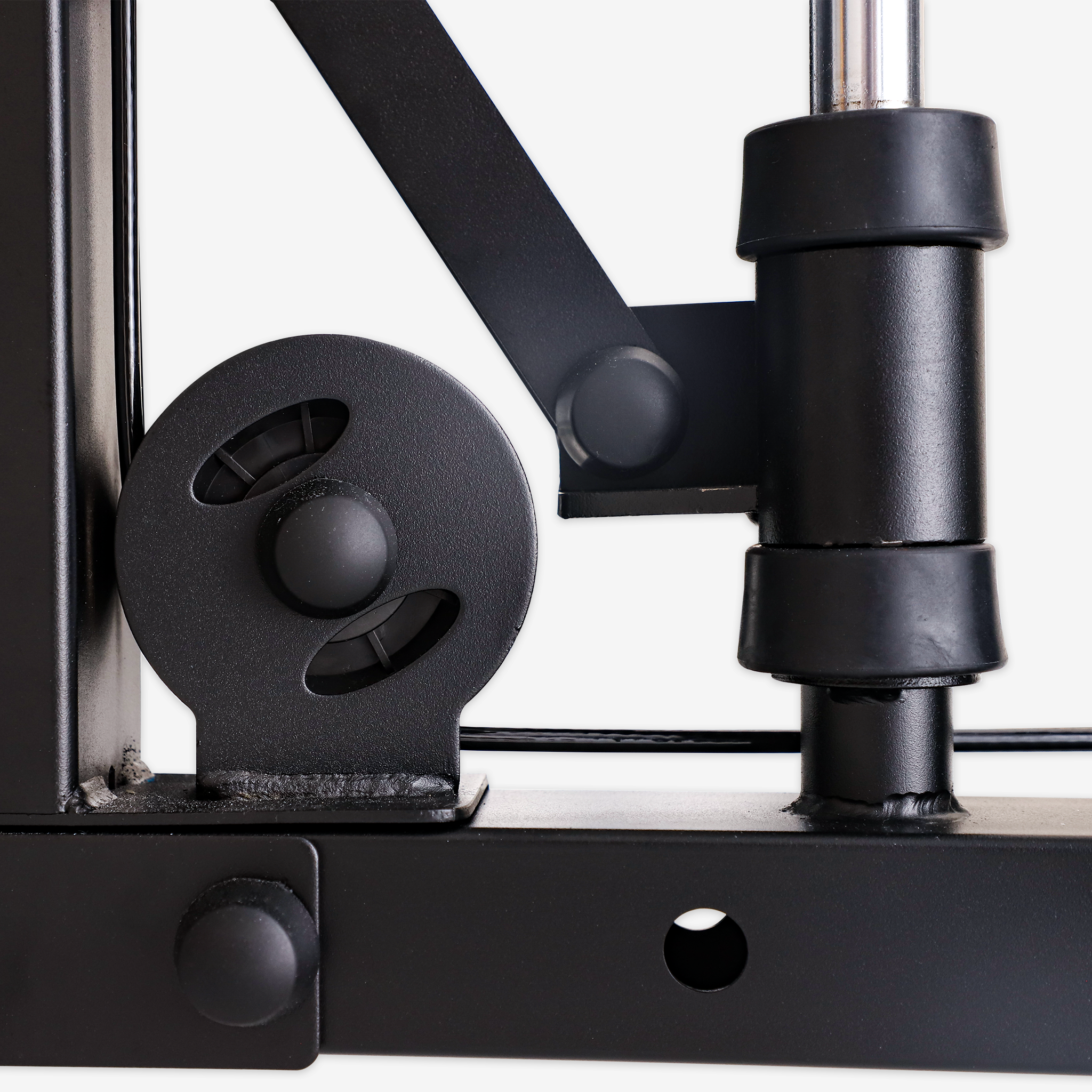
A rigid frame is important when performing overhead pressing and other loaded compound movements.
4. Bench or Seat Adjustability
The relationship between the bench, user position, and Smith bar can significantly affect exercise setup.
5. Weight Capacity
Choose a system whose rated capacity and loading configuration match your expected training needs.
6. Exercise Versatility
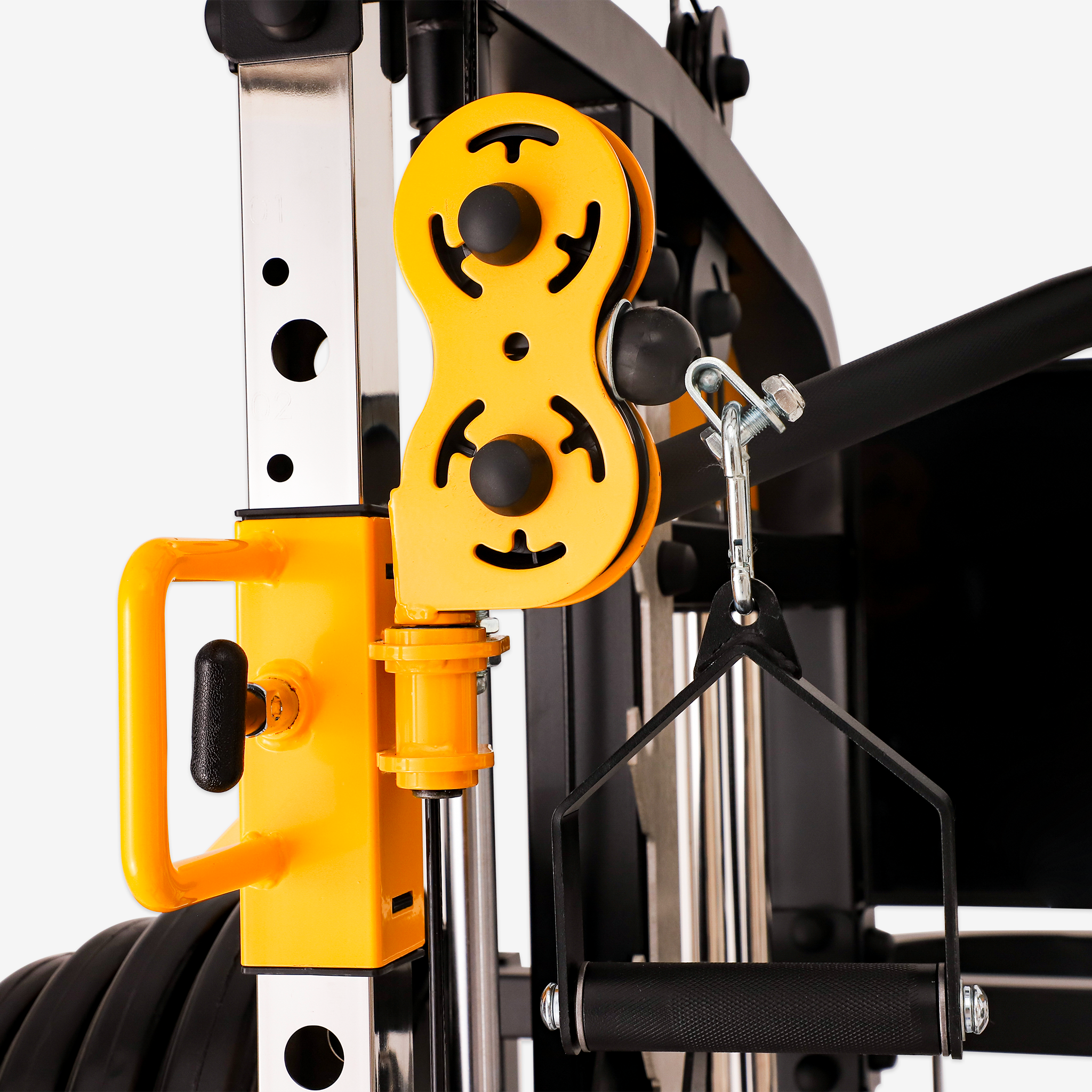
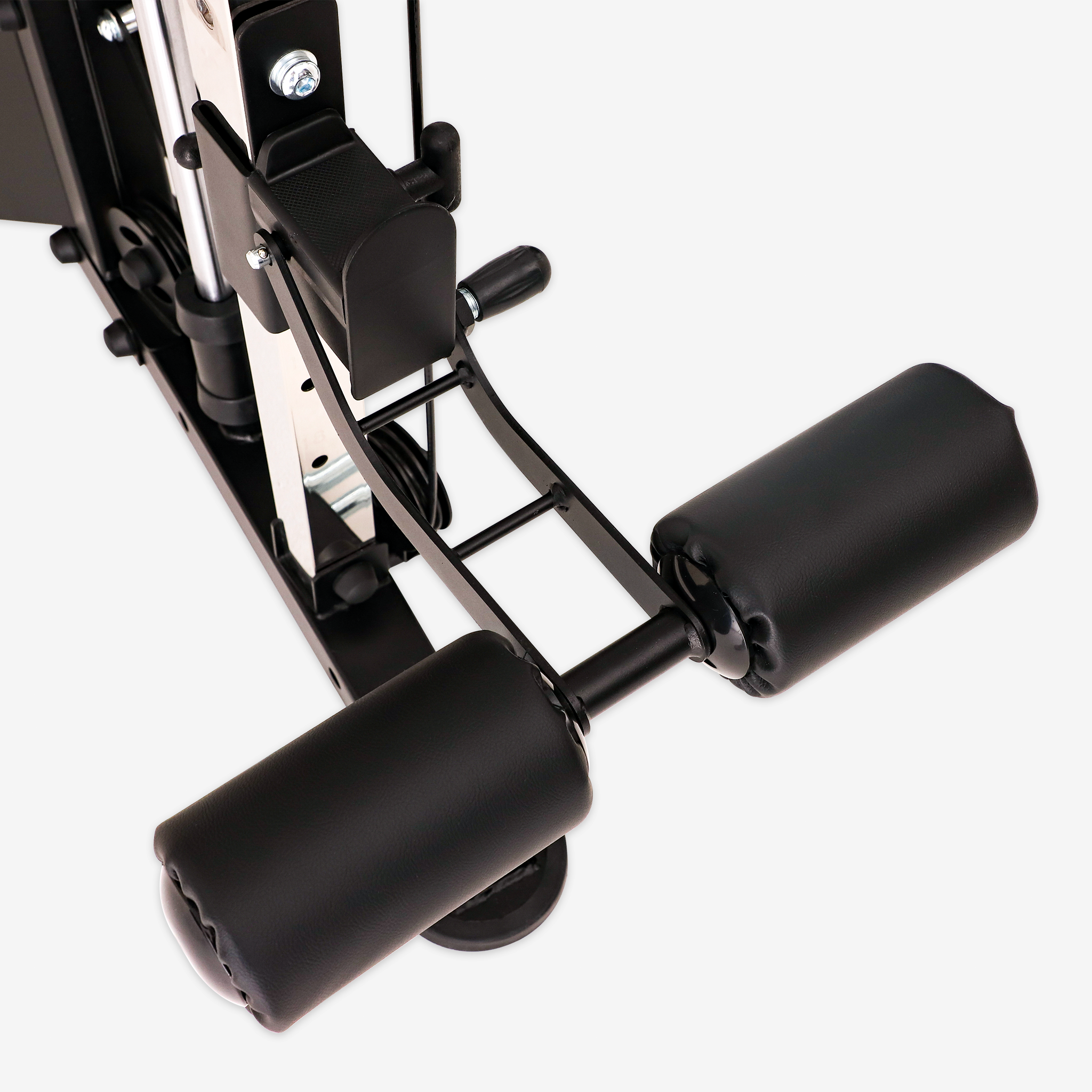
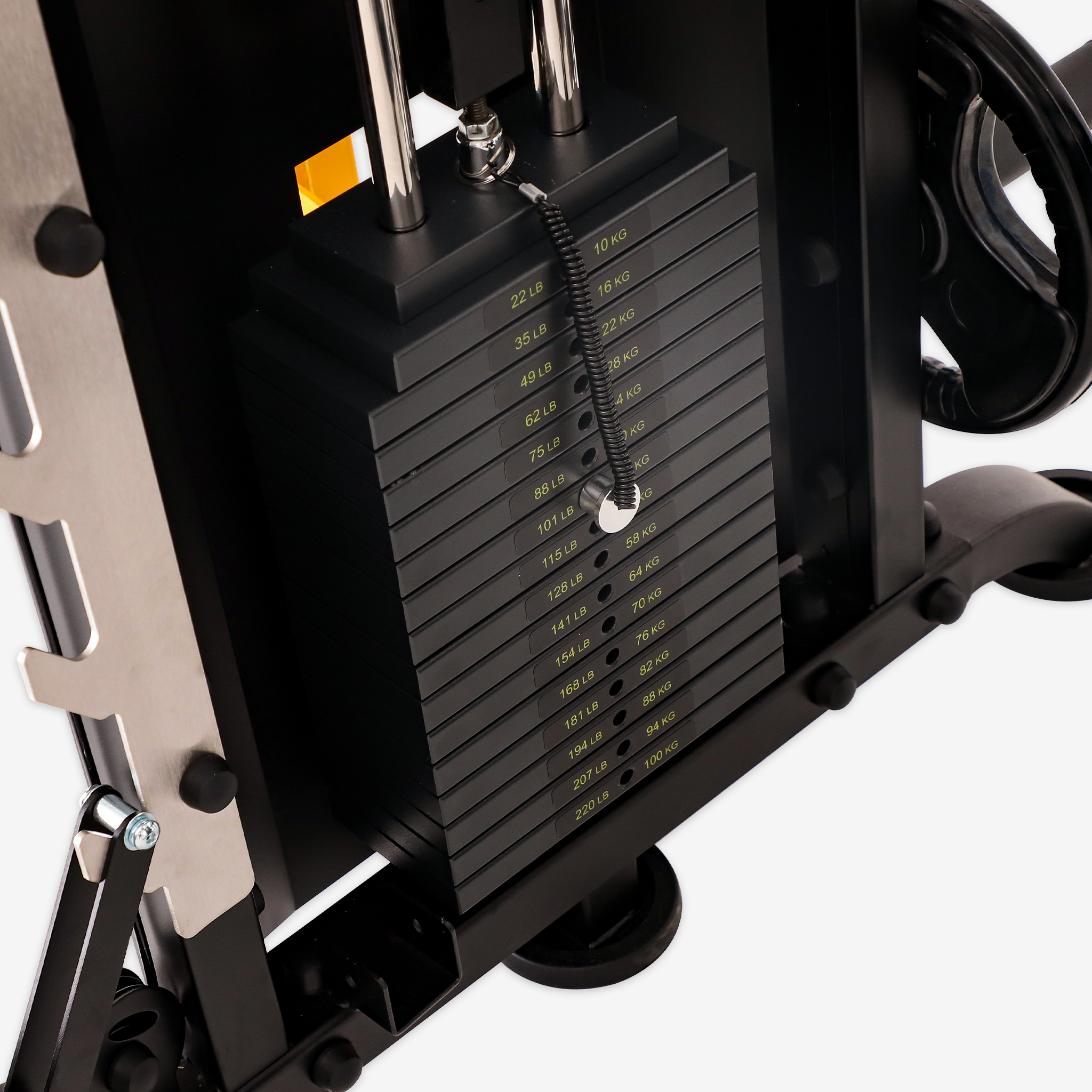
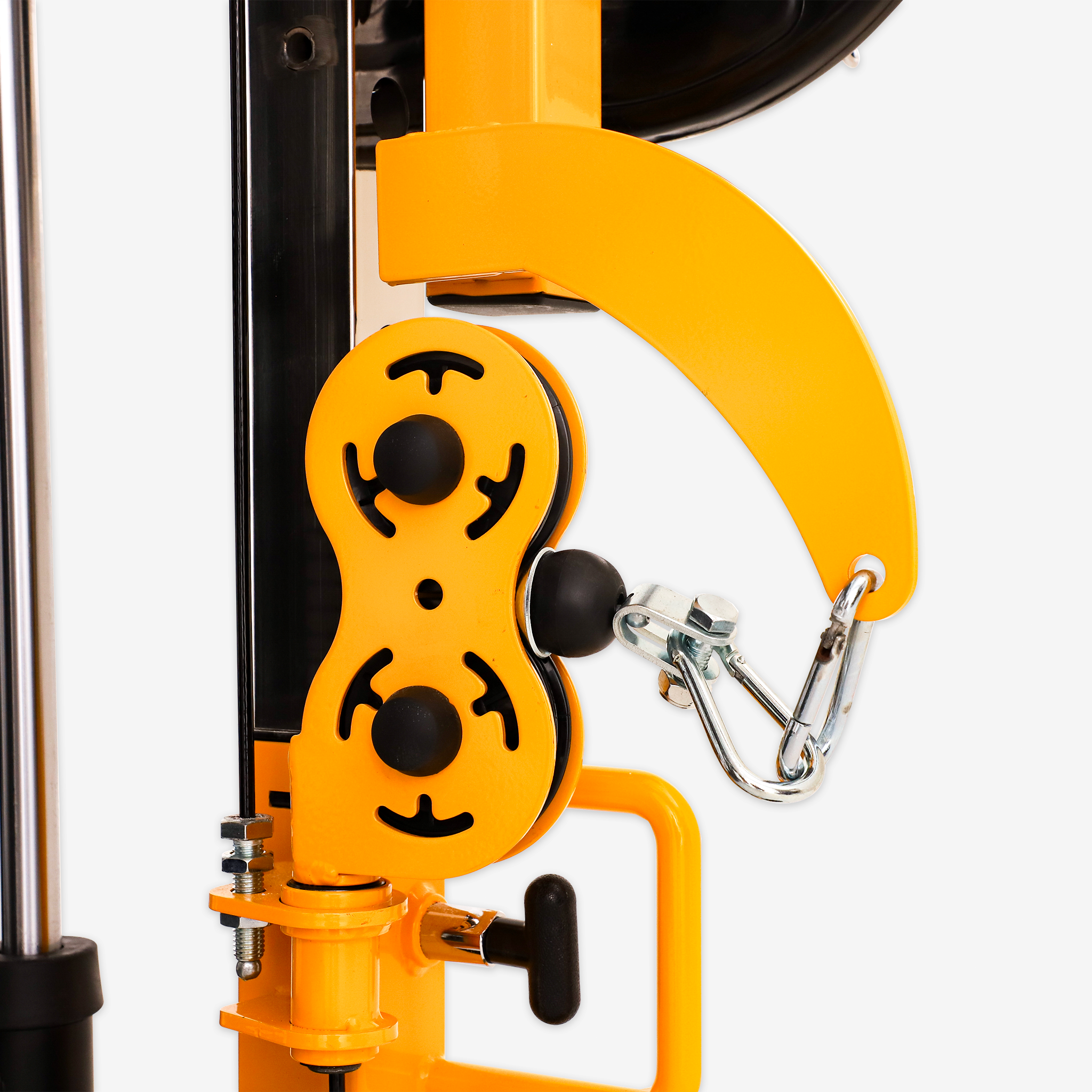
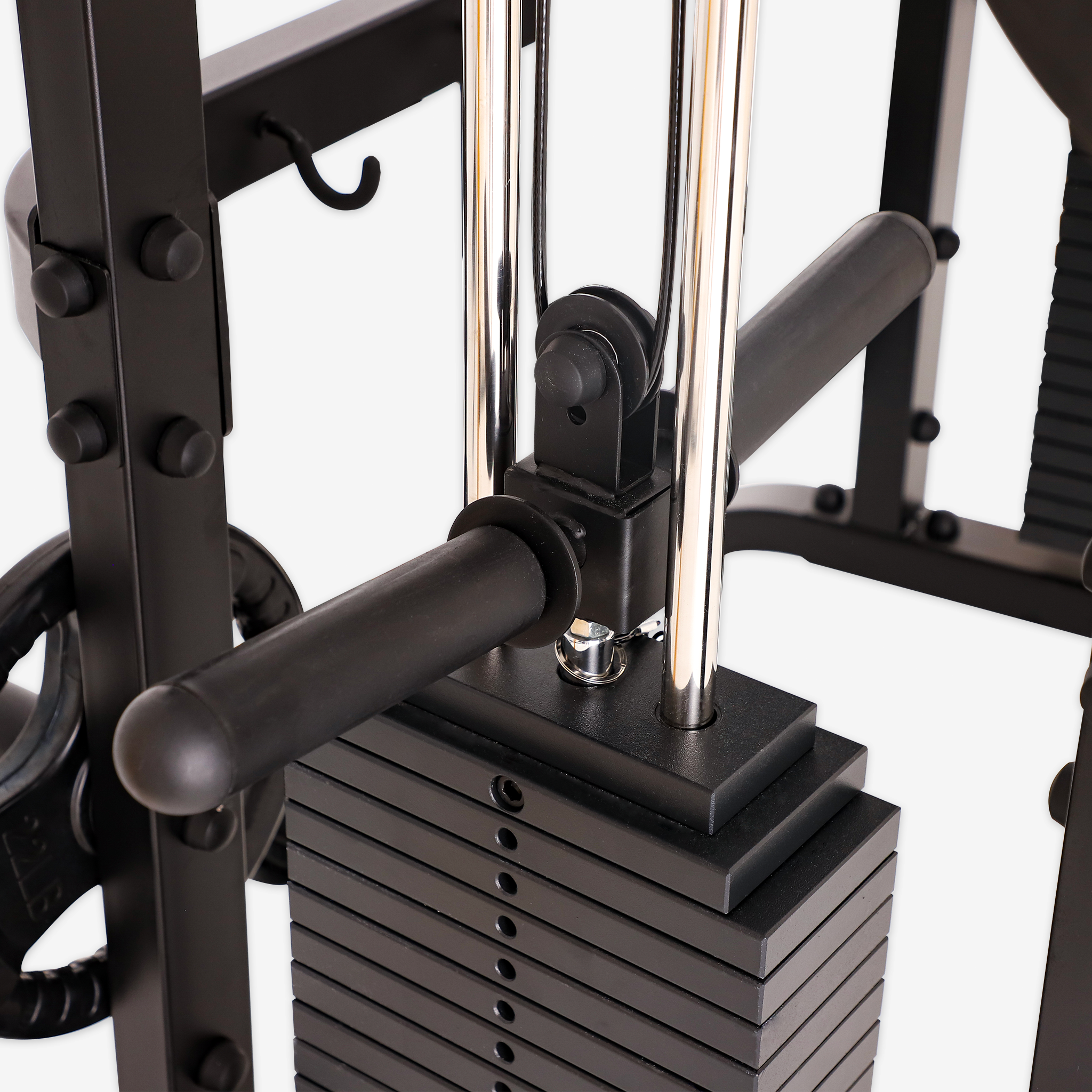
If the Smith machine is going to be the centerpiece of a home gym, consider whether it also supports squats, bench presses, cable exercises, pulldowns, rows, and other movements.
7. Overall Footprint
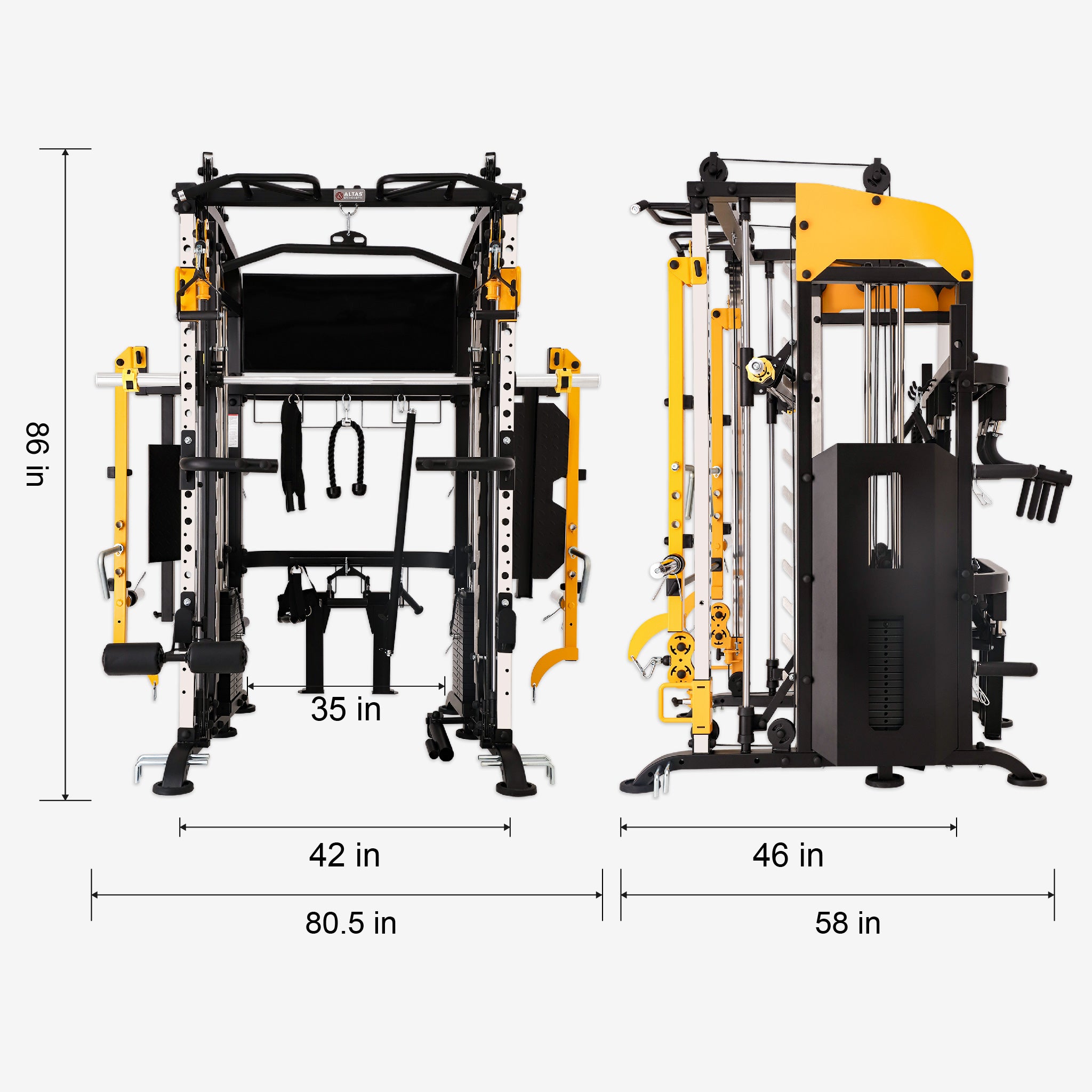
Measure the machine and the required training clearance before purchasing.
A machine that looks compact in product photos can still require substantial space once the user is exercising around it.
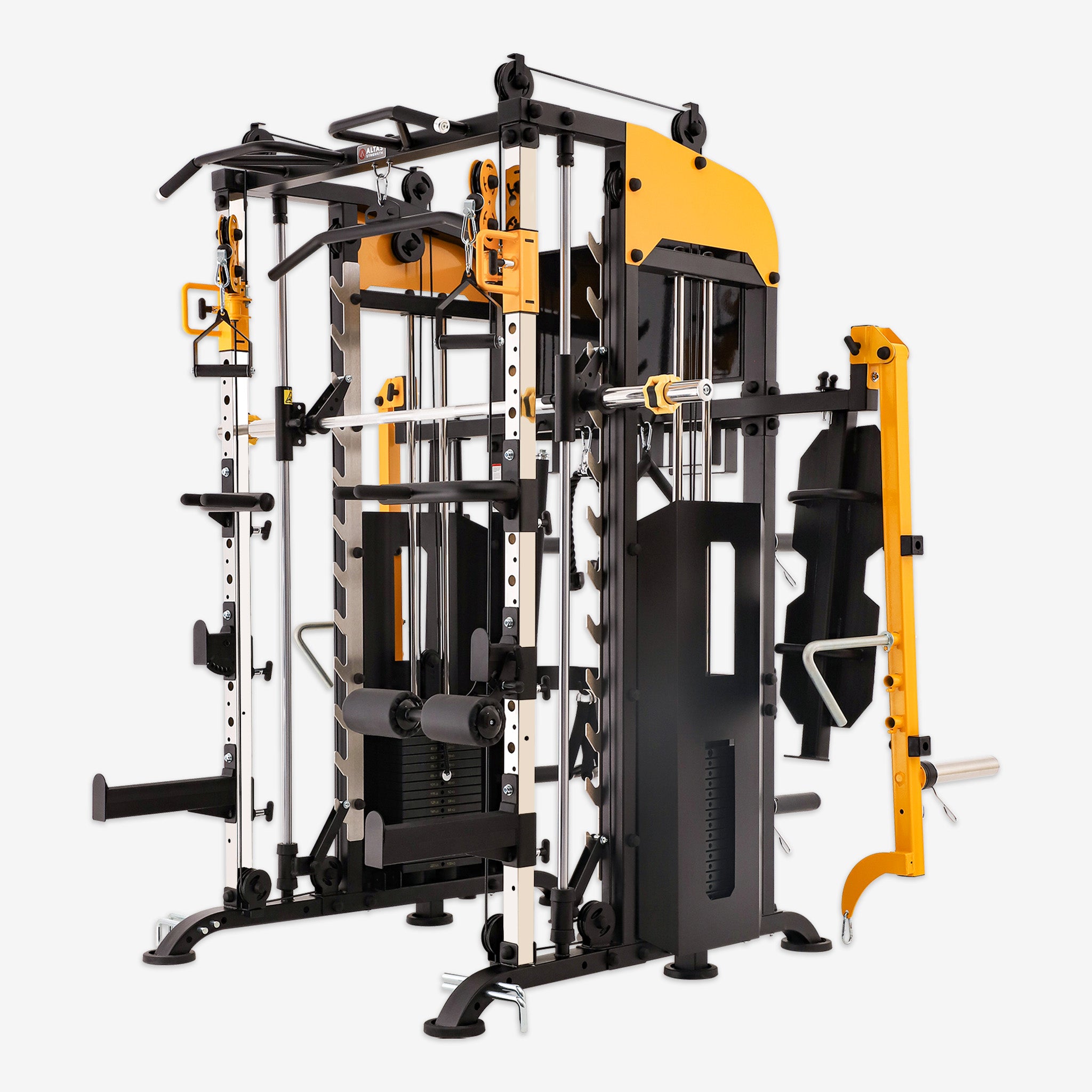
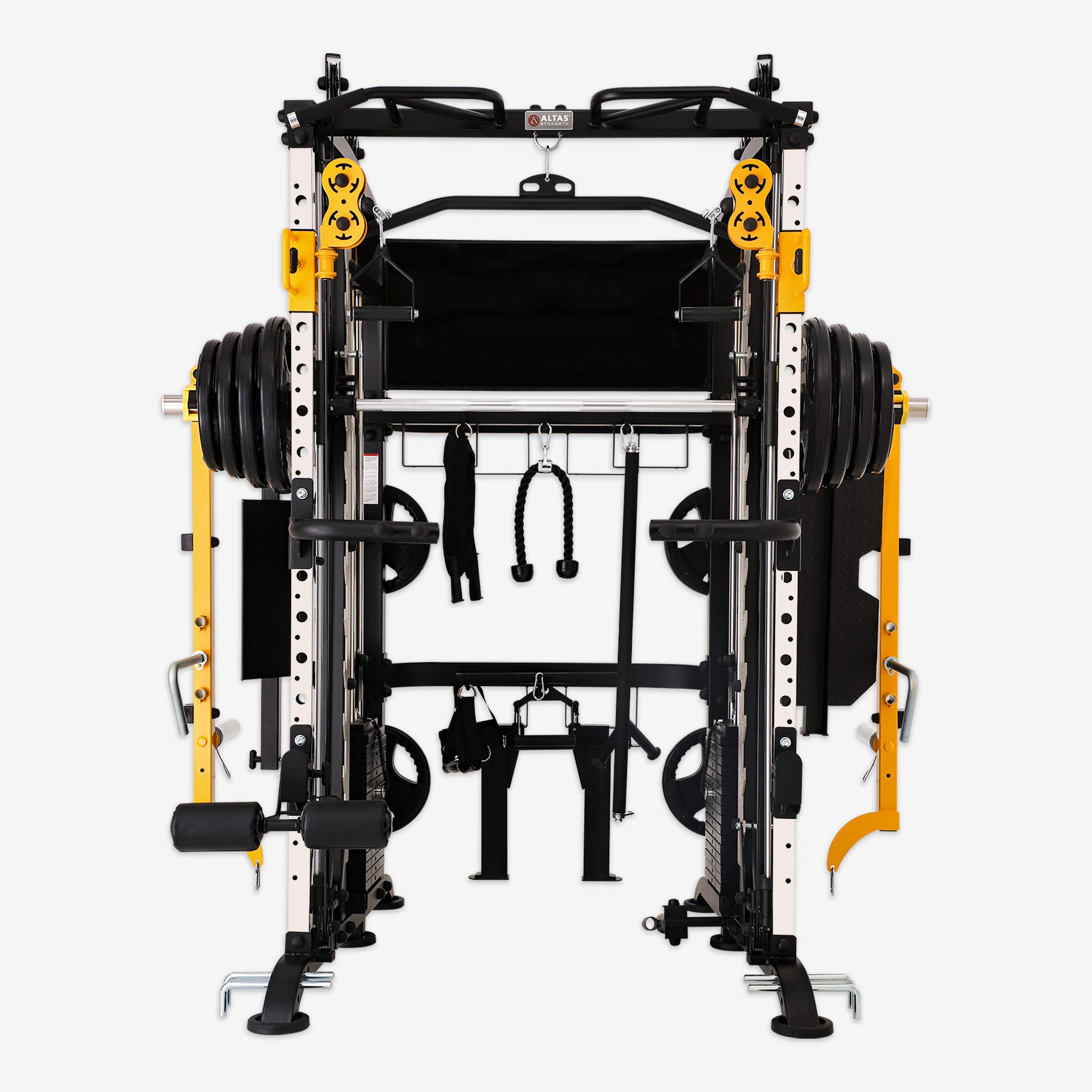
Why Consider Altas Strength?
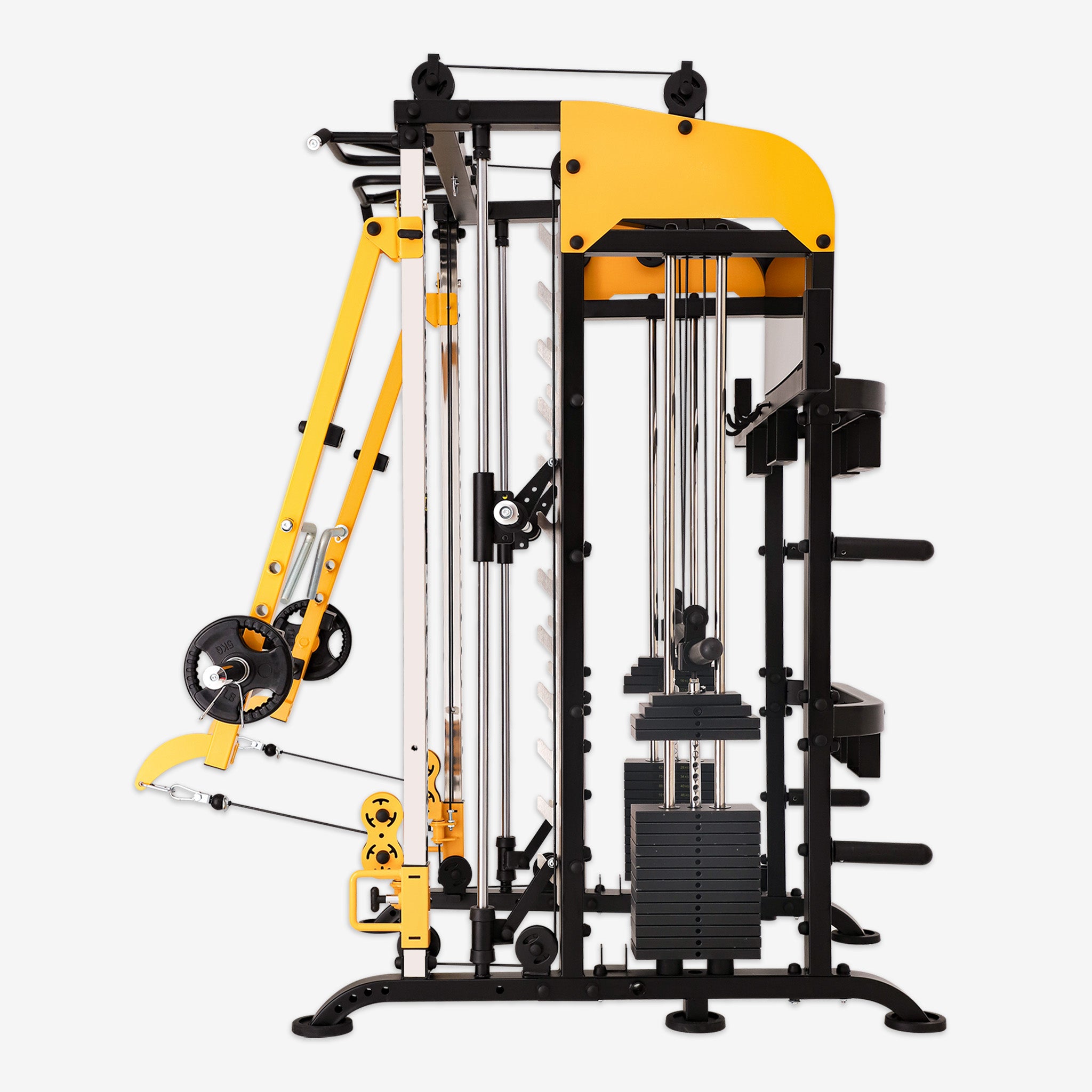
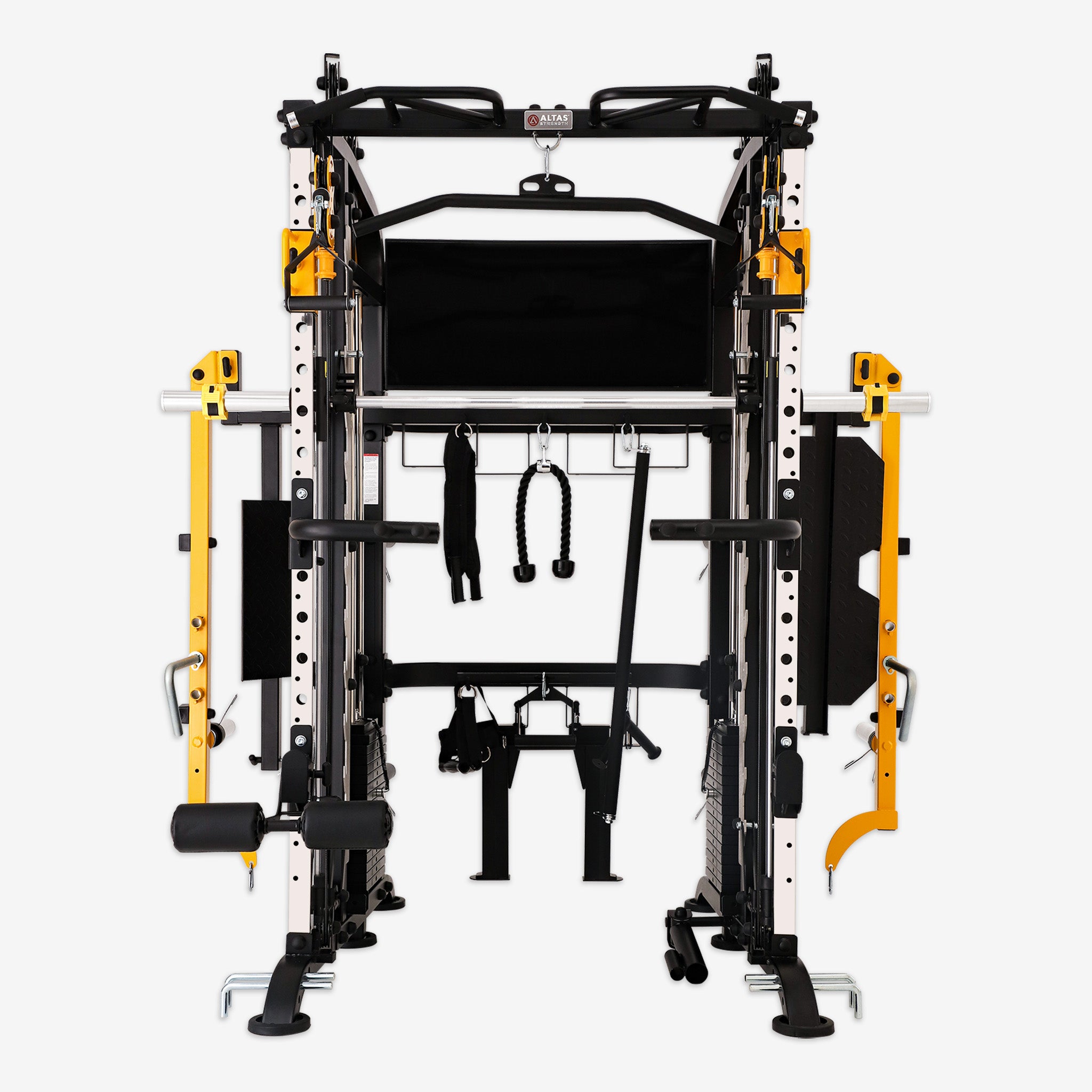
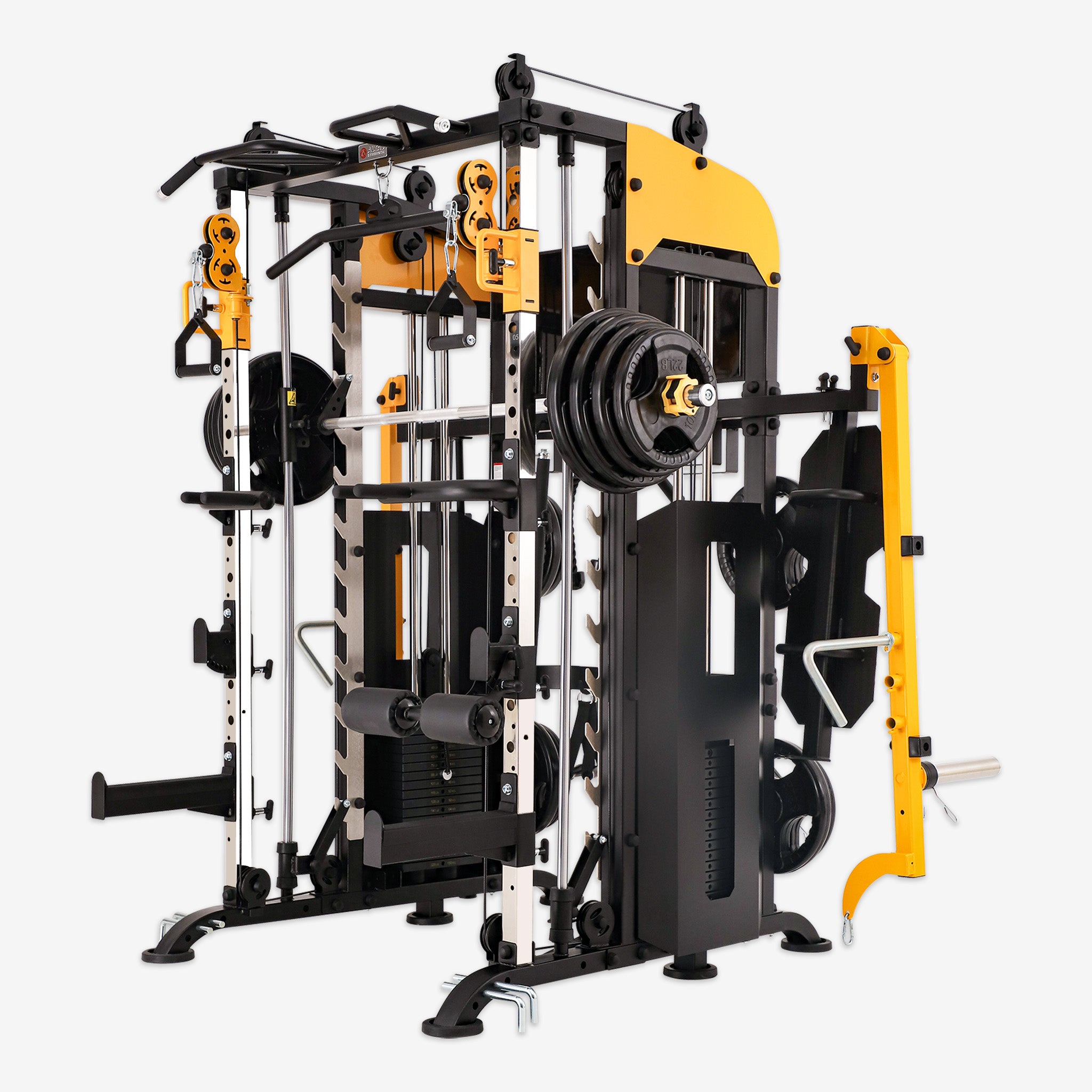
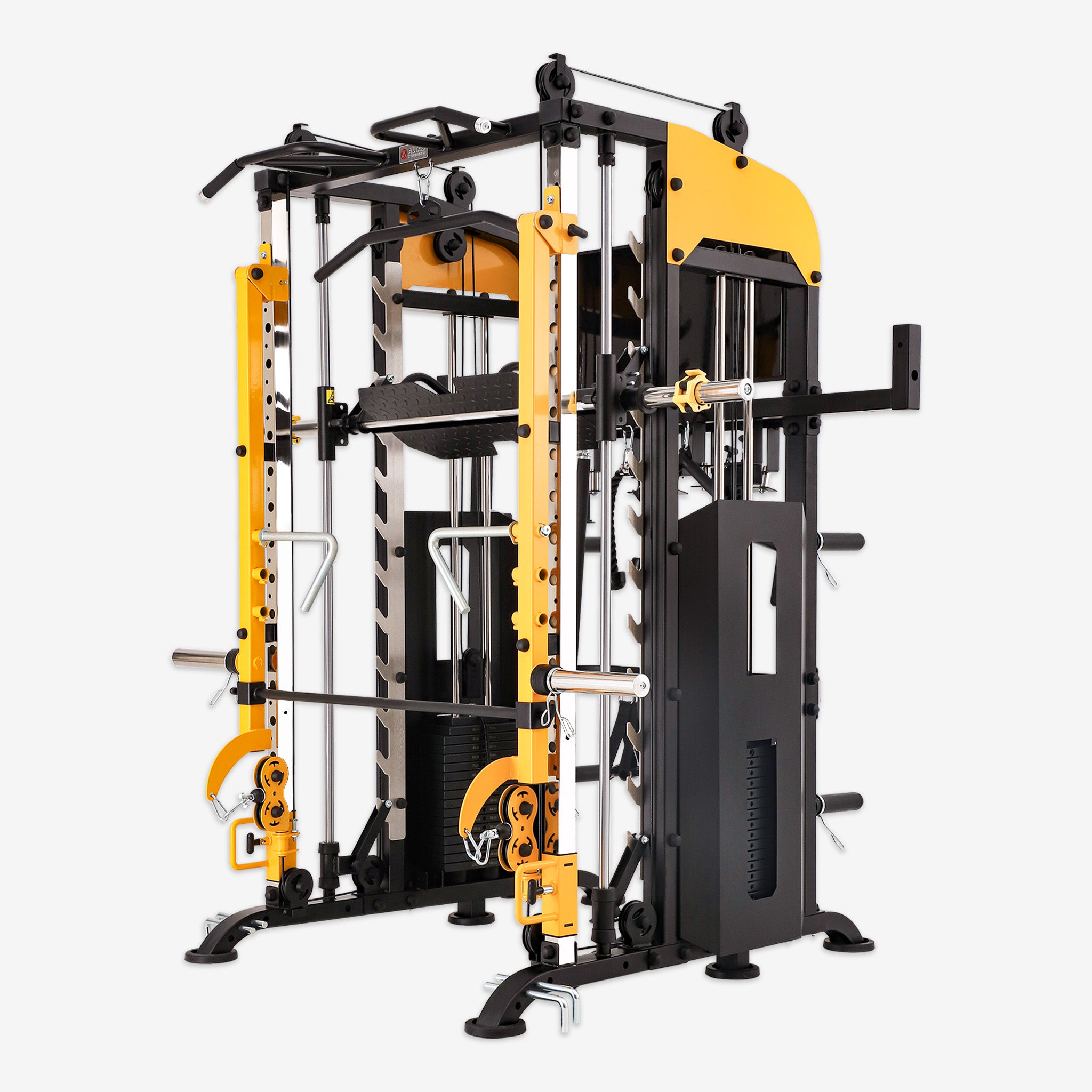
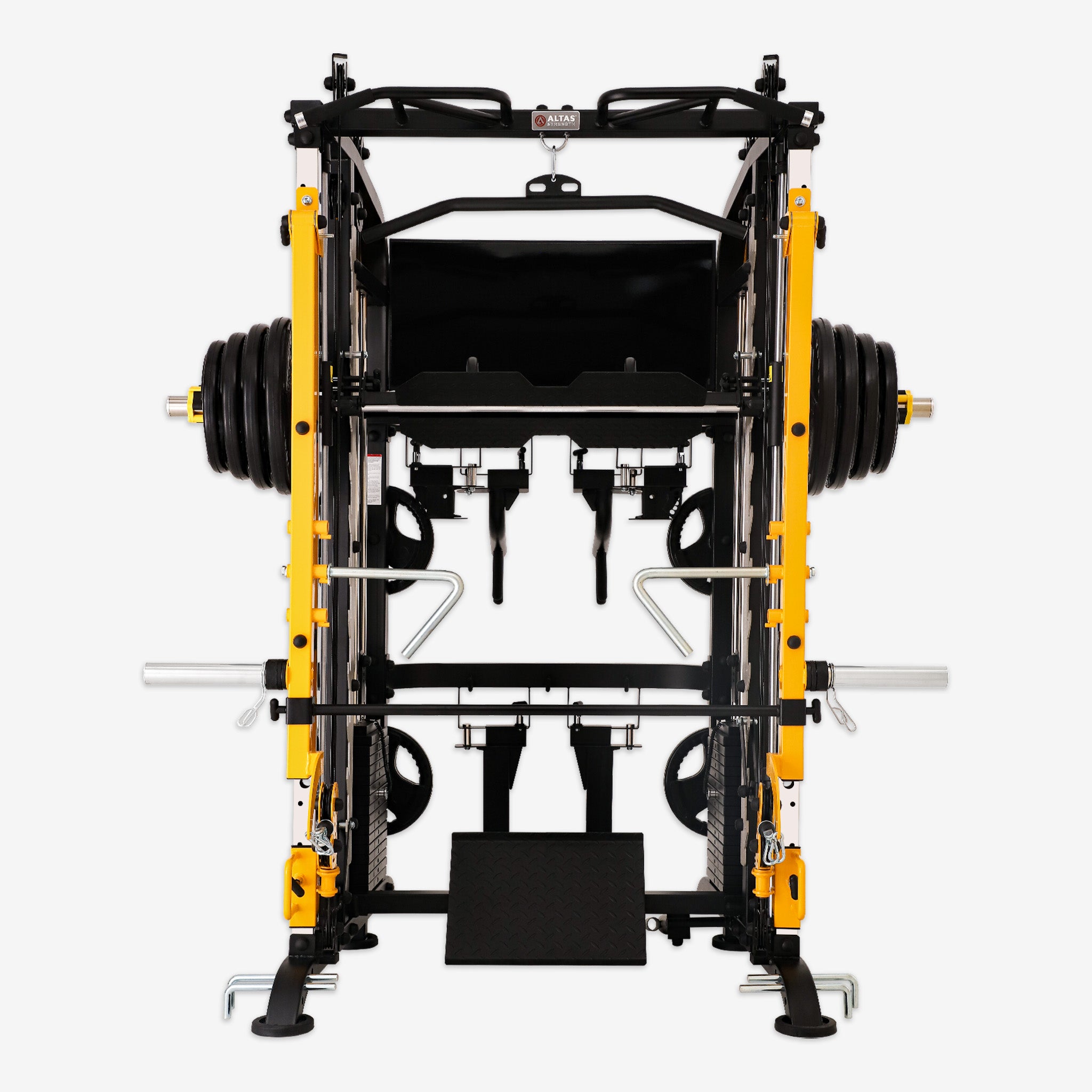
Altas Strength focuses on integrated strength-training equipment for home and light-commercial environments.
For buyers researching a Smith shoulder press, the value of an Altas Strength system is not limited to the shoulder press itself.
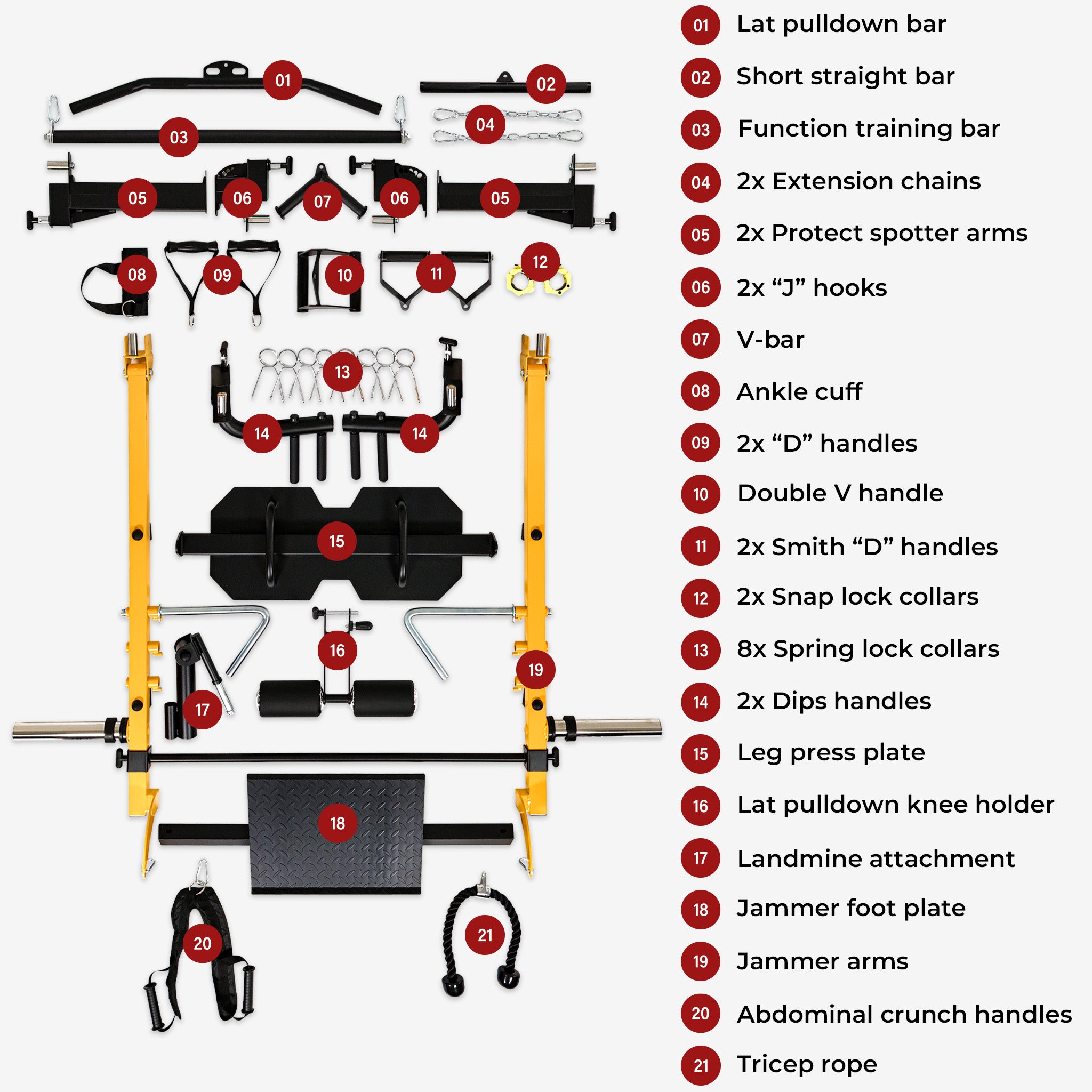
A multifunctional Smith system can potentially combine:
-
Smith machine pressing
-
Bench press
-
Squats
-
Overhead press
-
Lunges
-
Rows
-
Lat pulldowns
-
Cable exercises
-
Pull-ups
-
Additional accessory movements
This allows one central piece of equipment to support a broader training program.
The Altas Strength positioning emphasizes stable construction, guided Smith movement, safety systems, and multifunctional exercise capability. These are the same factors buyers should evaluate when comparing a Smith shoulder press with free weights or dedicated shoulder machines.
Final Takeaway
A Smith shoulder press can be an effective choice for lifters who prioritize stability, repeatability, and controlled overhead pressing.
Its biggest advantage is the guided bar path.
Its biggest limitation is also the guided bar path.
The machine reduces some stabilization demands and can make solo training and progressive pressing more straightforward. At the same time, it provides less movement freedom and does not reproduce the exact demands of a free-weight overhead press.
The best choice depends on your goal:
For controlled shoulder-focused training: a Smith shoulder press can be highly practical.
For free-weight stabilization and unrestricted movement: use a barbell or dumbbells.
For unilateral pressing: dumbbells or an iso-lateral machine may be better.
For maximum home gym versatility: consider a multifunctional Smith machine that combines pressing with cable and lower-body training.
Ultimately, the best Smith shoulder press is not simply the one with the highest weight capacity or the most attachments.
It is the system that provides the right combination of movement feel, safety, stability, adjustability, exercise versatility, and long-term value for your training goals.