If you are researching Smith machine weight, you may actually be asking two different questions:
How much does a Smith machine weigh?
And:
How much weight can a Smith machine hold?
These are important but different measurements.
The total weight of the machine describes how heavy the equipment is to install and move. The weight capacity describes how much resistance the Smith machine is designed to support.
For home gym buyers, both matter.
A heavier frame can contribute to stability, but it can also make installation and relocation considerably more difficult. A high weight rating can support long-term strength progression, but it does not automatically mean the machine is the right choice for every user.
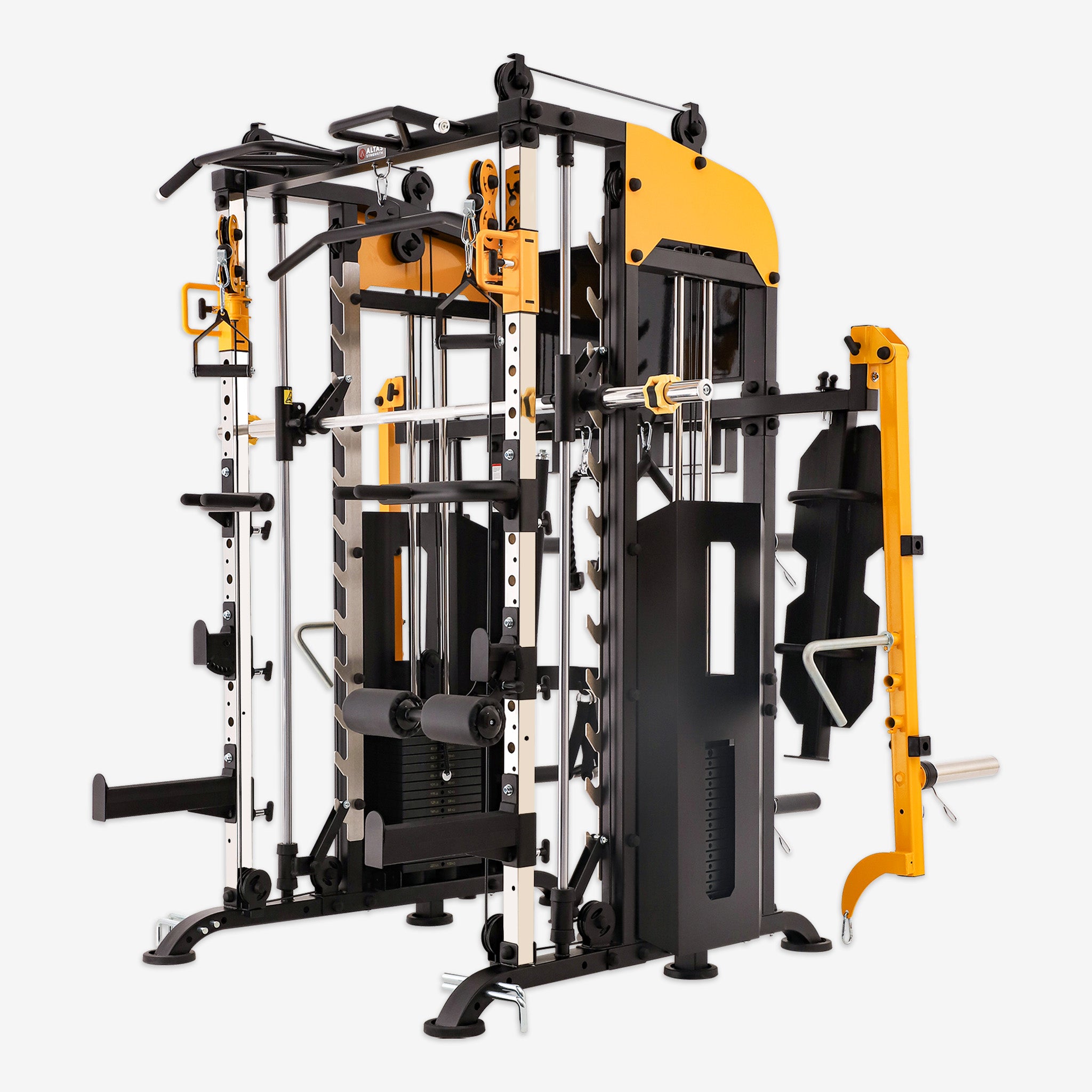
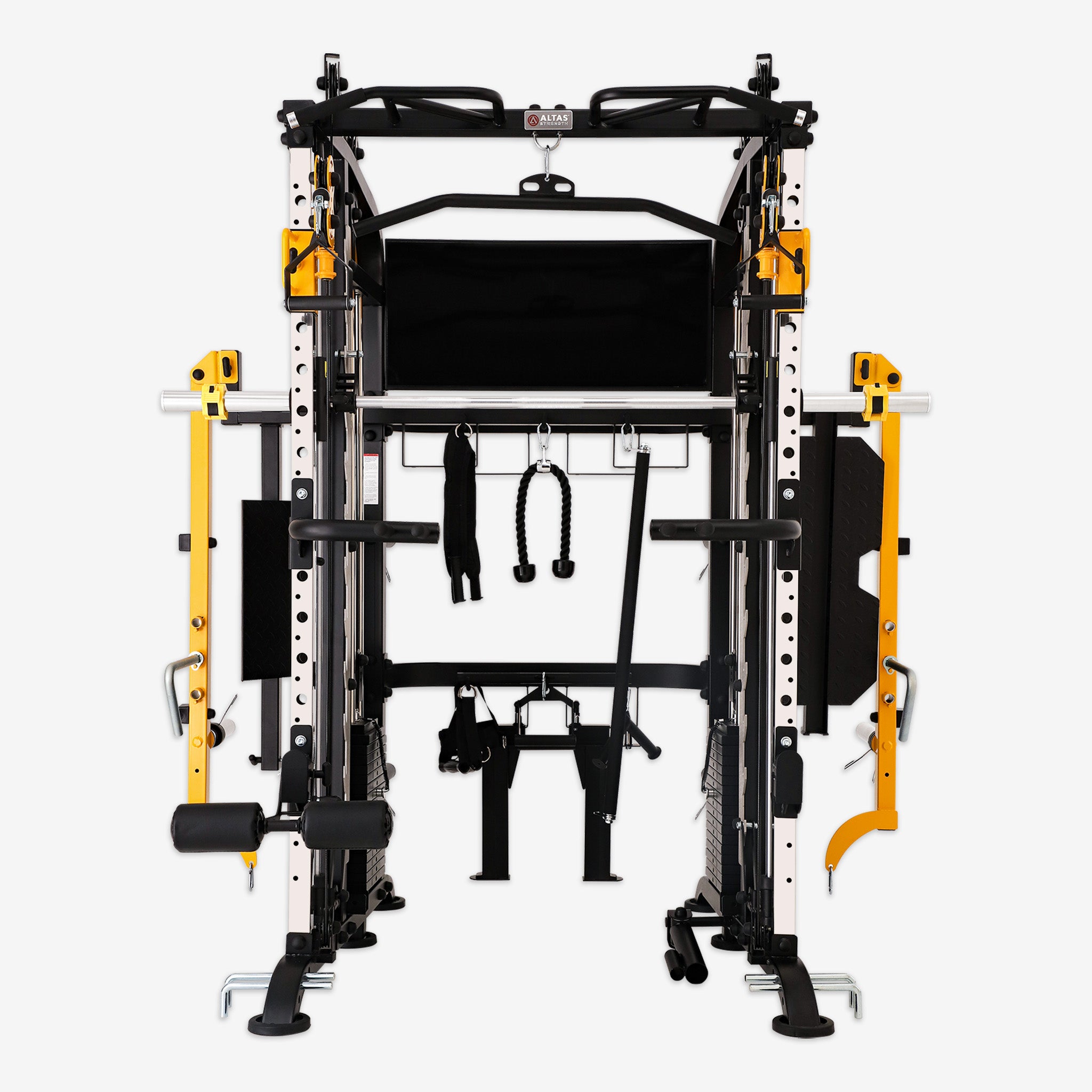
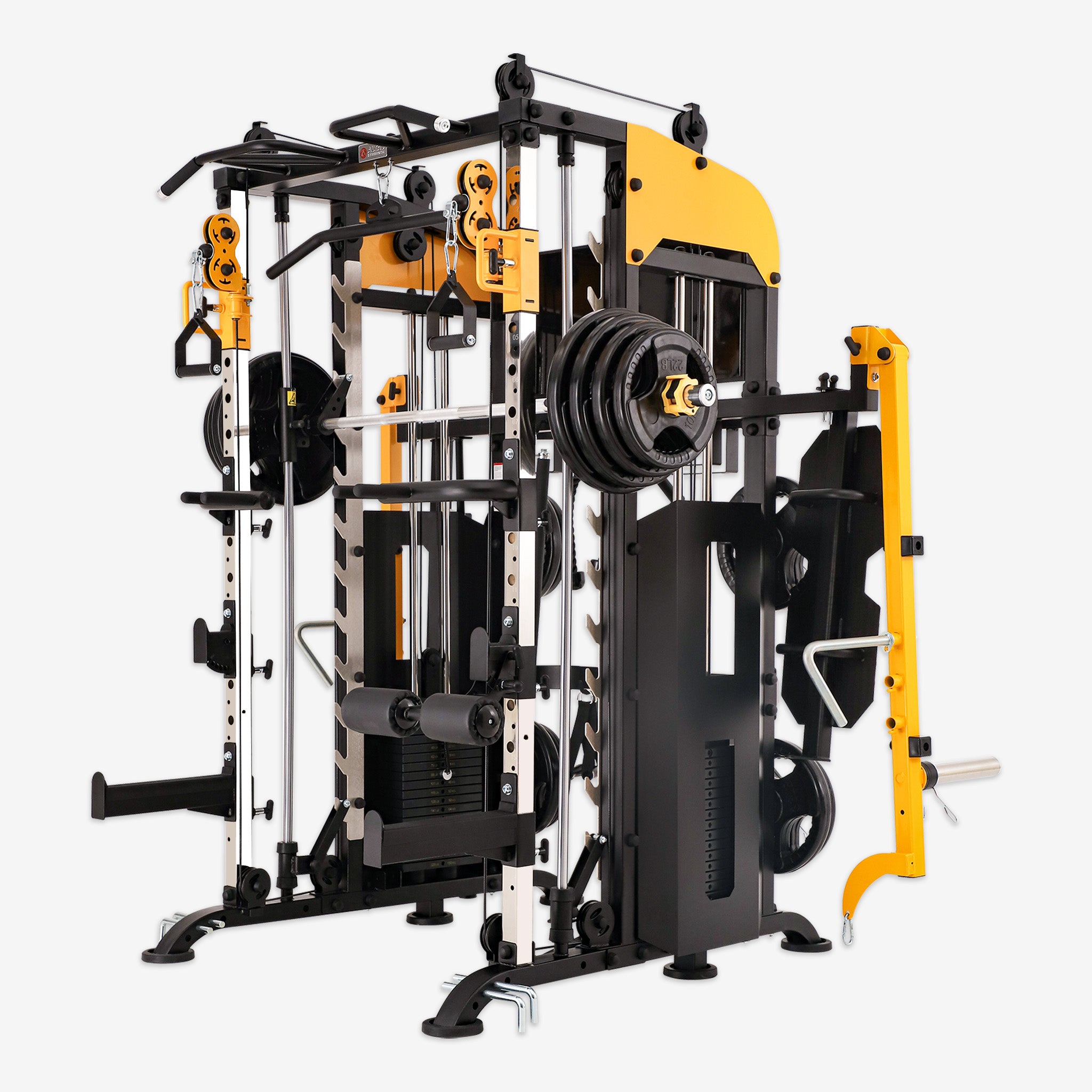
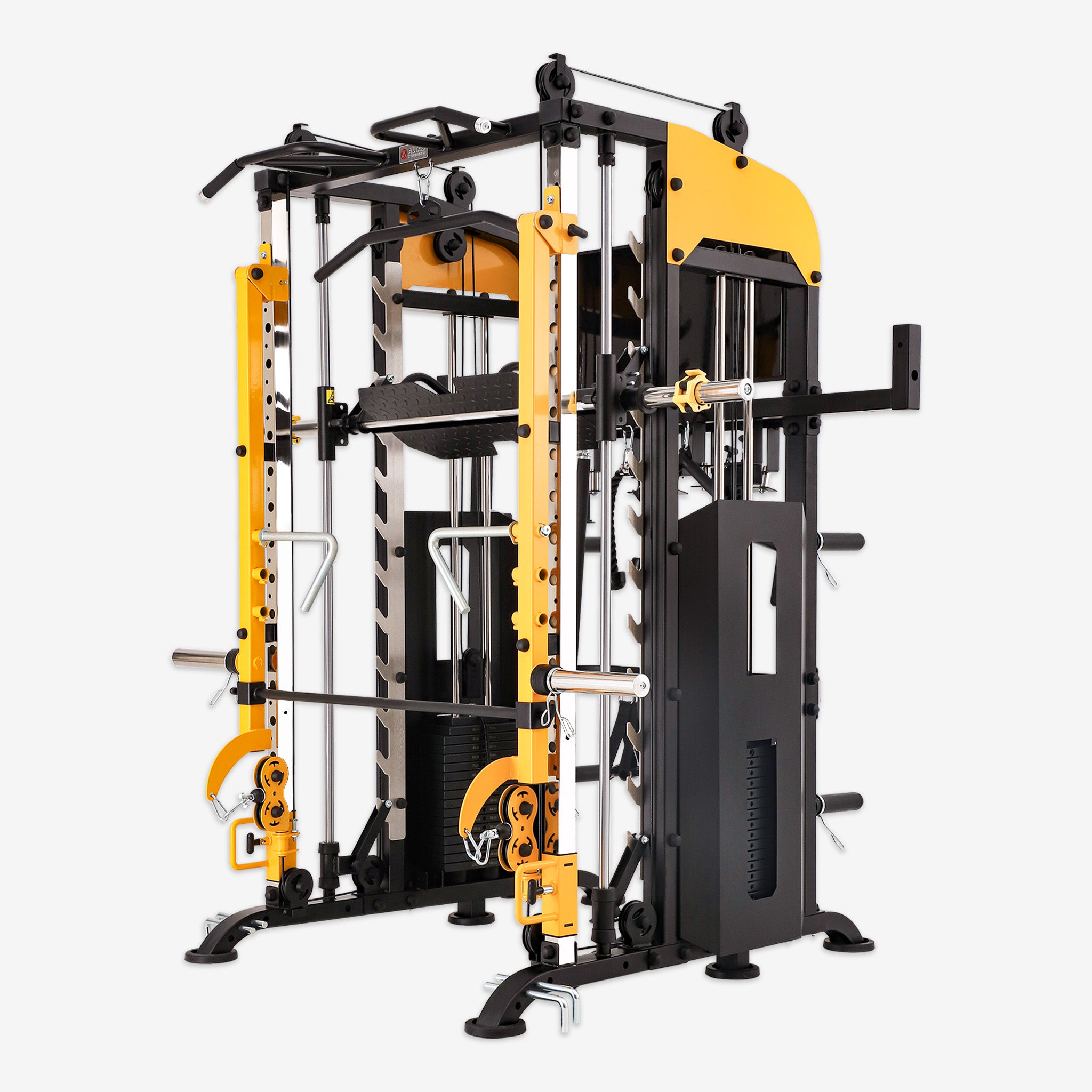
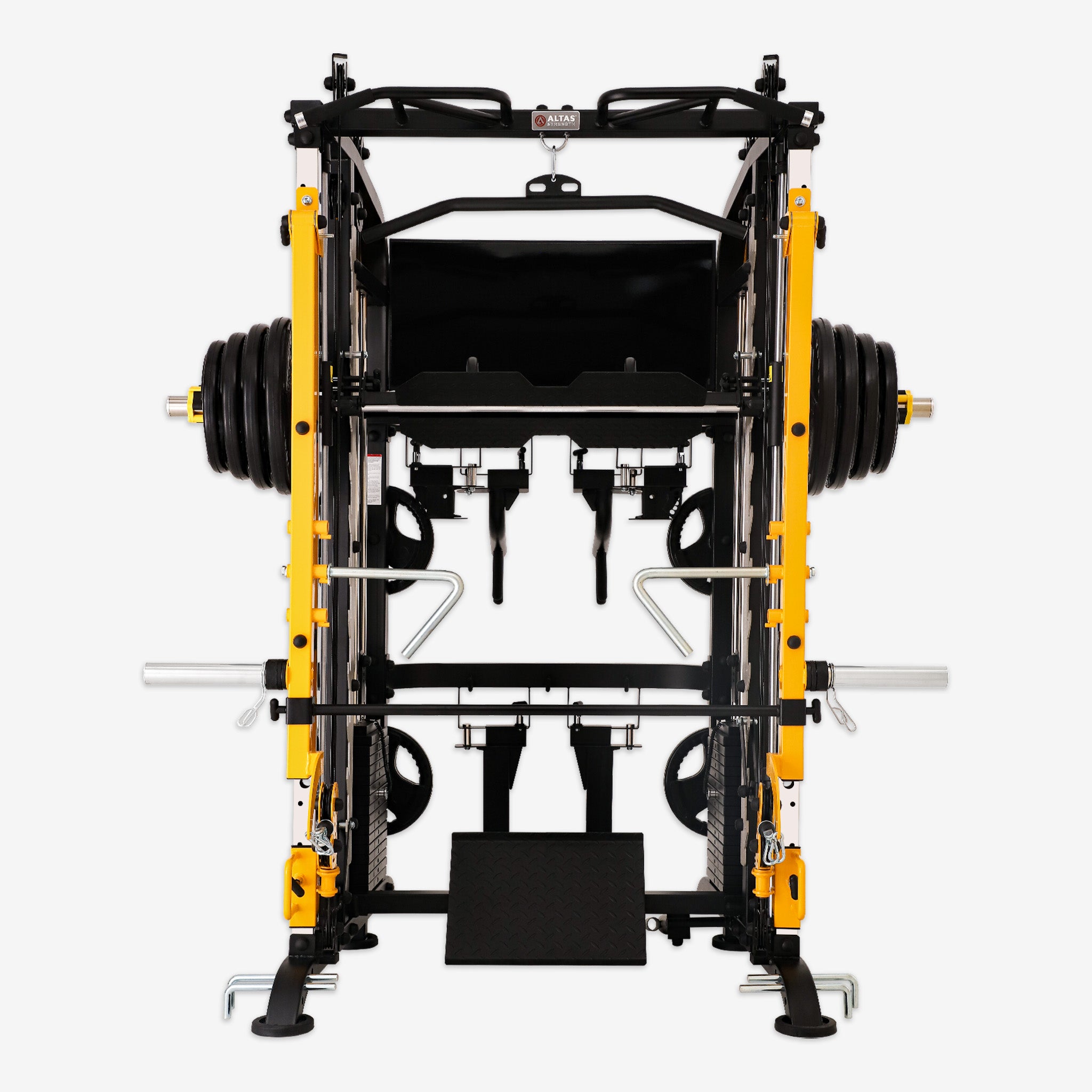
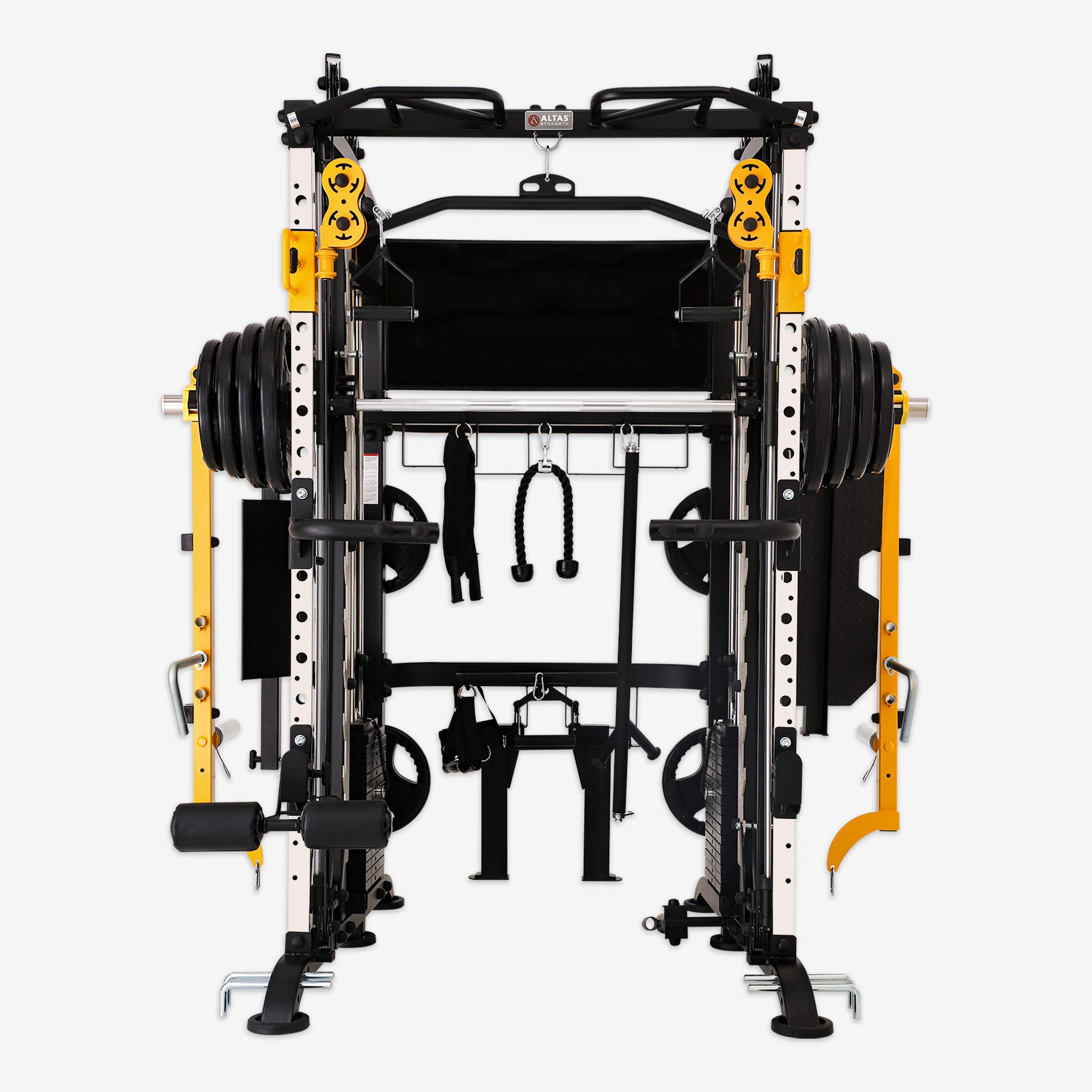
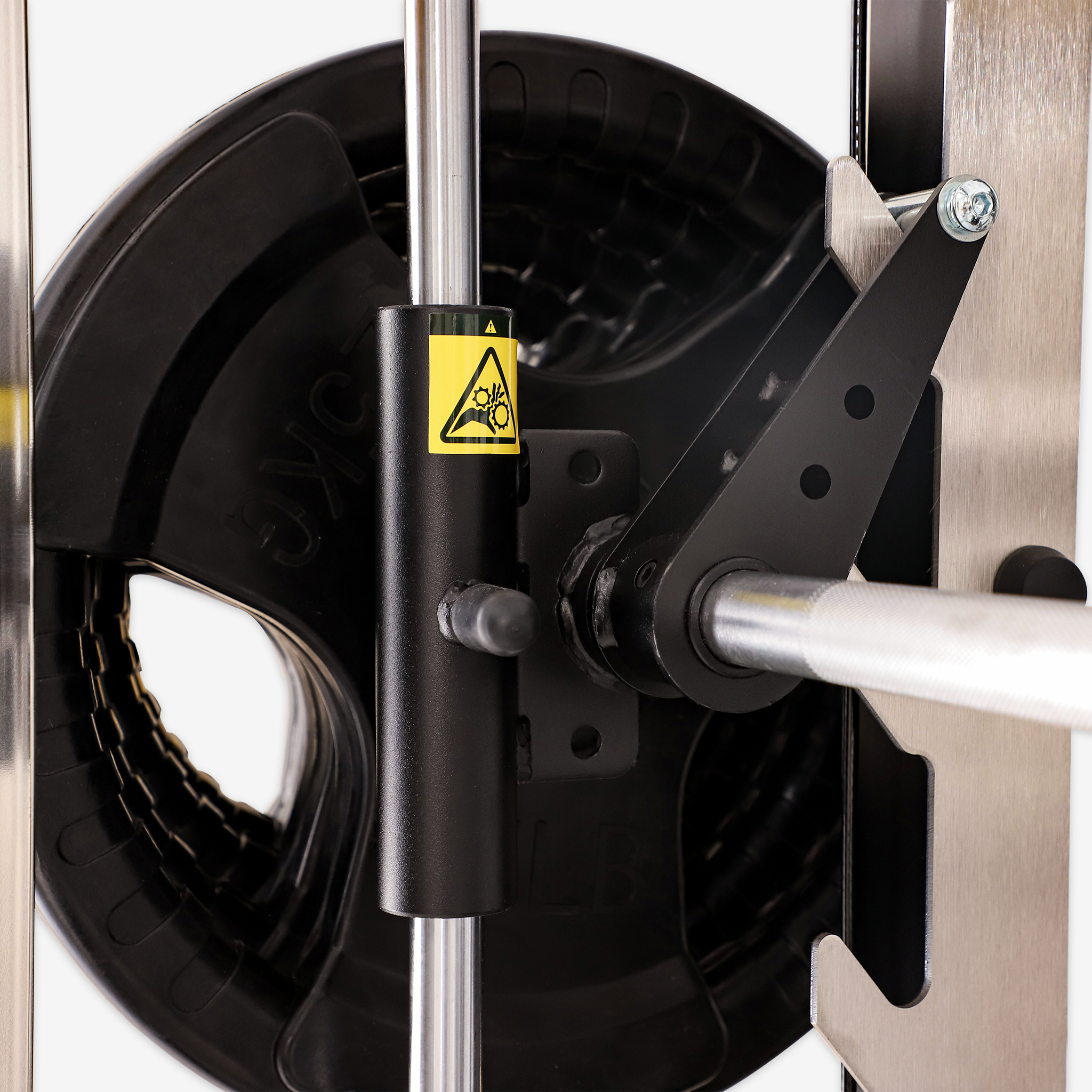
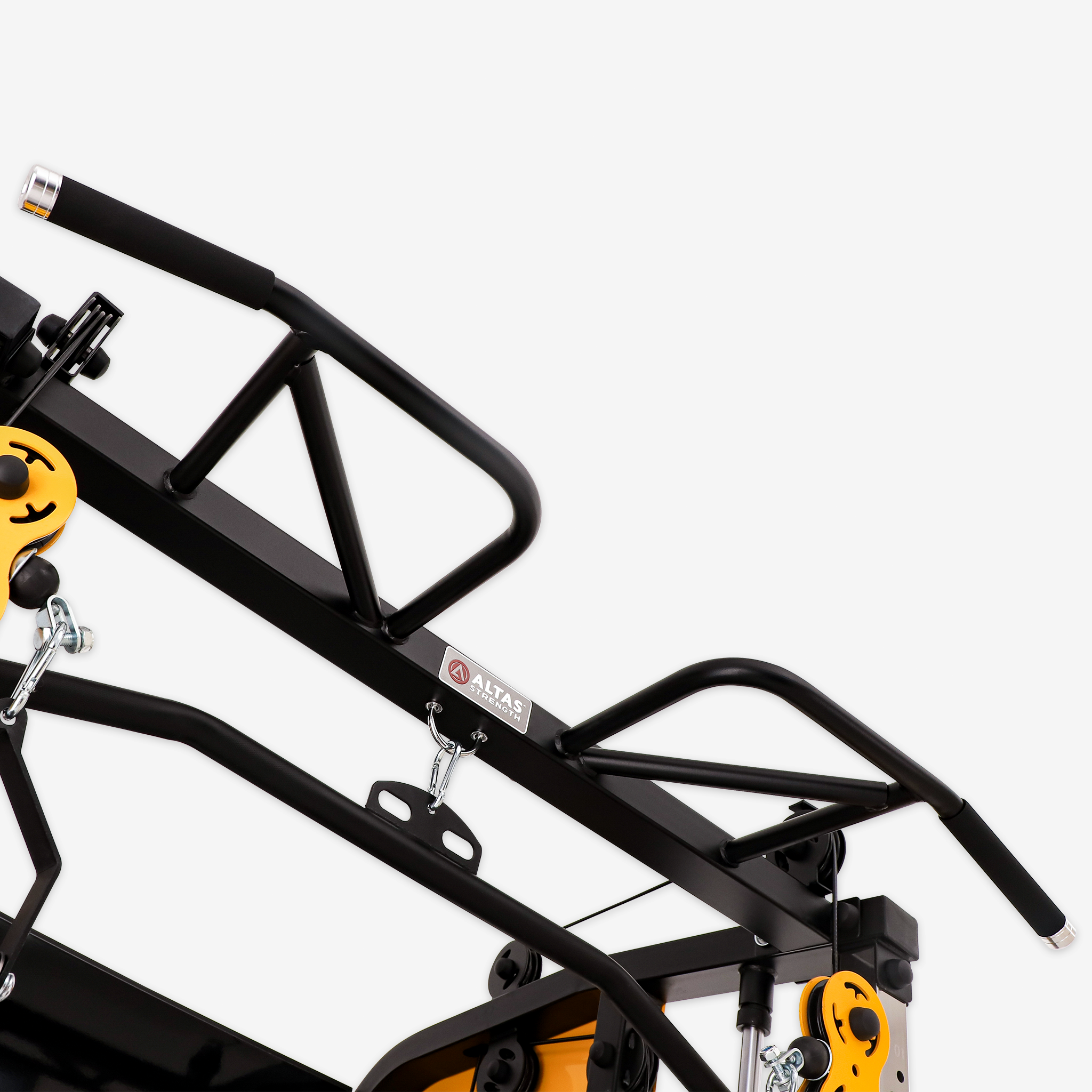
Altas Strength Smith machines are positioned around heavy-duty construction, substantial frame mass, guided bar movement, and high load capacity. The right model, however, depends on your available space, training goals, installation environment, and expected training loads.
How Much Does a Smith Machine Weigh?
There is no universal Smith machine weight.
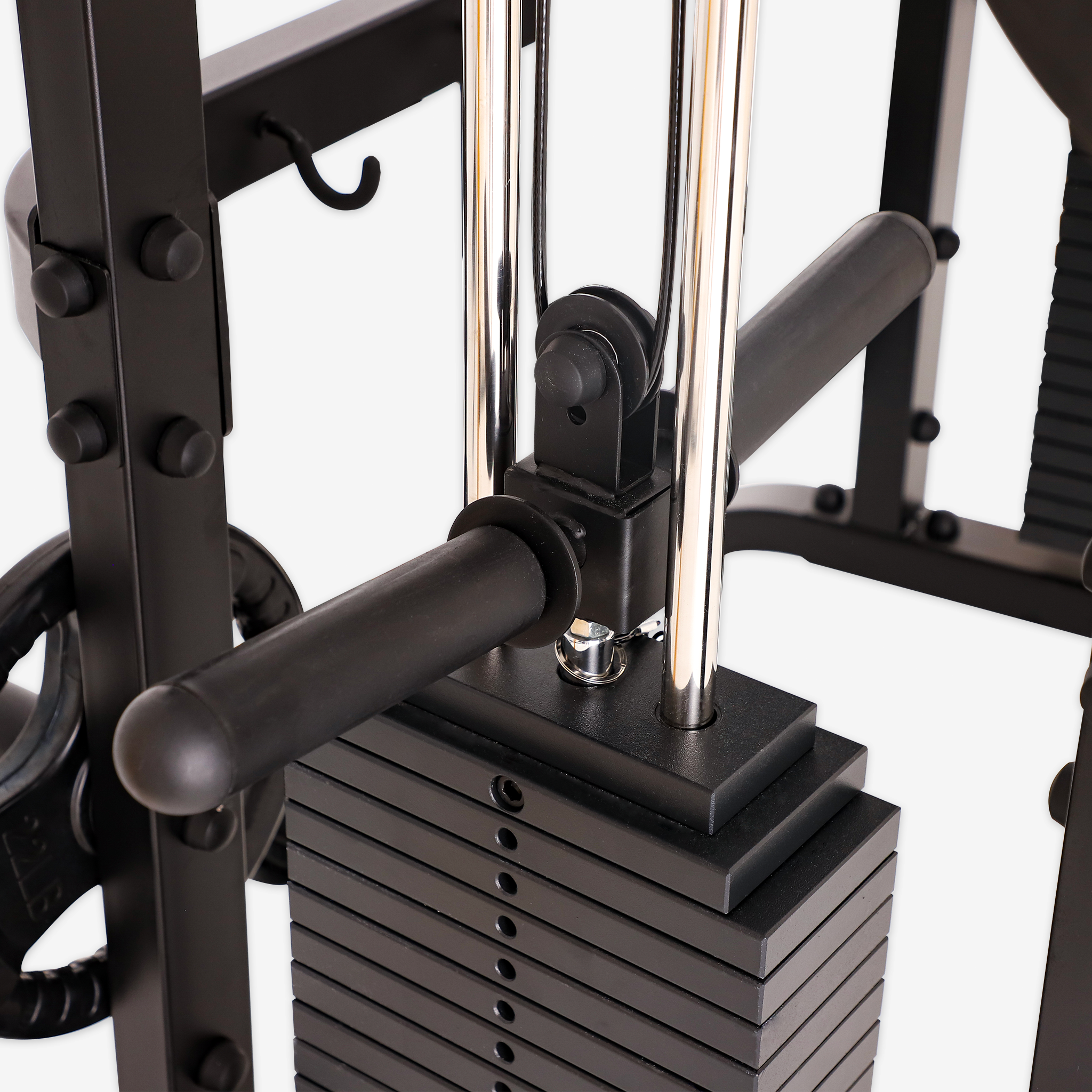
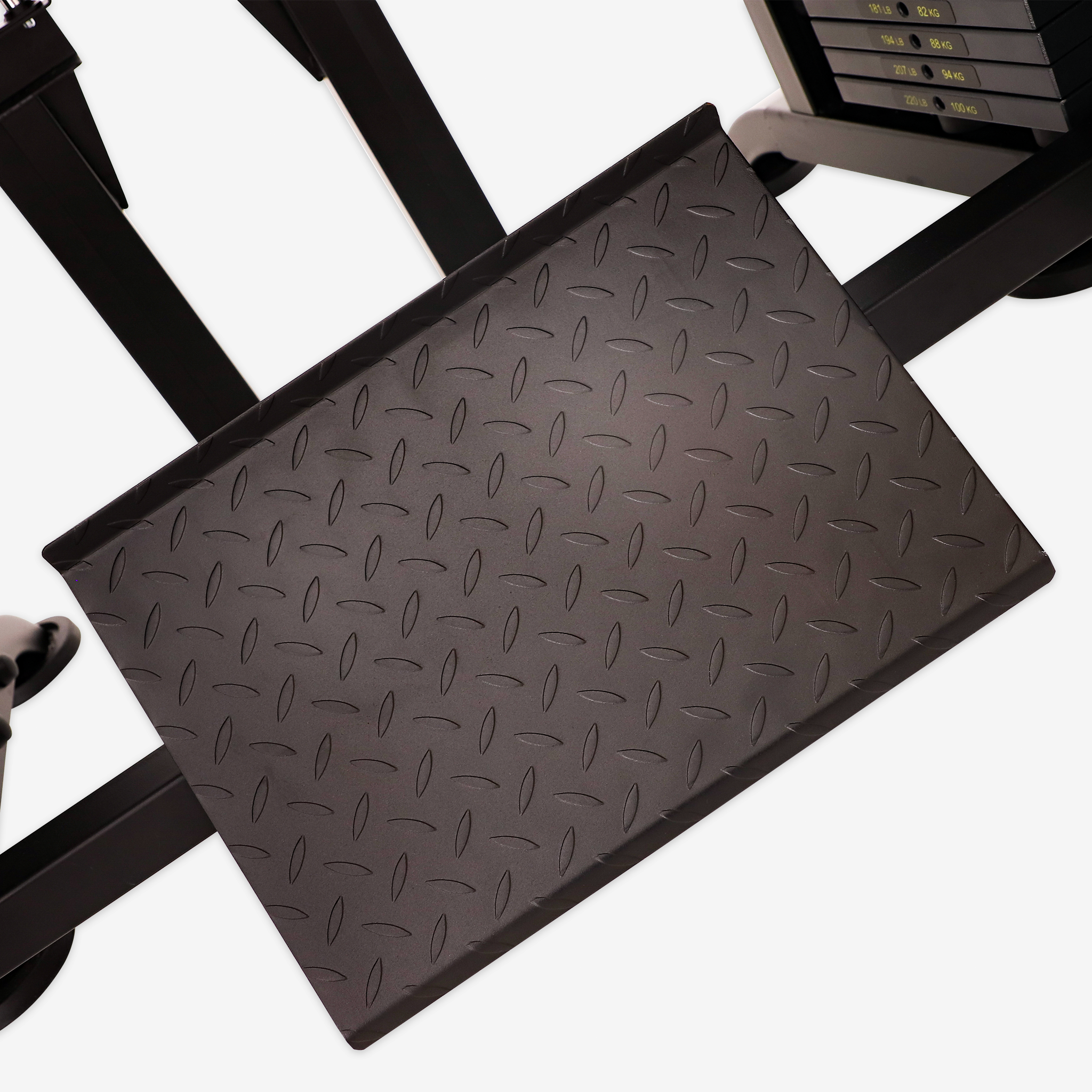
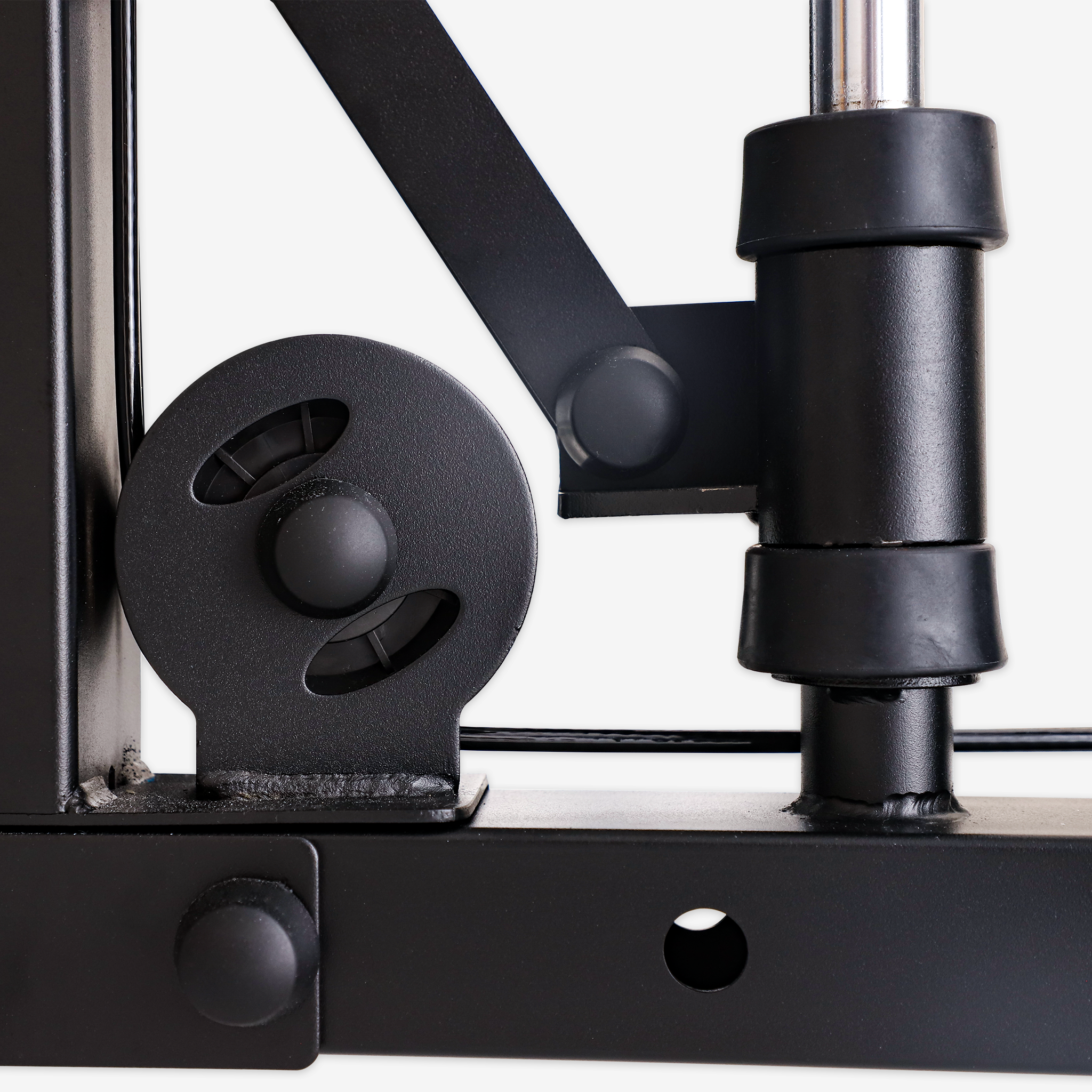
Different models can vary significantly depending on their frame size, steel construction, cable system, weight stacks, accessories, and integrated functions.
According to the Altas Strength specifications provided for this guide, some flagship models have a total machine weight in approximately the 990–1,020 lb range.
That places these systems substantially above lightweight residential Smith machines.
The extra mass is intentional.
A large, rigid frame can provide a more stable platform for exercises such as:
-
Smith machine squats
-
Bench press
-
Shoulder press
-
Lunges
-
Rows
-
Cable exercises
-
Lat pulldowns
However, machine weight should not be viewed as a standalone quality score.
A heavier machine is not automatically better for every home gym.
Why Does Smith Machine Weight Matter?
Machine weight matters primarily because it affects stability, installation, floor requirements, and mobility.
Stability During Heavy Training
A substantial frame can help keep the machine planted during loaded movements.
This is particularly important when the equipment is used for heavy compound exercises.
A lightweight frame may be more convenient to move, but excessive movement or flex can make a machine feel less stable during demanding workouts.
For users planning long-term strength training, frame rigidity can therefore be more important than portability.
Installation Requirements
The downside is straightforward:
A heavy Smith machine is difficult to install.
Large commercial-style systems may require multiple people for assembly and positioning.
Once installed, they should generally be treated as relatively permanent equipment rather than something that can easily be moved around a room.
Floor Considerations
Before purchasing a heavy Smith machine, consider the floor beneath it.
A large machine concentrates substantial weight across its support points.
Appropriate gym flooring can help protect residential surfaces and provide a suitable training environment. Buyers should also consider the construction of their particular floor and follow the manufacturer's installation recommendations.
How Much Weight Can a Smith Machine Hold?
Machine weight and weight capacity are not the same thing.
A Smith machine can weigh hundreds of pounds while having a substantially higher rated training capacity.
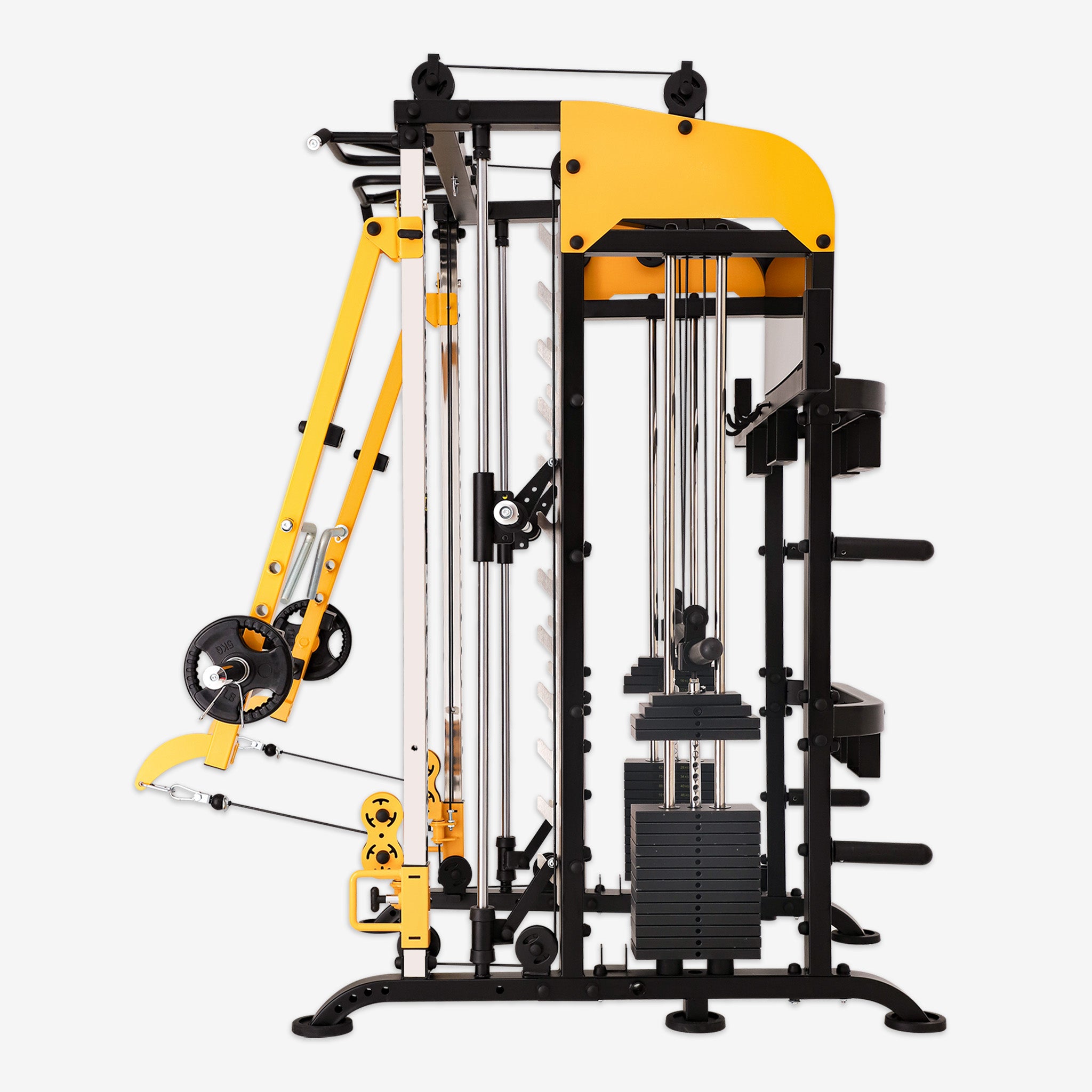
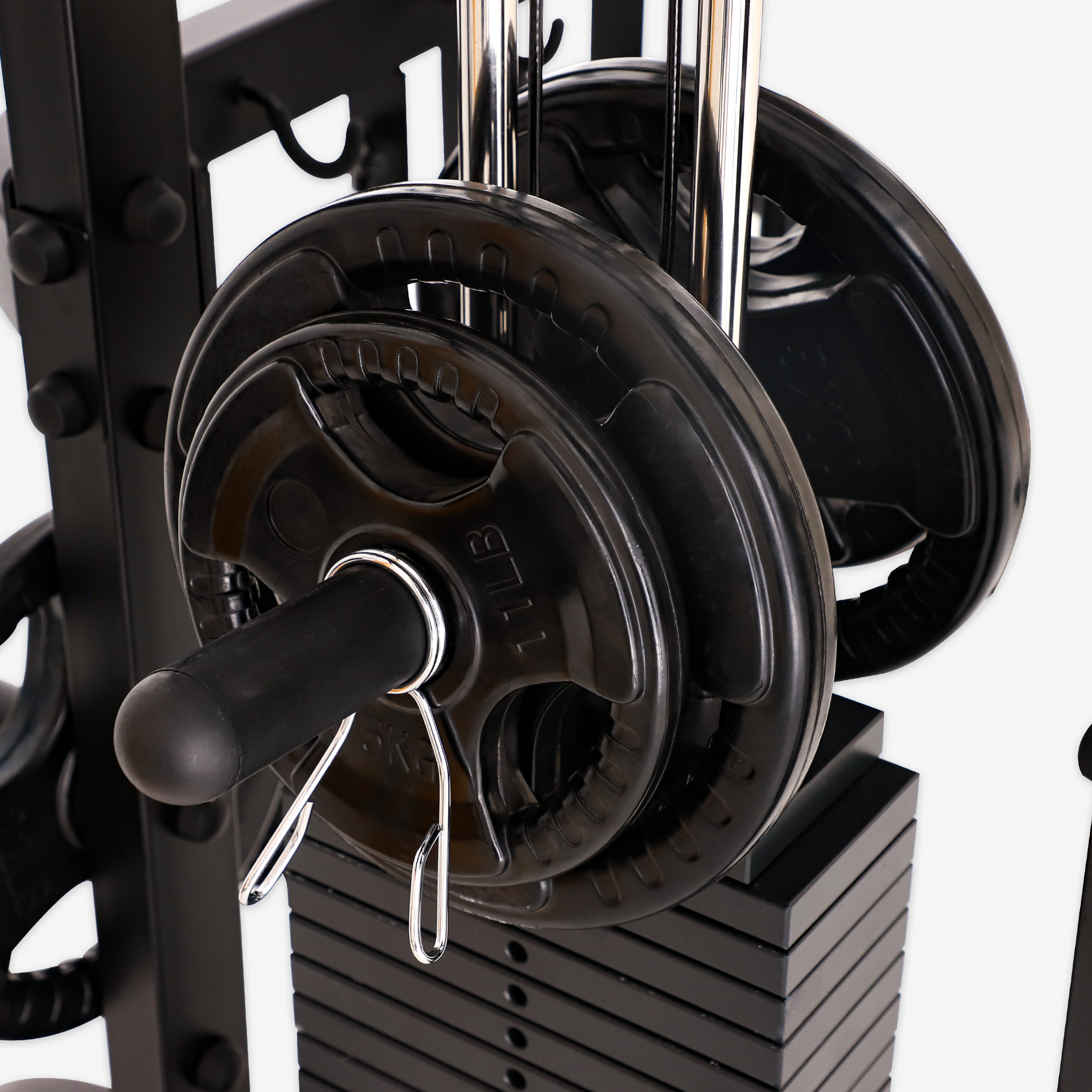
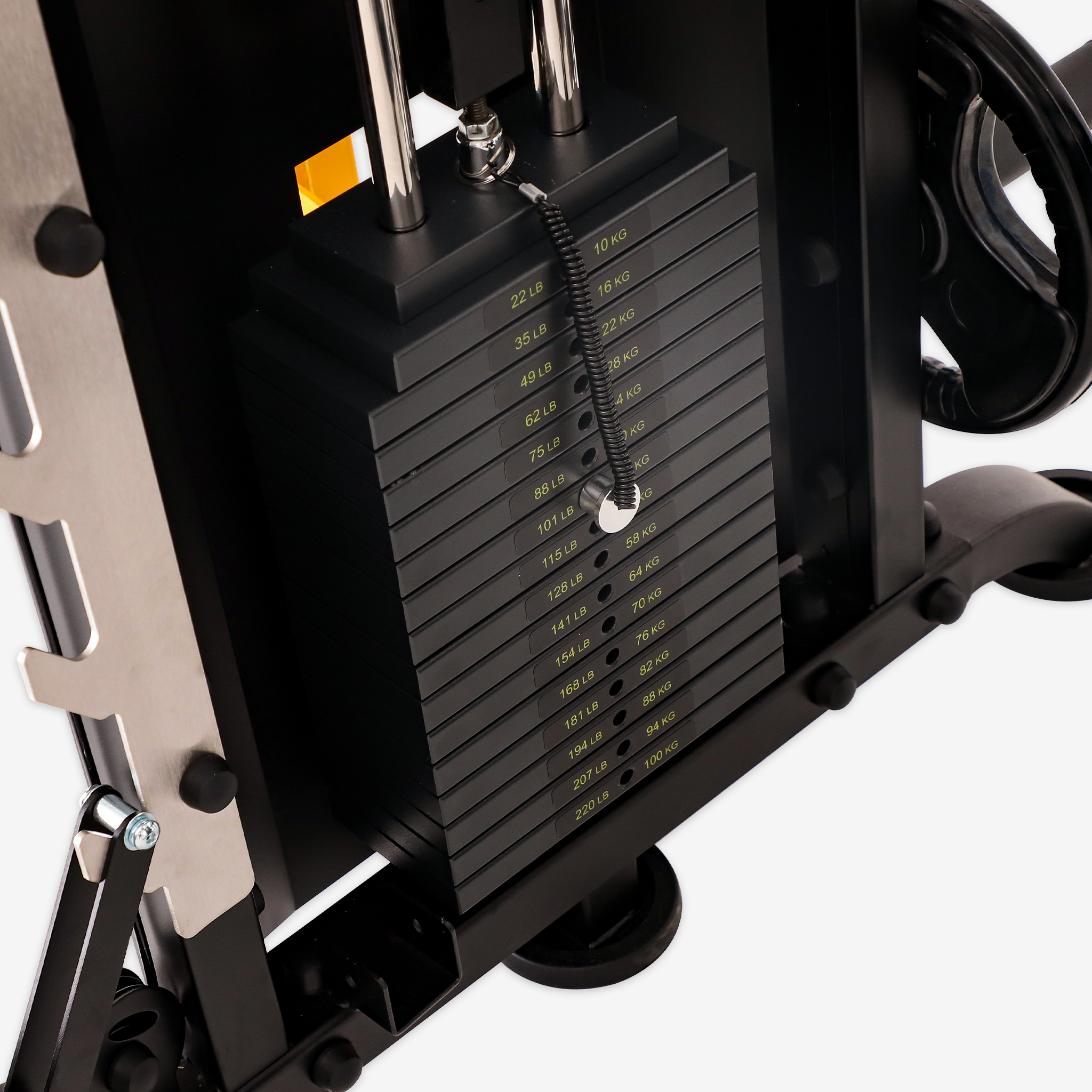
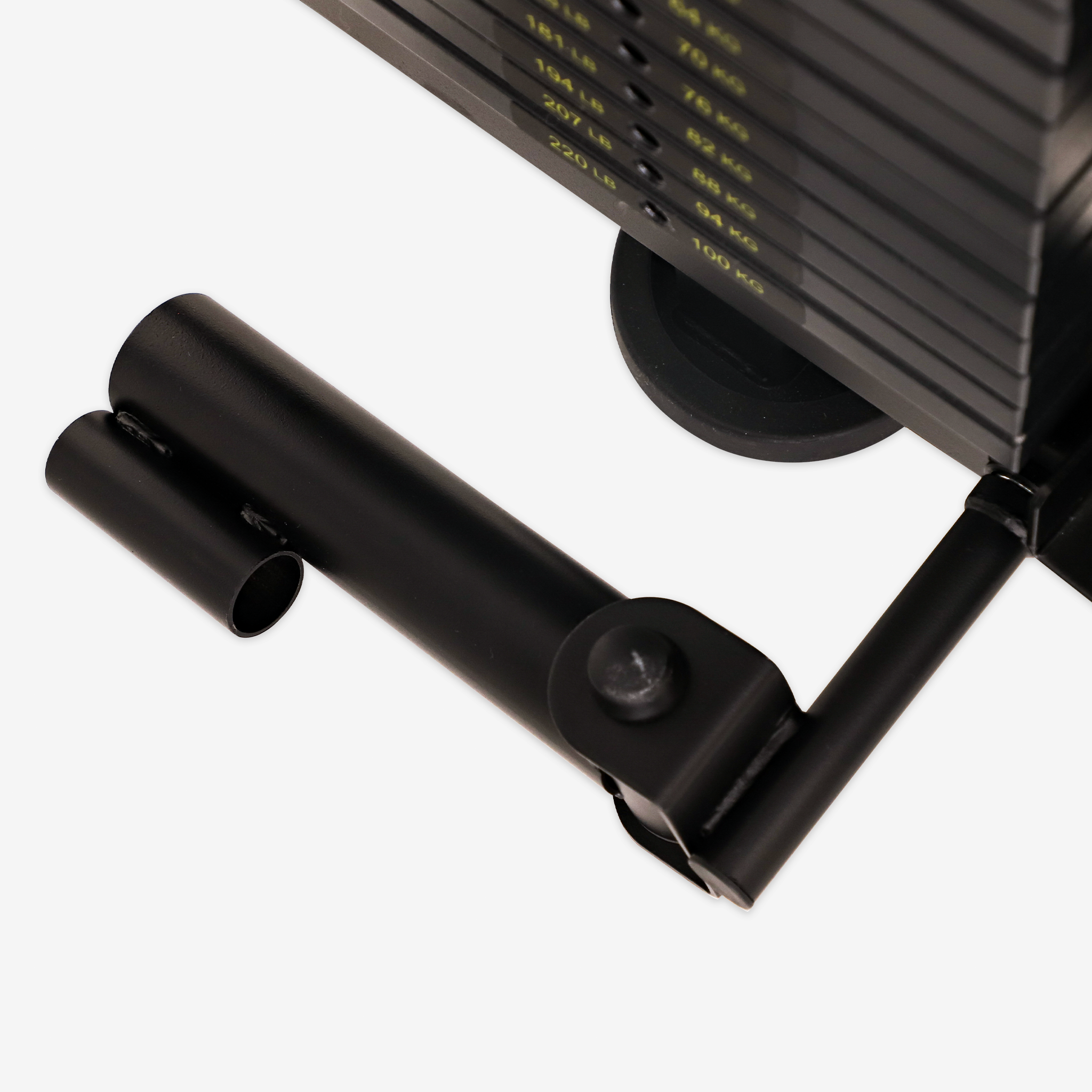
The Altas Strength information provided for this article identifies an 800 lb maximum bar load across its core models, with some systems also incorporating dual weight stacks in the approximately 200–220 lb range per stack, depending on model configuration.
This creates two different loading systems:
Smith bar loading: resistance added to the guided bar.
Weight-stack loading: resistance used through integrated cable functions.
Always check the specifications of the exact model before purchasing because weight capacity and configuration can vary between products.
Why Does High Weight Capacity Matter?
The primary reason buyers care about Smith machine capacity is progressive overload.
As a lifter becomes stronger, equipment that cannot accommodate increasing resistance can eventually become a limitation.
A higher-rated Smith machine gives users more room to progress.
This is particularly relevant to:
-
Intermediate lifters
-
Advanced home gym users
-
Strength-focused trainees
-
Bodybuilding and hypertrophy users
-
Family home gyms with multiple users
-
Light-commercial fitness facilities
For a beginner performing relatively light resistance training, an extremely high weight rating may provide little practical benefit.
Smith Machine Weight vs. Stability
A common misconception is that the heaviest Smith machine is automatically the most stable.
Machine stability depends on more than total weight.
Important factors include:
-
Frame geometry
-
Steel thickness
-
Base design
-
Connection points
-
Guide-track construction
-
Weight distribution
-
Floor surface
-
Installation quality
A well-engineered heavy frame can provide an excellent foundation, but total machine weight should be considered together with the entire structural design.
This is particularly important when comparing a premium Smith machine with an inexpensive lightweight model.
Why Do Users Like Heavy-Duty Smith Machines?
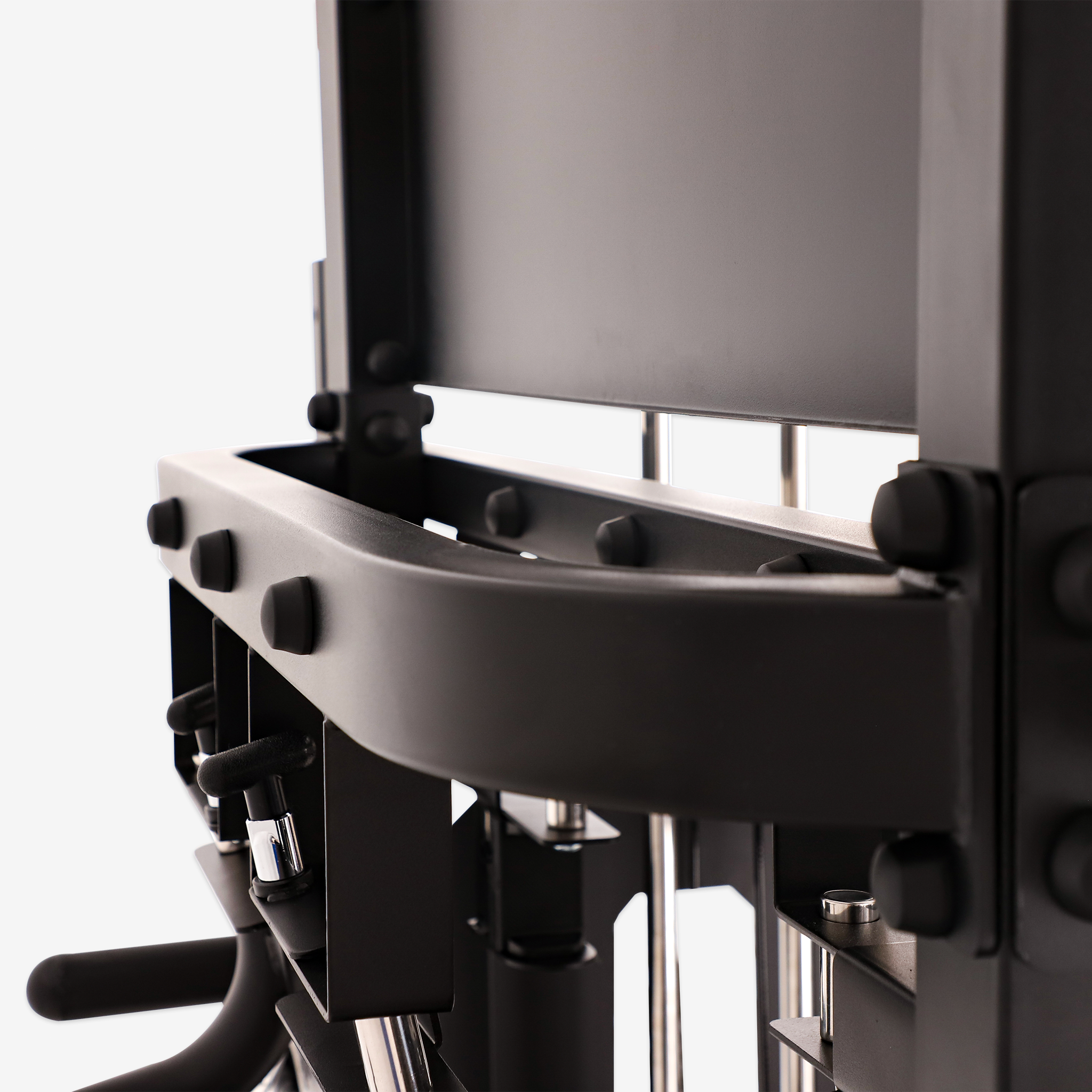
Rigid Frame Construction
One of the main reasons buyers choose heavy-duty equipment is the feeling of structural stability.
A substantial frame can reduce unwanted movement during demanding exercises and create a more solid training environment.
Higher Load Potential
A high-rated bar capacity provides more room for progressive training.
Users do not need to replace the machine simply because their strength has increased beyond the limitations of a basic home gym system.
Integrated Weight Systems
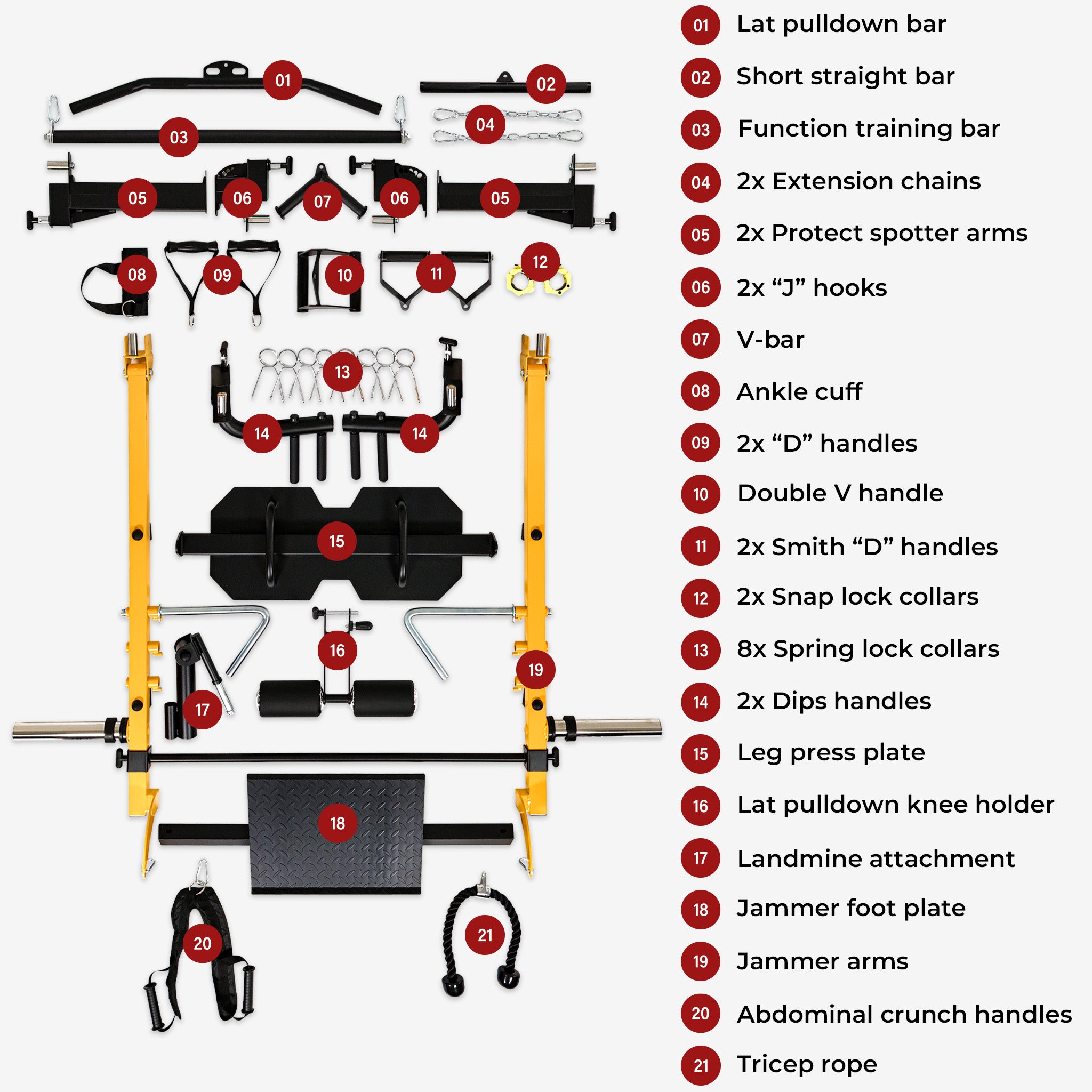
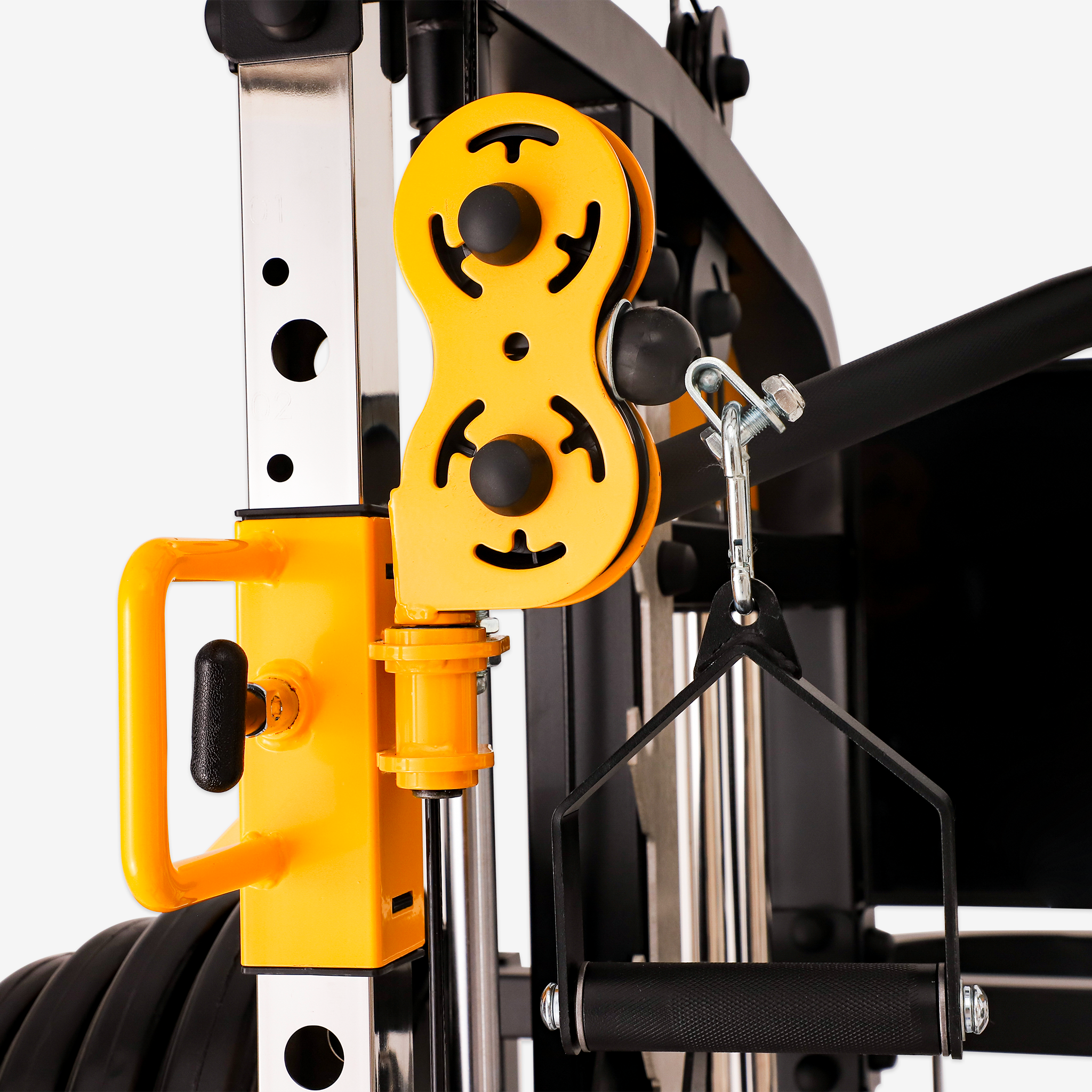
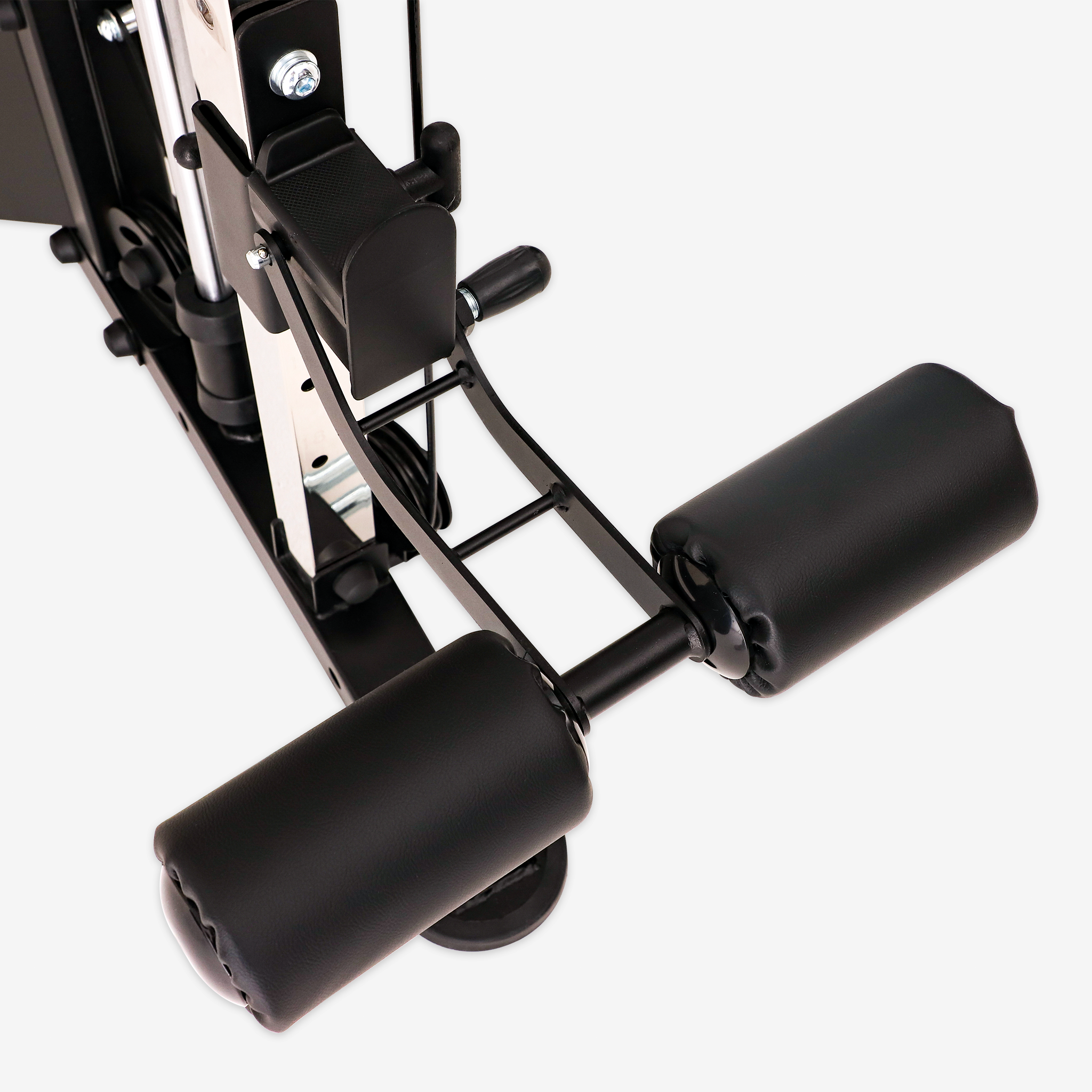
Multifunctional Smith machines can combine a guided bar with weight stacks, cables, and additional stations.
This means the machine's substantial frame supports much more than a single exercise.
Long-Term Home Gym Investment
For users who train consistently, a heavy-duty Smith machine can be viewed as a long-term equipment investment rather than an entry-level purchase.
The goal is not simply to own the heaviest machine.
The goal is to have equipment that continues to support the user's training as their requirements increase.
What Are the Drawbacks of a Heavy Smith Machine?
Heavy construction also creates several practical disadvantages.
Difficult to Move
A Smith machine weighing around 1,000 lb is not portable equipment.
Once installed, relocating it may require significant labor and planning.
This makes it less suitable for renters or users who frequently rearrange their workout space.
More Demanding Installation
Large multifunctional systems can require several people to assemble and position correctly.
Buyers should plan the installation route before delivery.
Measure doors, stairways, hallways, elevators, and the final workout area where applicable.
Larger Space Requirement
Heavy-duty Smith machines are generally designed around substantial frames.
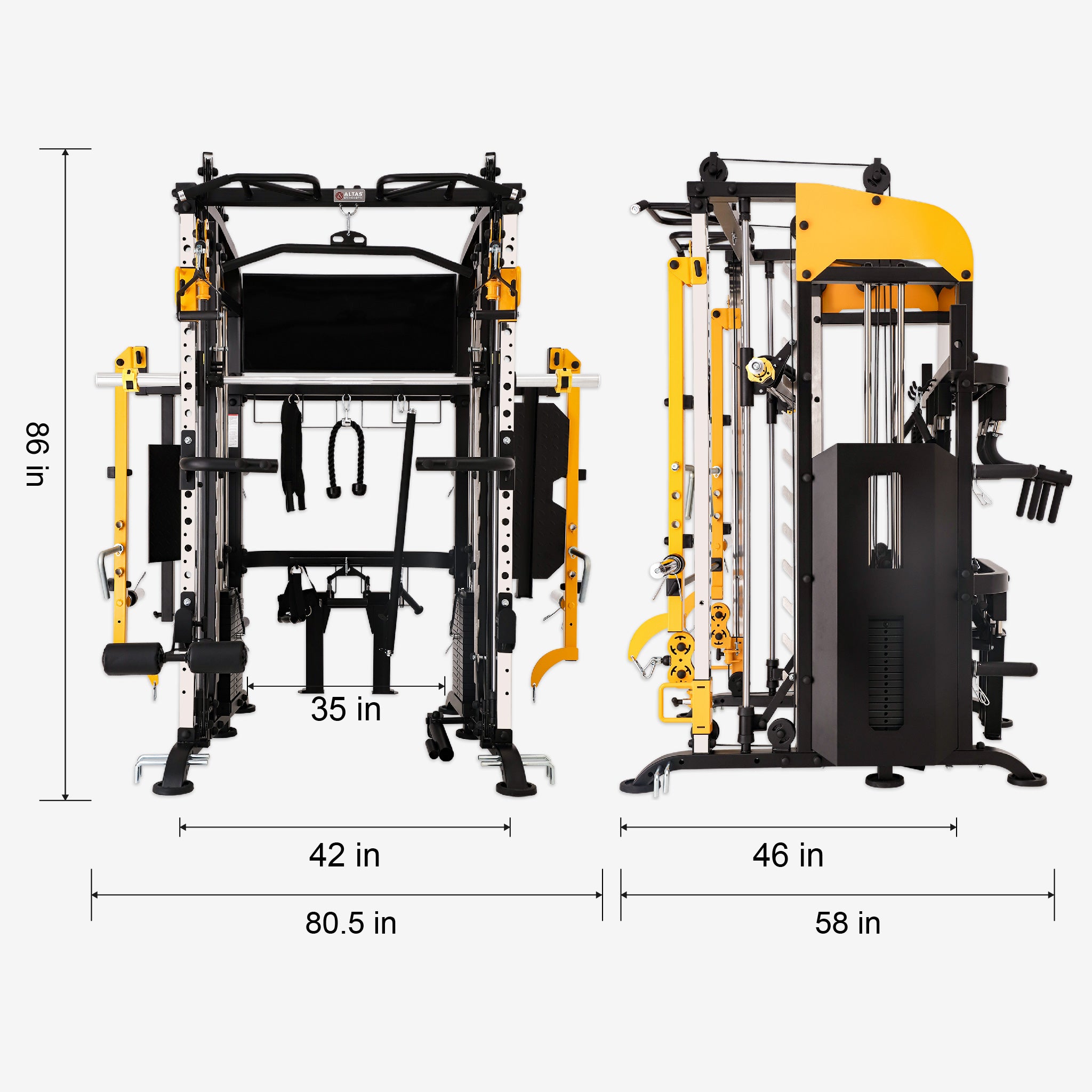
The Altas Strength information provided for flagship models lists dimensions of approximately 79.5 × 47.5 × 88 inches, although exact dimensions depend on the model.
The available training area must also include sufficient clearance for the exercises performed around the machine.
Higher Initial Investment
Heavy-duty steel construction and multifunctional systems typically cost more than entry-level Smith machines.
For occasional users, the additional capacity may not justify the investment.
Smith Machine Weight vs. Budget Smith Machines
Entry-level Smith machines are often designed around lower cost and easier residential installation.
Their lighter construction can be an advantage when:
-
Budget is the primary concern
-
Training loads are relatively light
-
The equipment needs to be moved occasionally
-
The user has limited space
The trade-off may be lower structural mass and lower load capacity.
Heavy-duty systems such as Altas Strength target a different buyer: someone who wants a more substantial, long-term home or light-commercial strength-training platform.
Smith Machine Weight vs. Power Rack
A power rack and Smith machine solve overlapping but different problems.
A power rack generally provides unrestricted barbell movement.
A Smith machine guides the bar along its track.
| Feature | Heavy-Duty Smith Machine | Power Rack |
|---|---|---|
| Bar movement | Guided | Free |
| Frame stability | High | High |
| Solo training features | Integrated depending on model | Requires appropriate safety setup |
| Movement freedom | More restricted | Greater |
| Cable integration | Available on multifunctional models | Usually separate |
| Portability | Low | Varies |
| Exercise versatility | High on all-in-one models | High with additional equipment |
For users who prioritize free-weight training, a power rack may be preferable.
For users who want guided training combined with cable and other functions, a multifunctional Smith machine may offer greater convenience.
Does a Heavier Smith Machine Mean It Is Better?
Not necessarily.
This is one of the most important points when researching Smith machine weight.
A 1,000 lb machine is not automatically better than a 600 lb machine for every user.
Consider what you actually need.
If you train lightly, have limited space, or need to move the equipment regularly, a lighter machine may be more practical.
If you perform heavy compound exercises, train frequently, and want an all-in-one system for years of use, a heavy-duty machine may make more sense.
The best equipment is the one whose specifications match the user's actual training requirements.
Why Consider Altas Strength?
Altas Strength positions its Smith machine systems toward buyers looking for substantial home and light-commercial strength equipment.
The supplied specifications emphasize:
-
Heavy-duty steel construction
-
Substantial machine mass
-
High Smith bar load capacity
-
Integrated weight stacks on applicable models
-
Guided linear-bearing movement
-
Adjustable safety mechanisms
-
Multifunctional training capability
This combination is designed for users who want more than a lightweight entry-level Smith machine.
The key value is not simply that the machine is heavy.
It is that the heavy-duty structure supports a broader training system designed for progressive strength training.
Who Should Buy a Heavy-Duty Smith Machine?
A heavy Smith machine can be a strong fit for:
-
Serious home gym users
-
Intermediate and advanced lifters
-
Users who train several times per week
-
People who prioritize stability
-
Lifters planning long-term progressive overload
-
Families sharing one home gym
-
Light-commercial facilities
-
Users who want an all-in-one strength system
Who Should Choose a Lighter or Simpler System?
A heavy-duty Smith machine may be excessive for:
Casual Lifters
If you only perform occasional light workouts, the additional capacity may provide little practical benefit.
Small Apartment Users
A large, heavy machine may be difficult to fit into a compact apartment or condo.
Renters Who Need Mobility
If equipment must be moved when changing homes or rearranging rooms, a near-1,000 lb machine is impractical.
Strict Budget Buyers
If the lowest possible upfront price is the priority, an entry-level Smith machine may better match the intended use.
Users Who Only Need Basic Exercises
If your goal is simply occasional squats and presses, a multifunctional commercial-style system may offer substantially more equipment than you need.
What Should You Check Before Buying?
If Smith machine weight is an important part of your purchase decision, check these specifications before ordering.
1. Total machine weight
Make sure the installation location can accommodate the equipment.
2. Maximum bar load
Confirm the rated Smith bar capacity for the exact model.
3. Weight-stack capacity
If the system includes cable training, check the stack configuration separately.
4. Overall dimensions
Measure both the machine and the available room.
5. Delivery route
Confirm that the equipment can physically reach the intended installation location.
6. Floor conditions
Consider flooring protection and the structural characteristics of the installation area.
7. Safety system
Look for adjustable catches or other manufacturer-specified safety mechanisms.
8. Long-term training needs
Buy according to where your training is going, not only where it is today.
Final Takeaway: What Does Smith Machine Weight Really Tell You?
When researching Smith machine weight, remember that there are two separate questions:
How heavy is the machine?
and
How much resistance can it support?
A heavy frame can contribute to stability, but it also increases installation difficulty, floor considerations, and lack of mobility.
A high weight capacity provides room for progressive overload, but it may be unnecessary for casual users.
For serious home gym owners, the ideal Smith machine balances frame stability, load capacity, movement quality, safety, exercise versatility, footprint, and long-term value.
Altas Strength's heavy-duty Smith machine systems are aimed at users who want substantial construction and high-capacity training in an integrated home or light-commercial setup.
So when comparing Smith machines, don't simply ask:
“Which machine weighs the most?”
Ask:
“Does the machine's weight, capacity, construction, and functionality match the way I actually plan to train?”
That is the more useful way to evaluate a Smith machine—and the better way to determine whether a heavy-duty system is worth the investment.