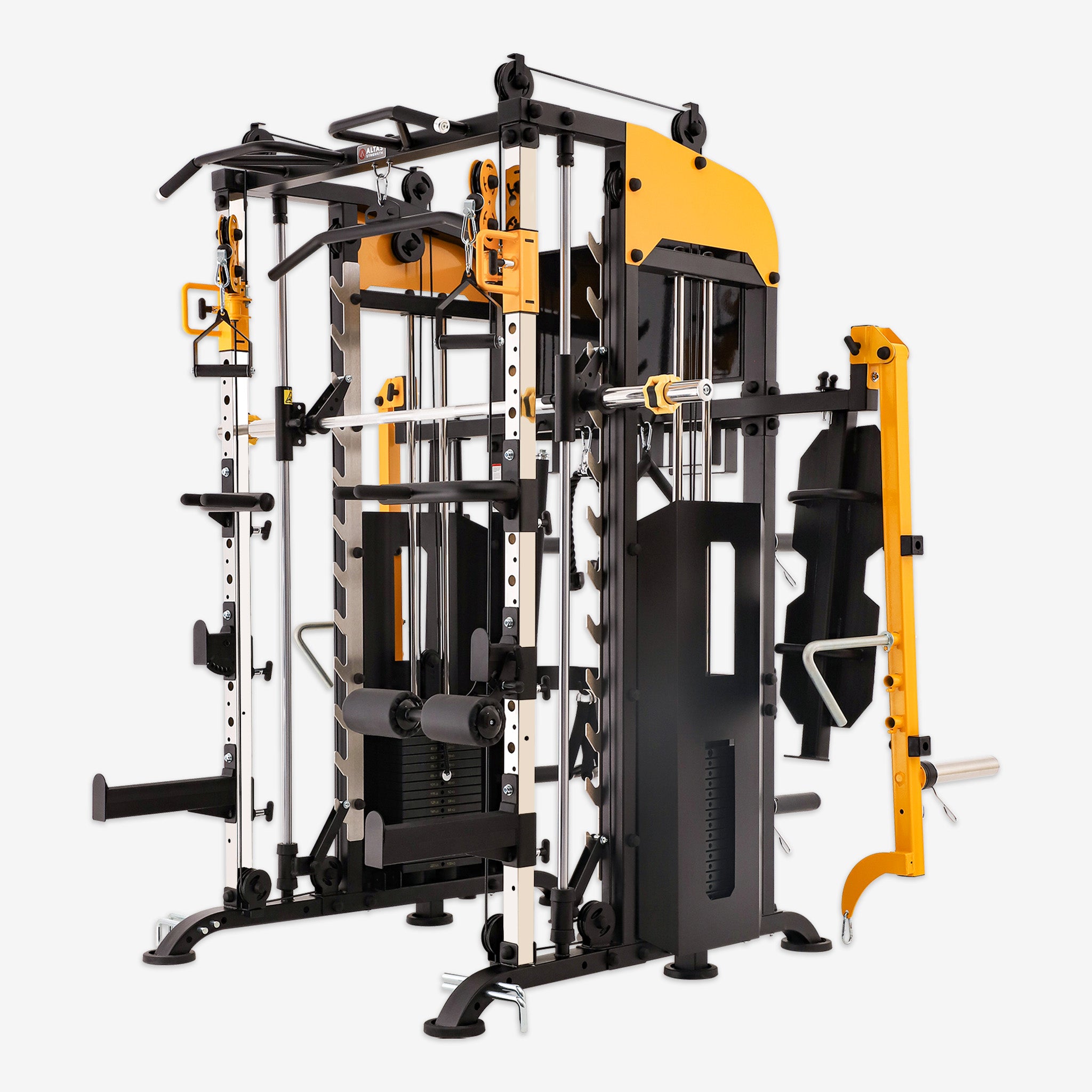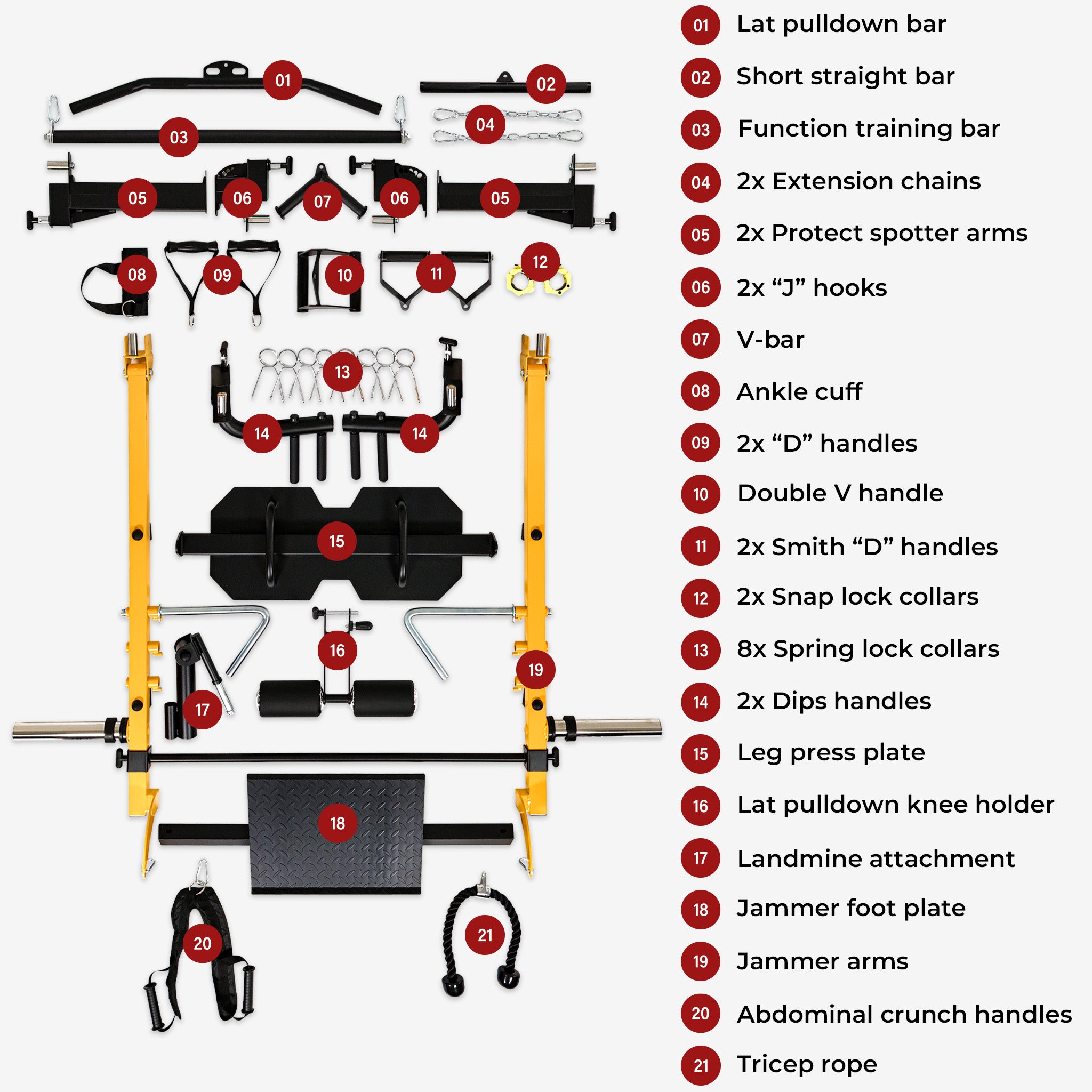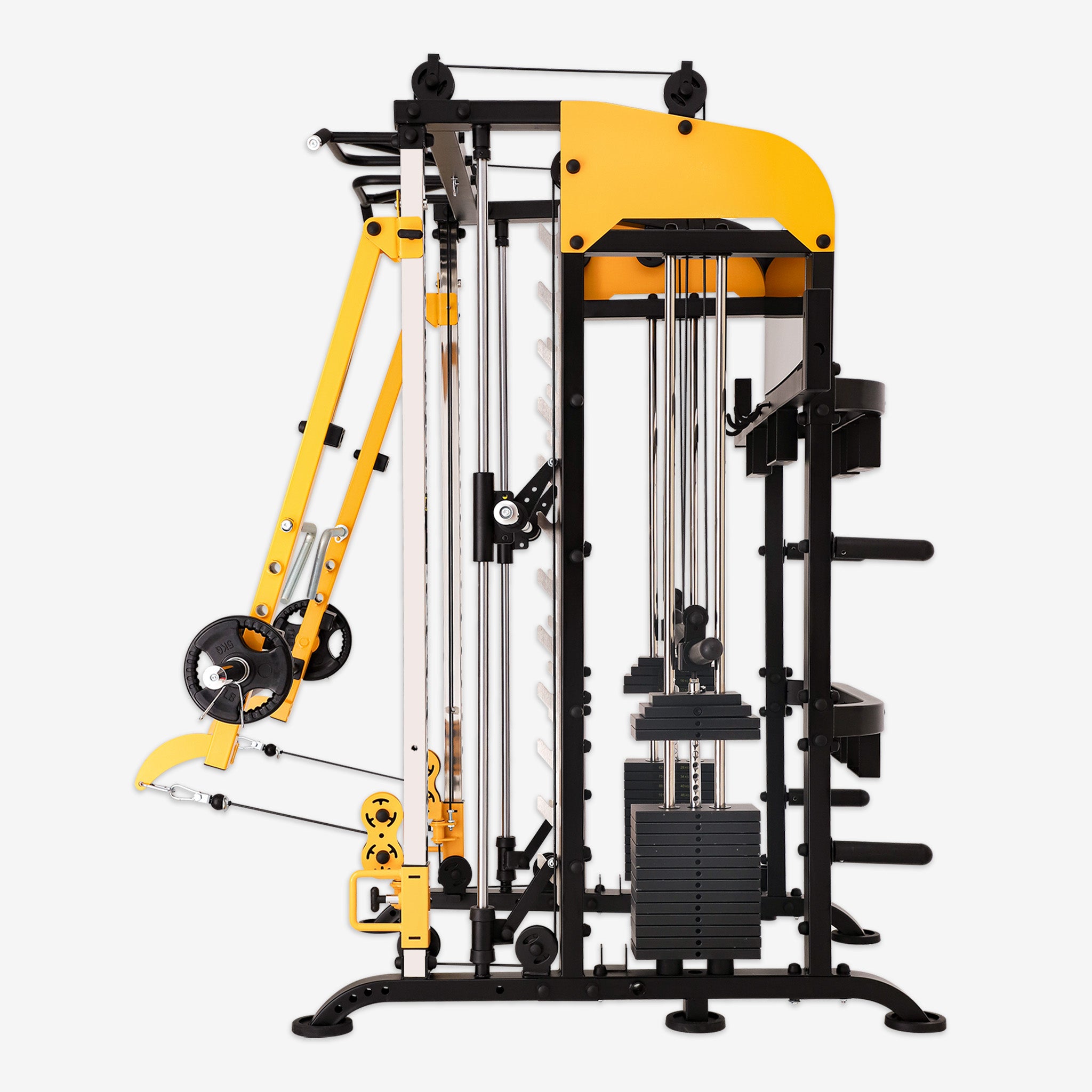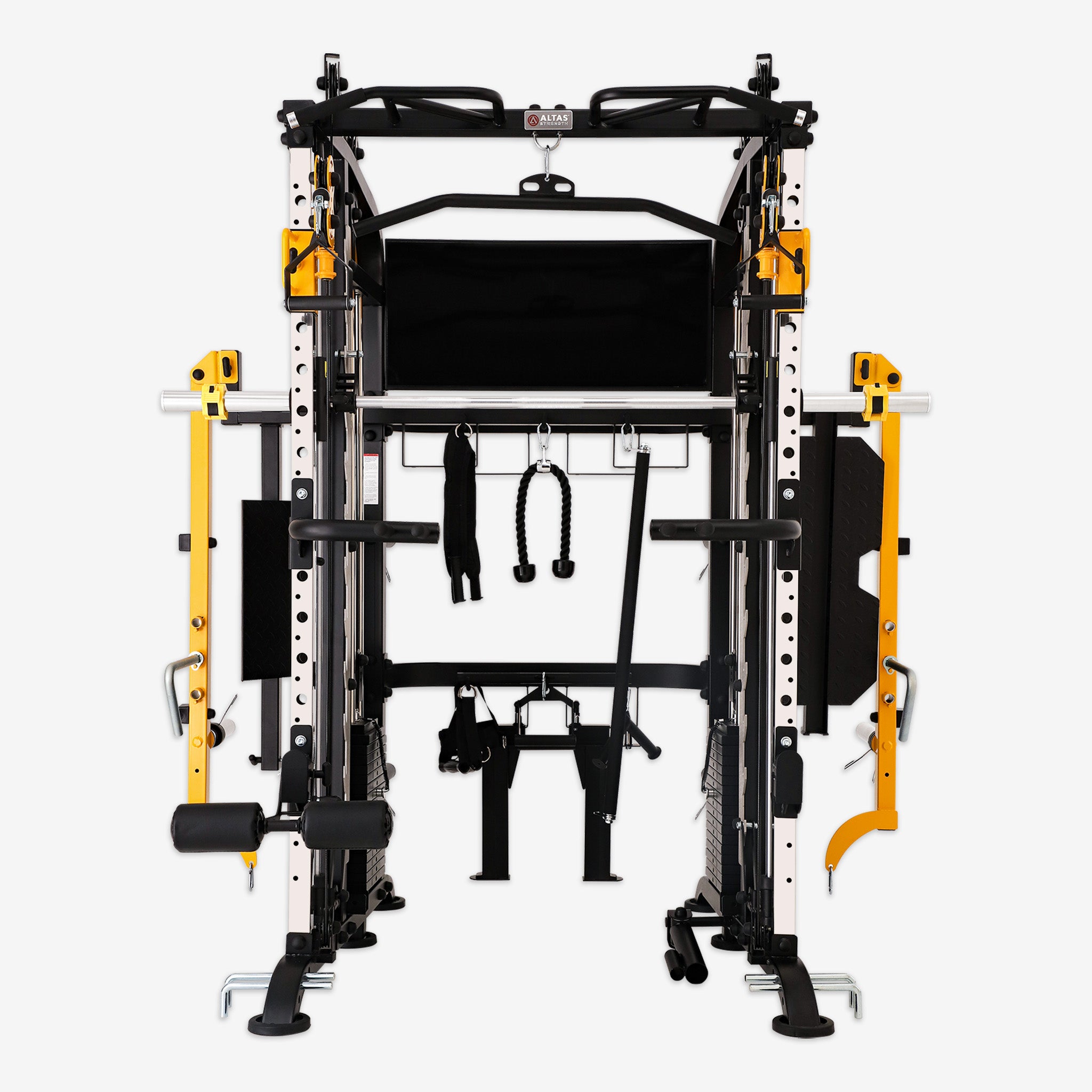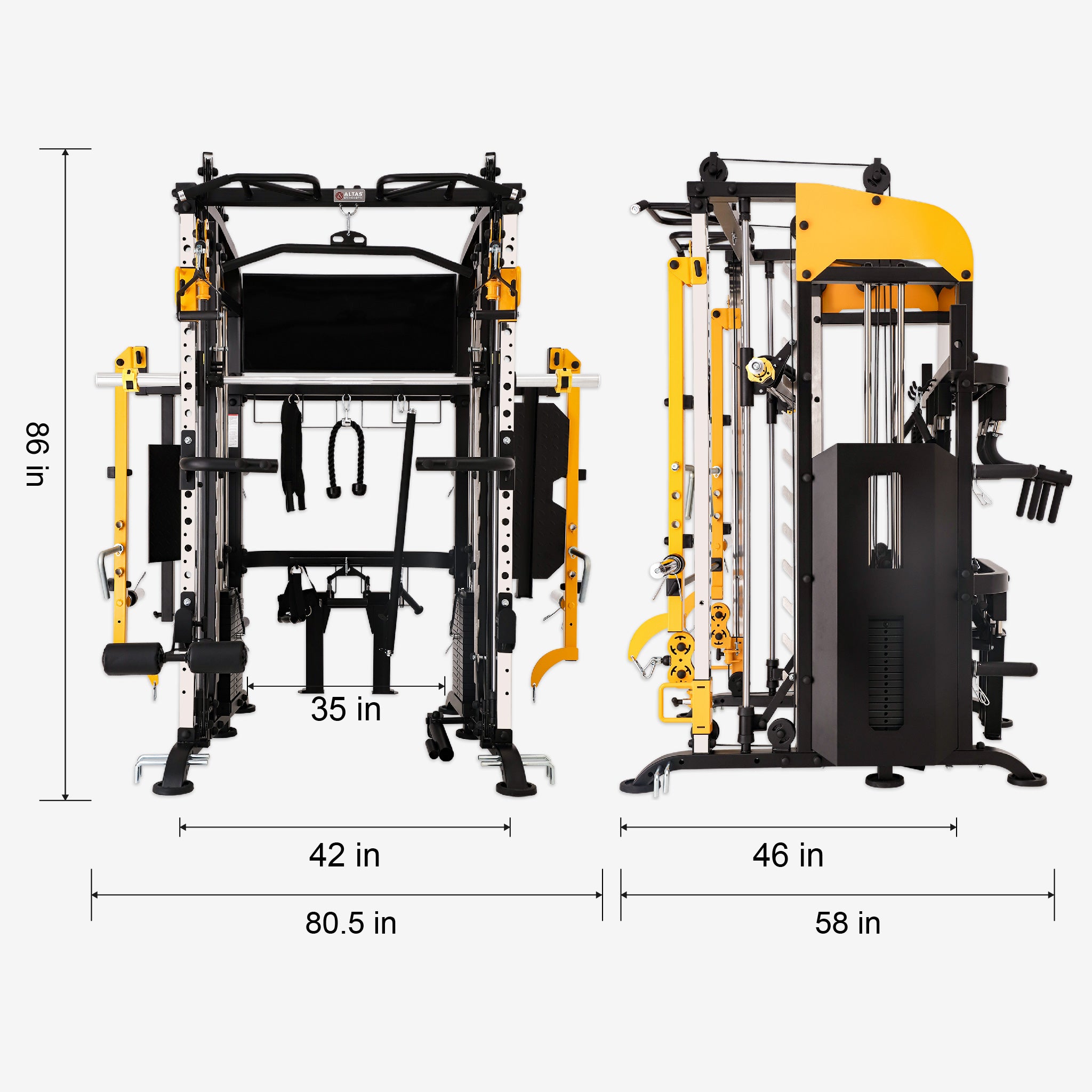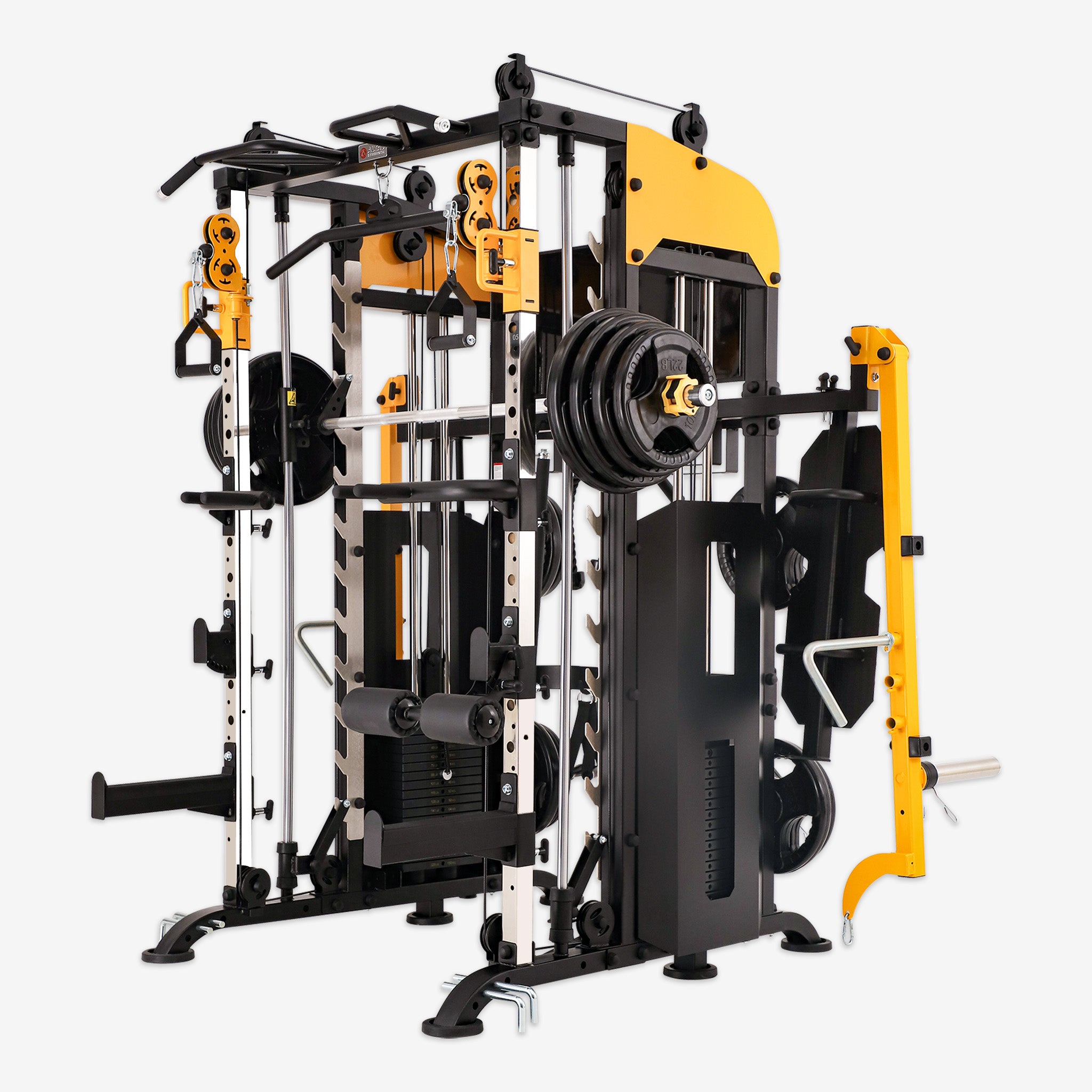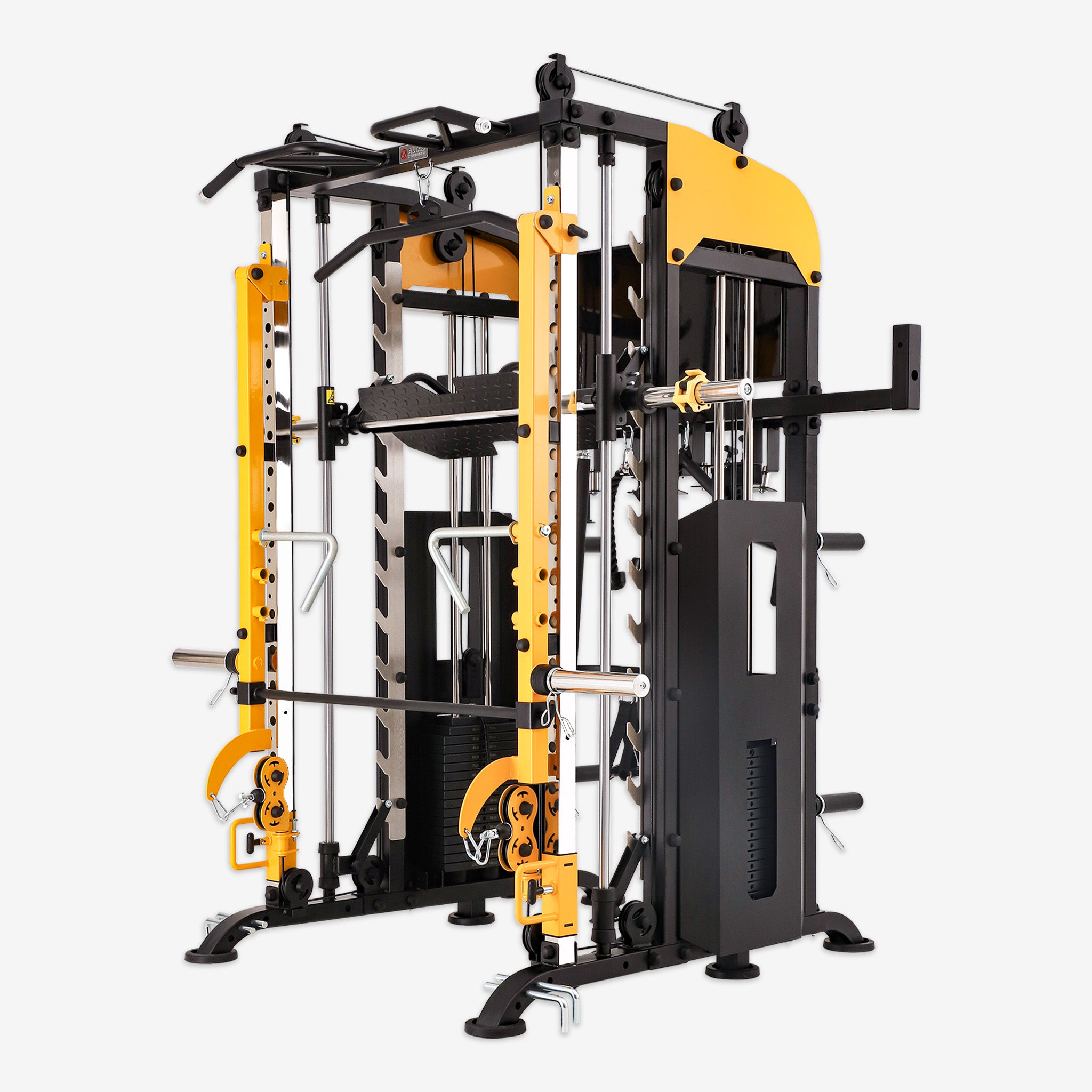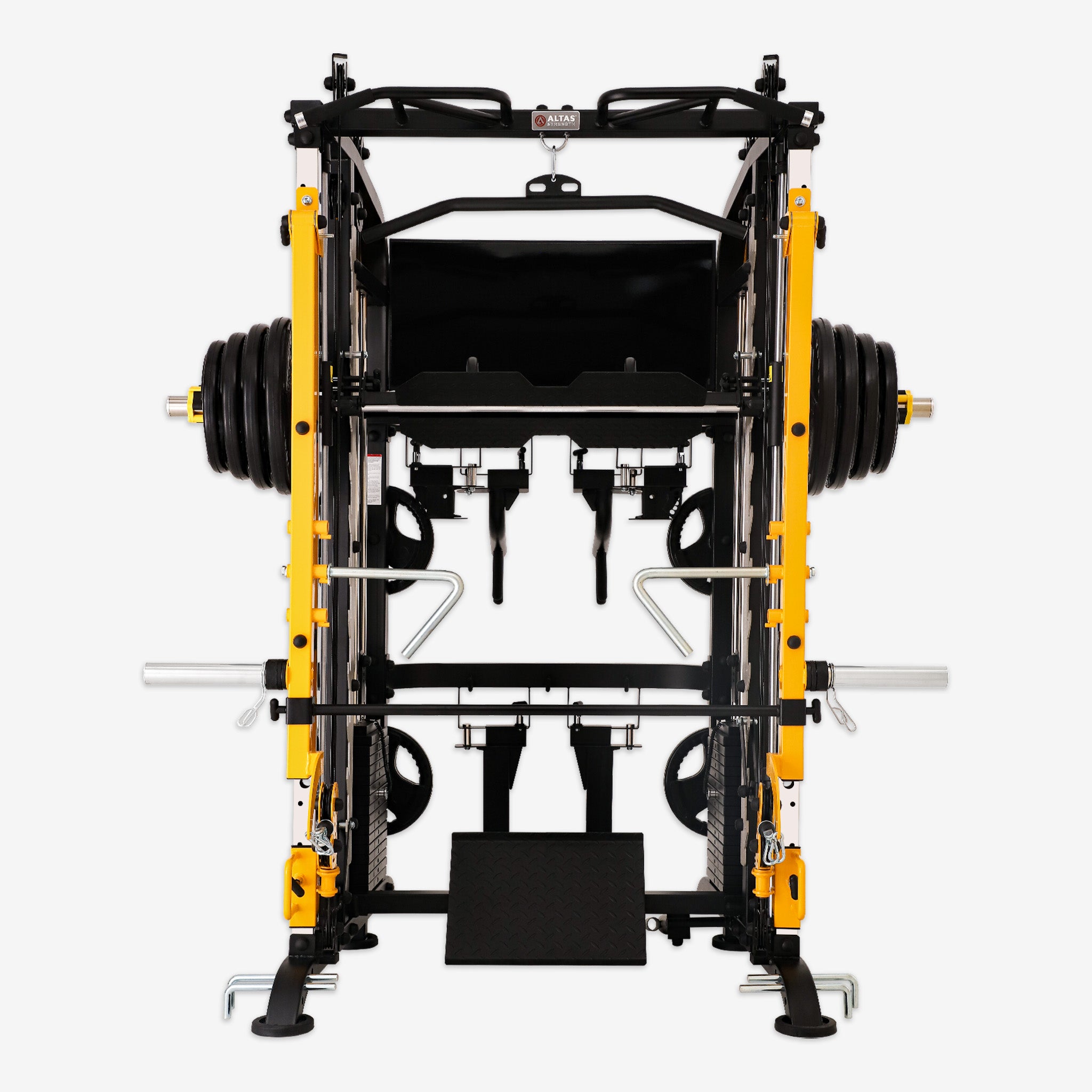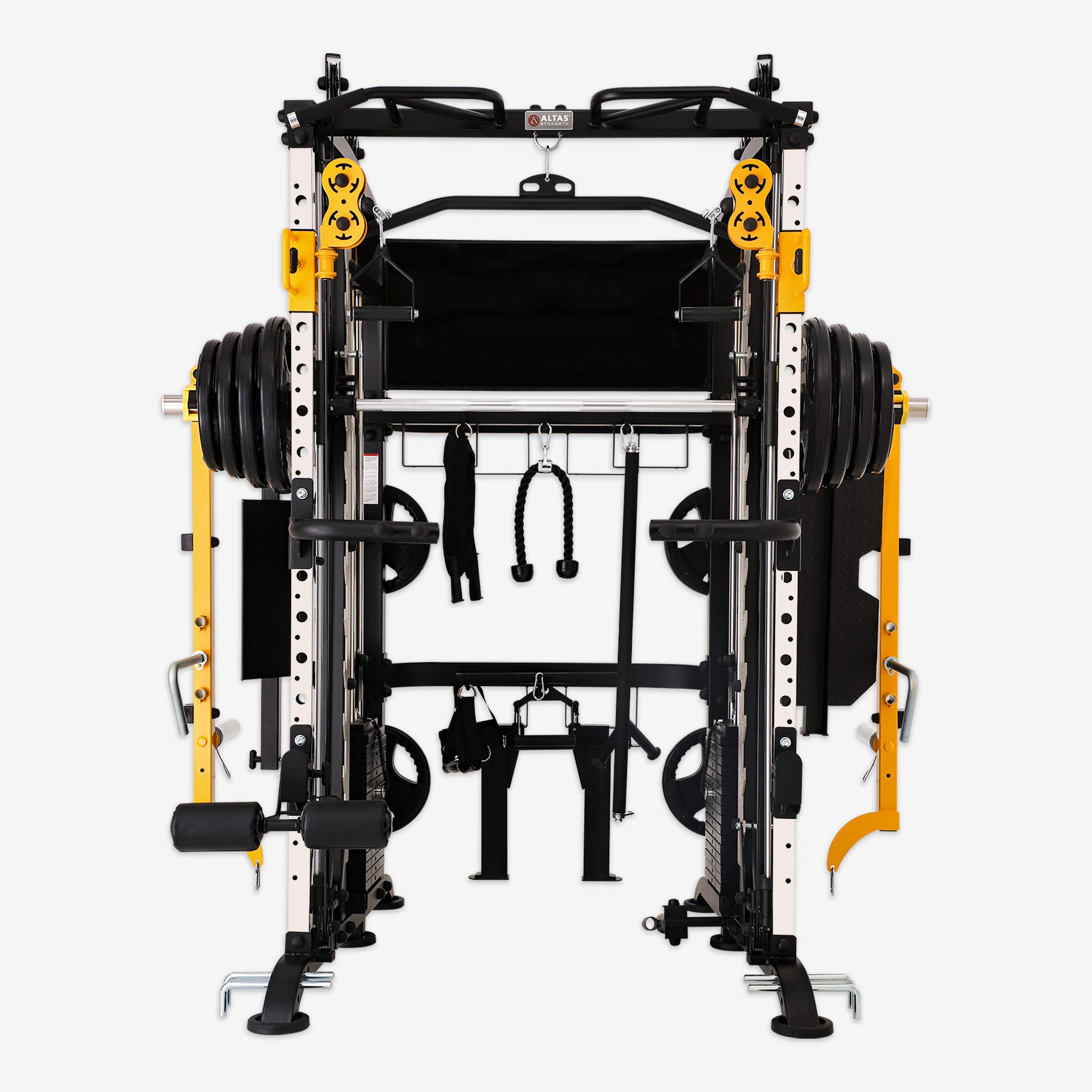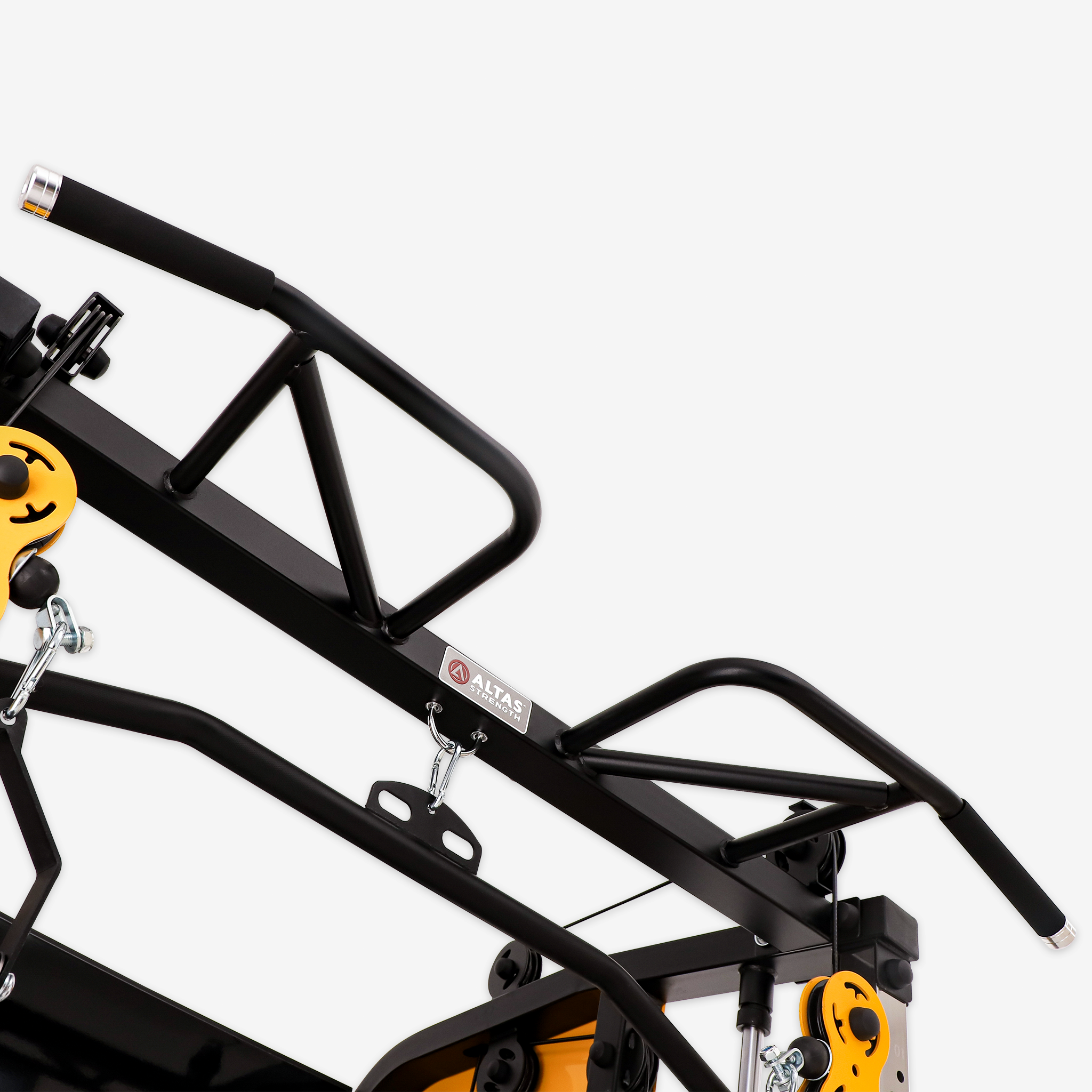
What Are Smith Machine Step Ups?
Smith machine step ups are a unilateral lower-body exercise performed using a Smith machine and an elevated platform or bench. By combining the stability of the Smith machine with the functional movement of stepping, this exercise helps build stronger quads, glutes, hamstrings, and calves while reducing balance challenges common with dumbbell or barbell step ups.
Because the Smith machine guides the bar along a fixed path, lifters can focus entirely on muscle activation and proper technique, making Smith machine step ups one of the best leg exercises for beginners and advanced athletes alike.
Smith Machine Step Ups Muscles Worked
Primary Muscles
-
Quadriceps
-
Gluteus Maximus
Secondary Muscles
-
Hamstrings
-
Calves
-
Core Stabilizers
-
Hip Flexors
The exercise emphasizes single-leg strength development, helping improve muscular balance while enhancing lower-body power and stability.
Benefits of Smith Machine Step Ups
Build Stronger Glutes and Quads
The elevated stepping motion places significant tension on the glutes and quadriceps, making Smith machine step ups highly effective for muscle growth and lower-body shaping.
Improve Single-Leg Strength
Most people have a dominant leg. Smith machine step ups train each leg independently, helping correct muscle imbalances and improve athletic performance.
Beginner-Friendly Stability
Unlike free-weight step ups, the Smith machine eliminates bar instability and balance concerns, making it easier to learn proper movement mechanics.
Joint-Friendly Alternative to Heavy Squats
Many lifters use Smith machine step ups during recovery phases or deload weeks because they provide excellent muscle stimulation with less spinal loading than traditional back squats.
Functional Everyday Strength
The stepping pattern closely mimics daily movements such as climbing stairs, hiking, and athletic acceleration, making the exercise practical for real-world strength development.
How to Do Smith Machine Step Ups
Step 1: Set Up the Equipment
-
Place a stable bench or step platform inside the Smith machine.
-
Position the bar across your upper traps.
-
Set safety stops appropriately.
Step 2: Assume Starting Position
-
Stand facing the platform.
-
Place one foot firmly on the bench.
-
Keep your chest up and core engaged.
Step 3: Drive Up
-
Push through the heel of the elevated foot.
-
Extend the knee and hip until standing tall.
-
Avoid pushing off excessively with the trailing leg.
Step 4: Control the Descent
-
Lower yourself slowly.
-
Maintain balance and tension throughout the movement.
-
Return to the starting position under control.
Step 5: Repeat
Complete all repetitions on one side before switching legs.
Common Smith Machine Step Ups Mistakes
Using Too Much Momentum
Avoid bouncing or jumping onto the platform. Controlled reps maximize muscle activation.
Letting the Heel Rise
Keep the entire working foot planted to maintain proper force transfer.
Leaning Forward Excessively
An upright torso keeps tension on the target muscles and reduces lower-back stress.
Using a Platform That Is Too High
A step that is excessively high can compromise technique and increase knee stress.
Uneven Weight Distribution
Avoid pushing primarily with the trailing leg. The elevated leg should perform most of the work.
Best Rep Ranges for Different Goals
Strength
-
3–4 sets
-
6–8 reps per leg
Muscle Growth
-
3–4 sets
-
8–12 reps per leg
Endurance and Conditioning
-
2–3 sets
-
12–15 reps per leg
Smith Machine Step Ups vs Lunges
| Exercise | Primary Focus | Stability | Beginner Friendly |
|---|---|---|---|
| Smith Machine Step Ups | Glutes & Quads | Very High | Excellent |
| Smith Machine Lunges | Quads & Glutes | High | Good |
Step ups generally place less stress on the knees while providing excellent unilateral strength development.
Frequently Asked Questions
Are Smith machine step ups good for glutes?
Yes. Driving through the heel and using a moderate-to-high platform height creates significant glute activation and development.
Are Smith machine step ups better than squats?
They are not necessarily better, but they offer unique benefits such as unilateral strength development, improved balance between legs, and reduced spinal loading.
What height should the platform be?
For most users, knee height or slightly below knee height provides the best balance of safety and muscle activation.
Can beginners do Smith machine step ups?
Absolutely. The guided bar path makes them one of the safest and easiest lower-body exercises to learn.
Final Thoughts
Smith machine step ups are one of the most effective yet underutilized exercises for building stronger legs, firmer glutes, and balanced lower-body strength. The combination of unilateral training, controlled movement, and Smith machine stability makes them suitable for beginners, intermediate lifters, and advanced athletes. Whether your goal is muscle growth, strength development, or lower-body conditioning, adding Smith machine step ups to your workout routine can deliver measurable results while minimizing injury risk.