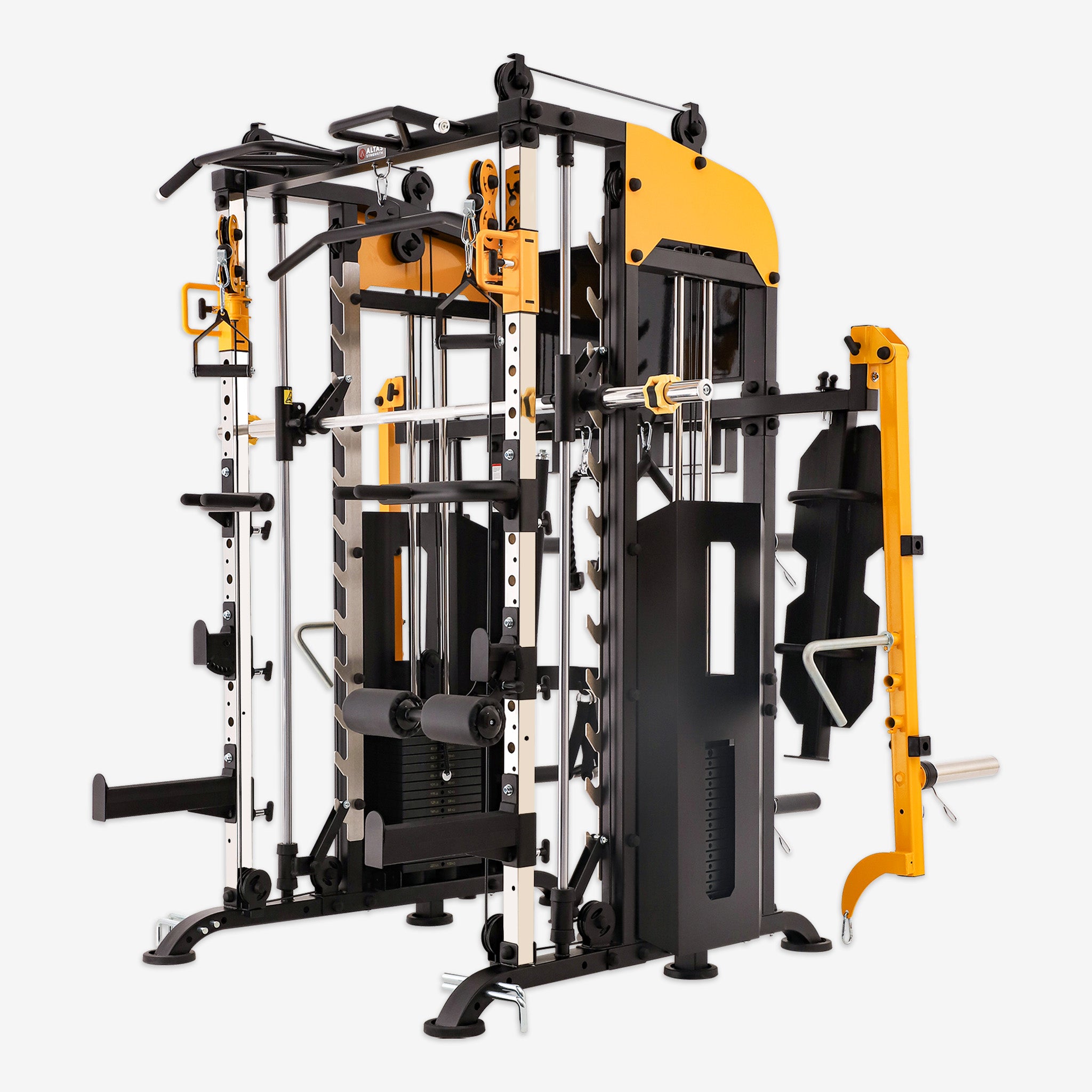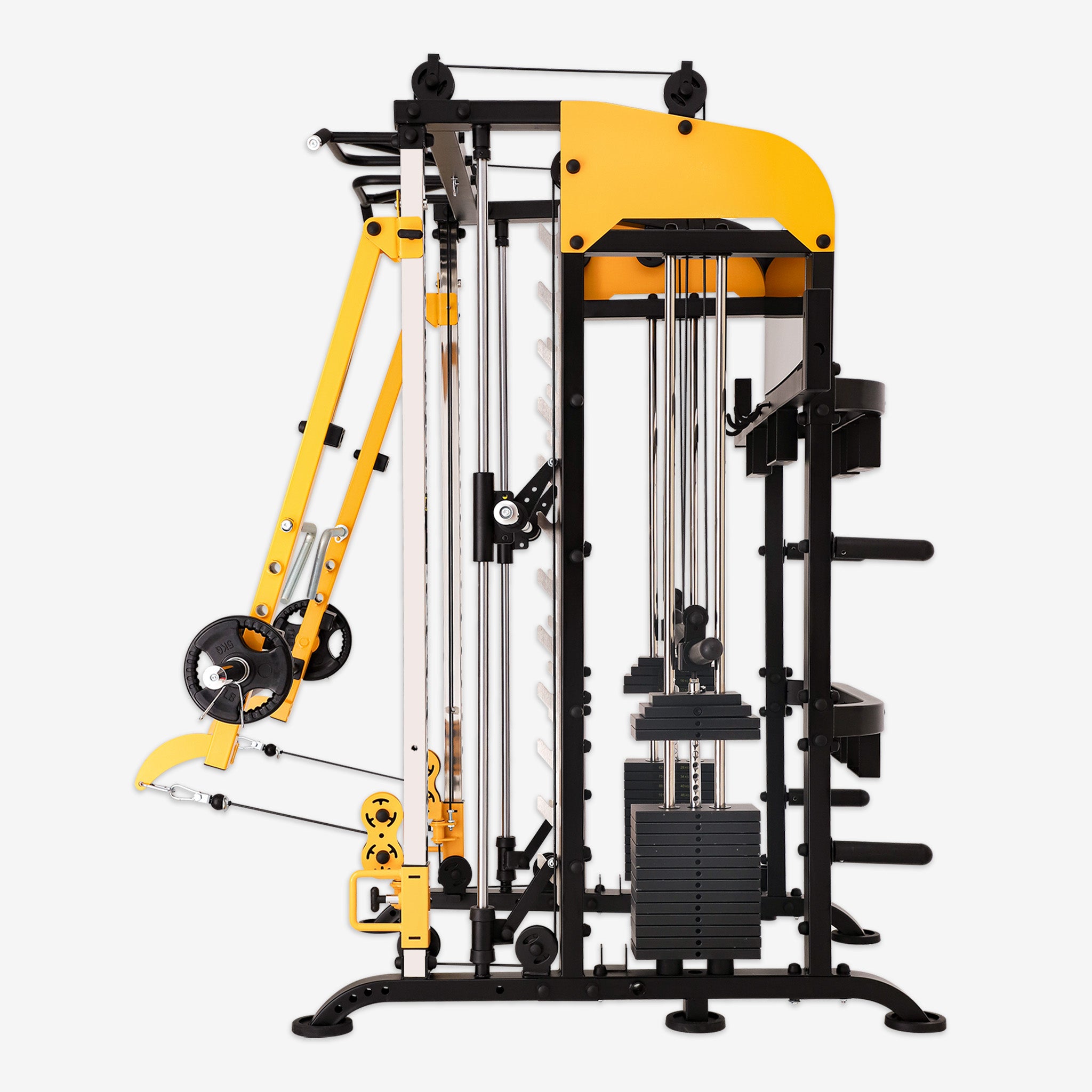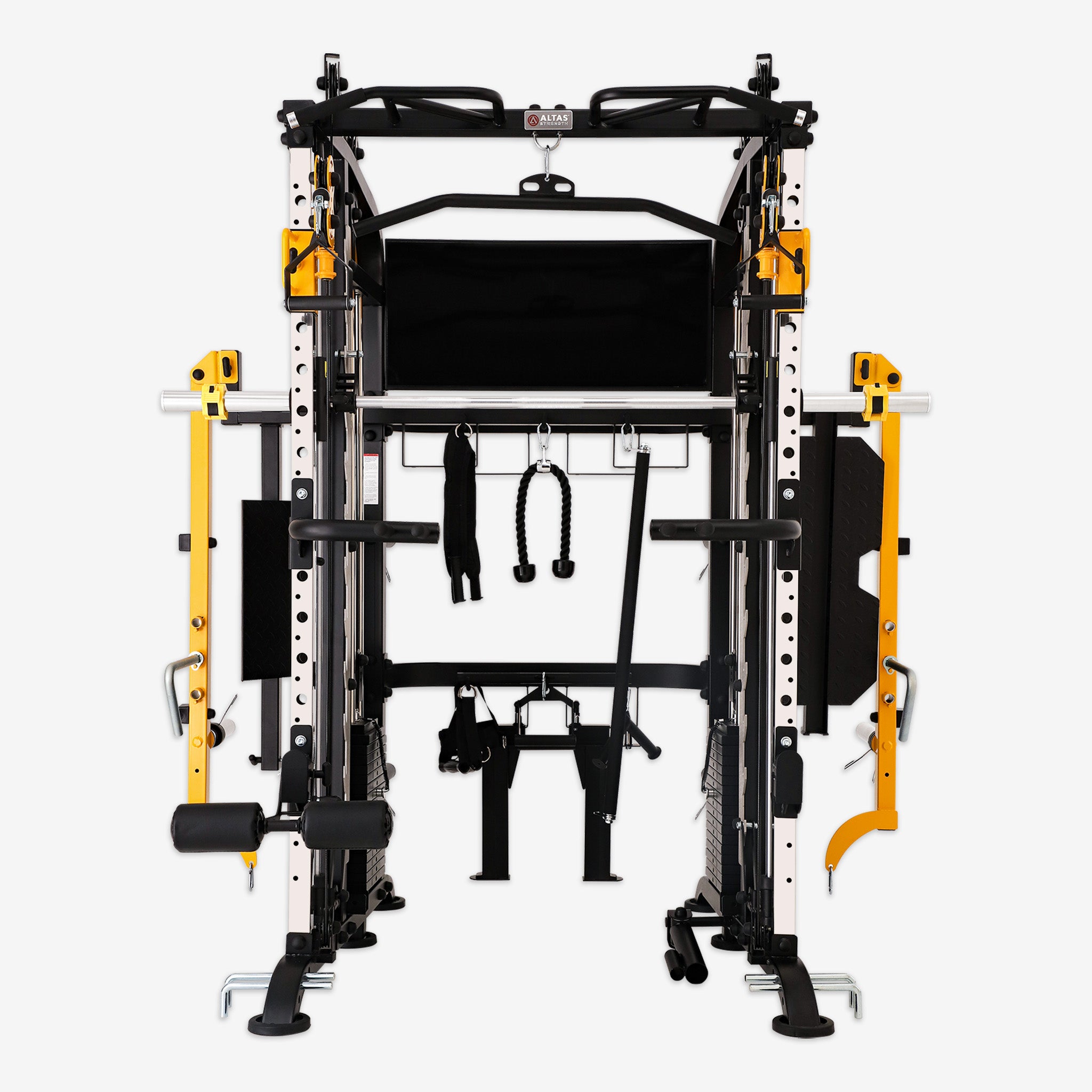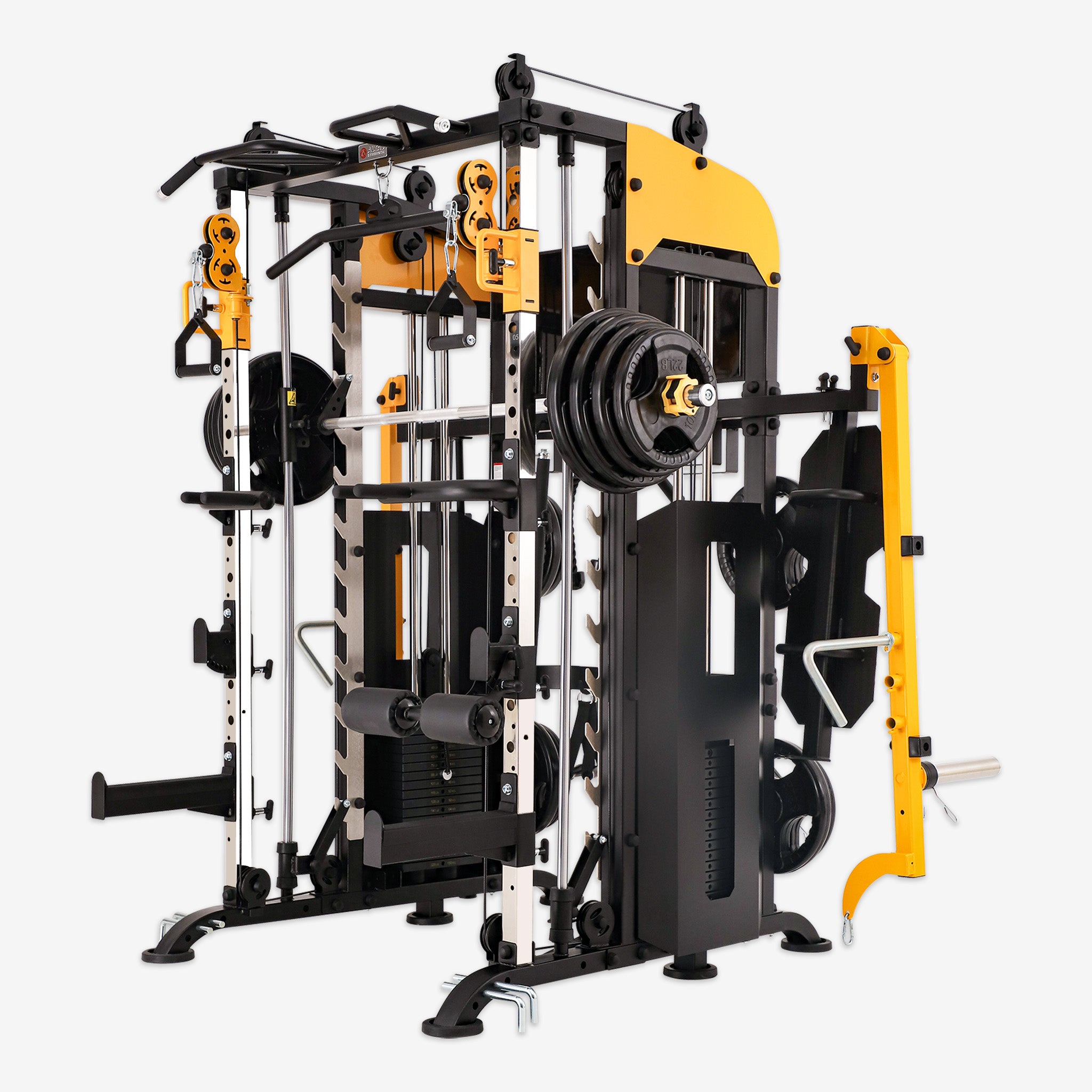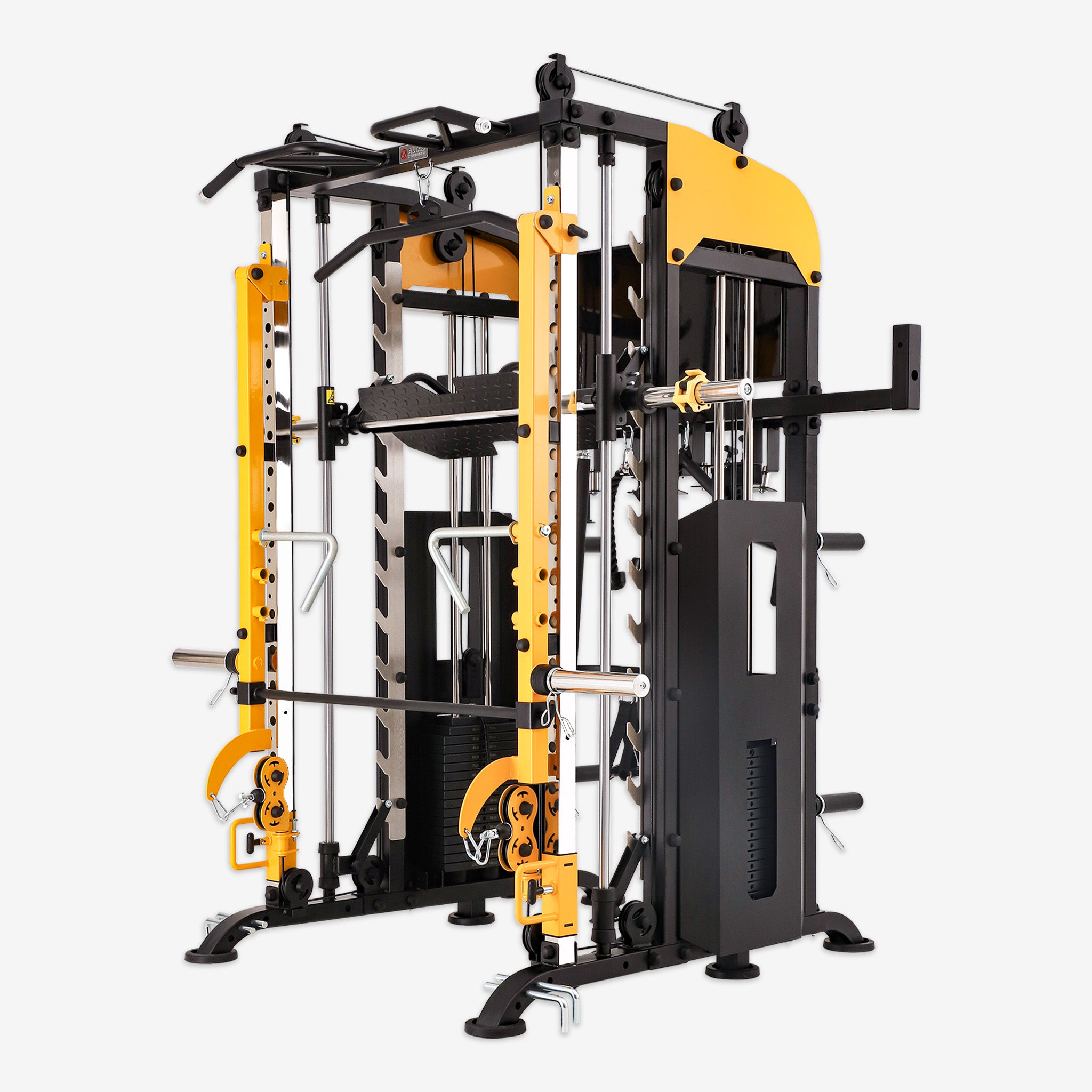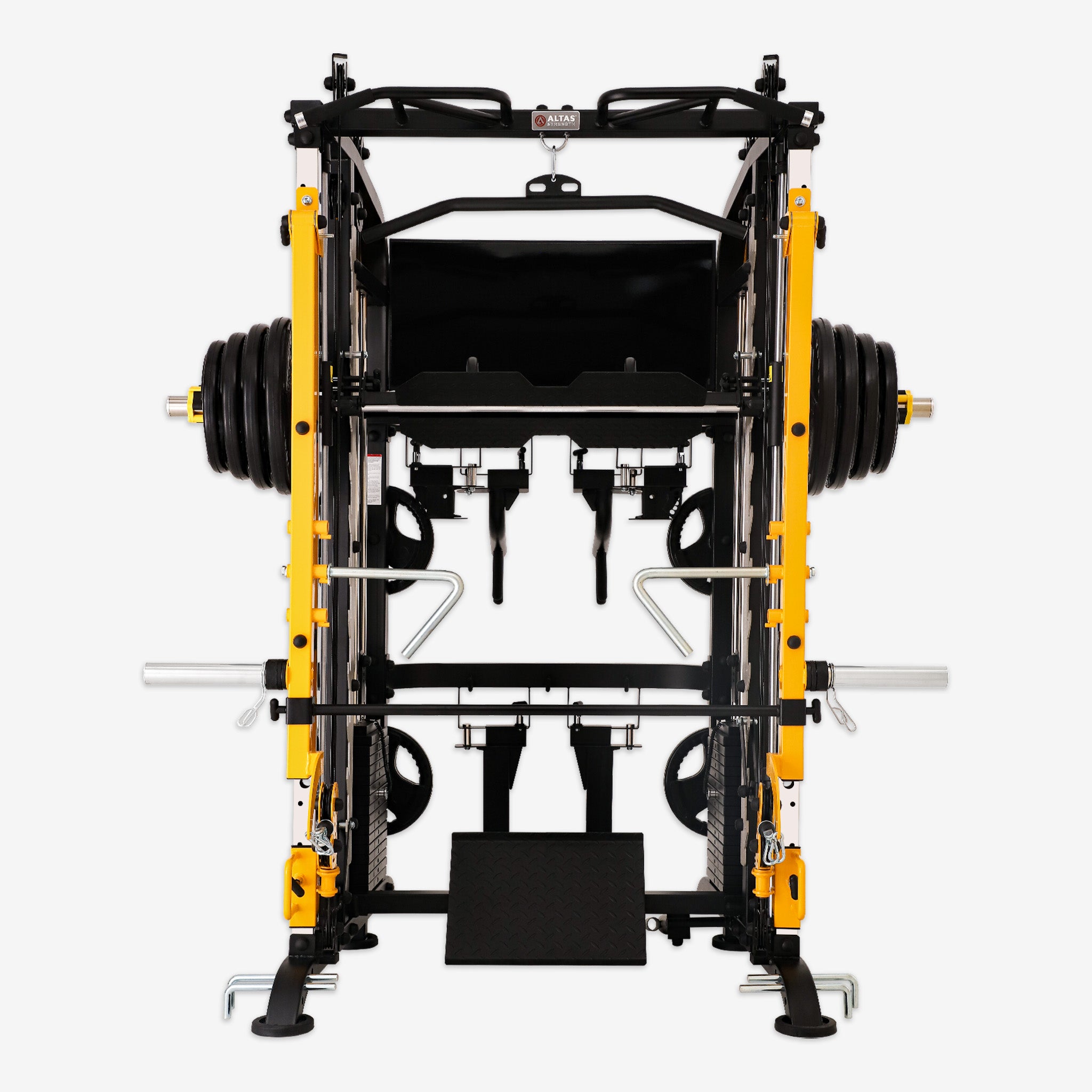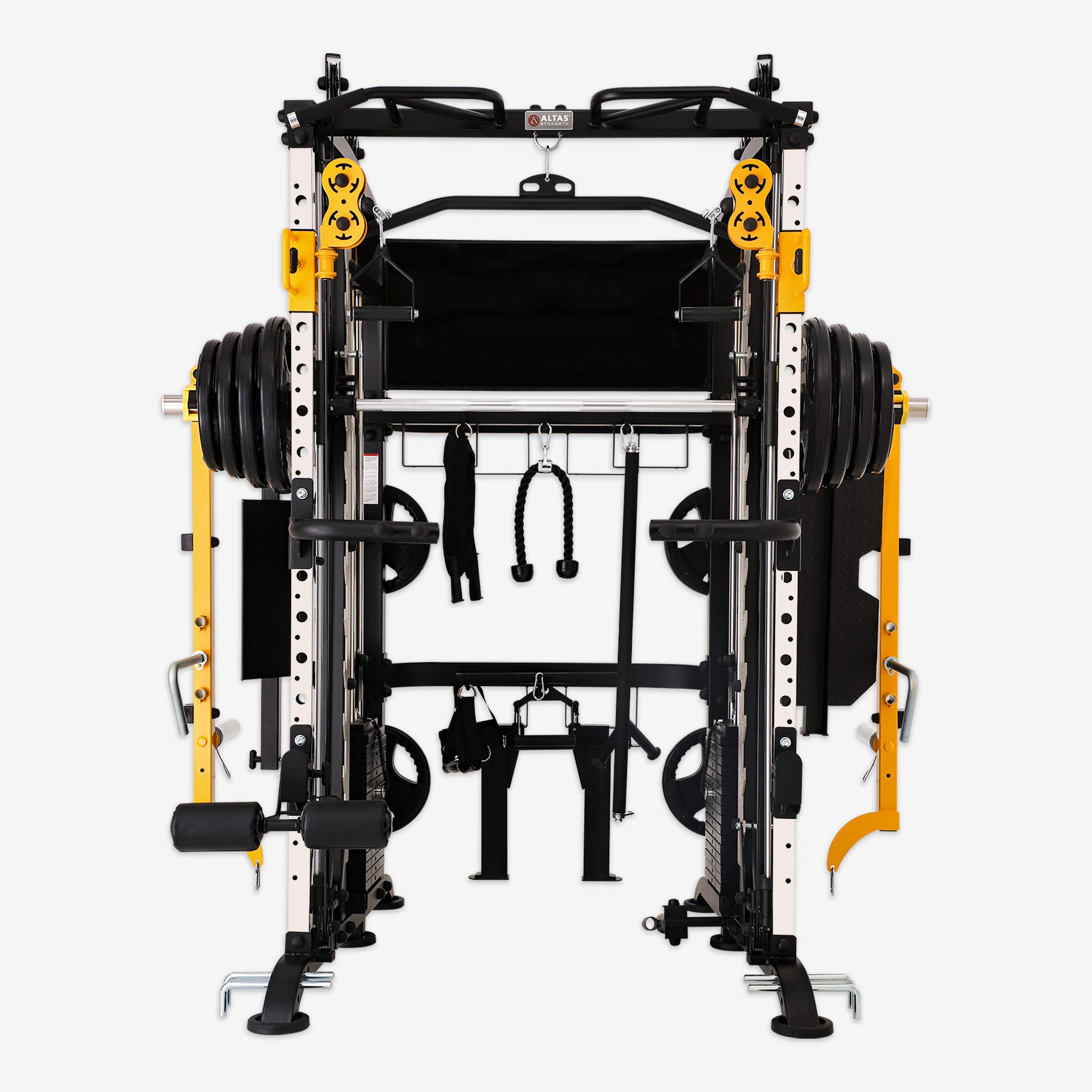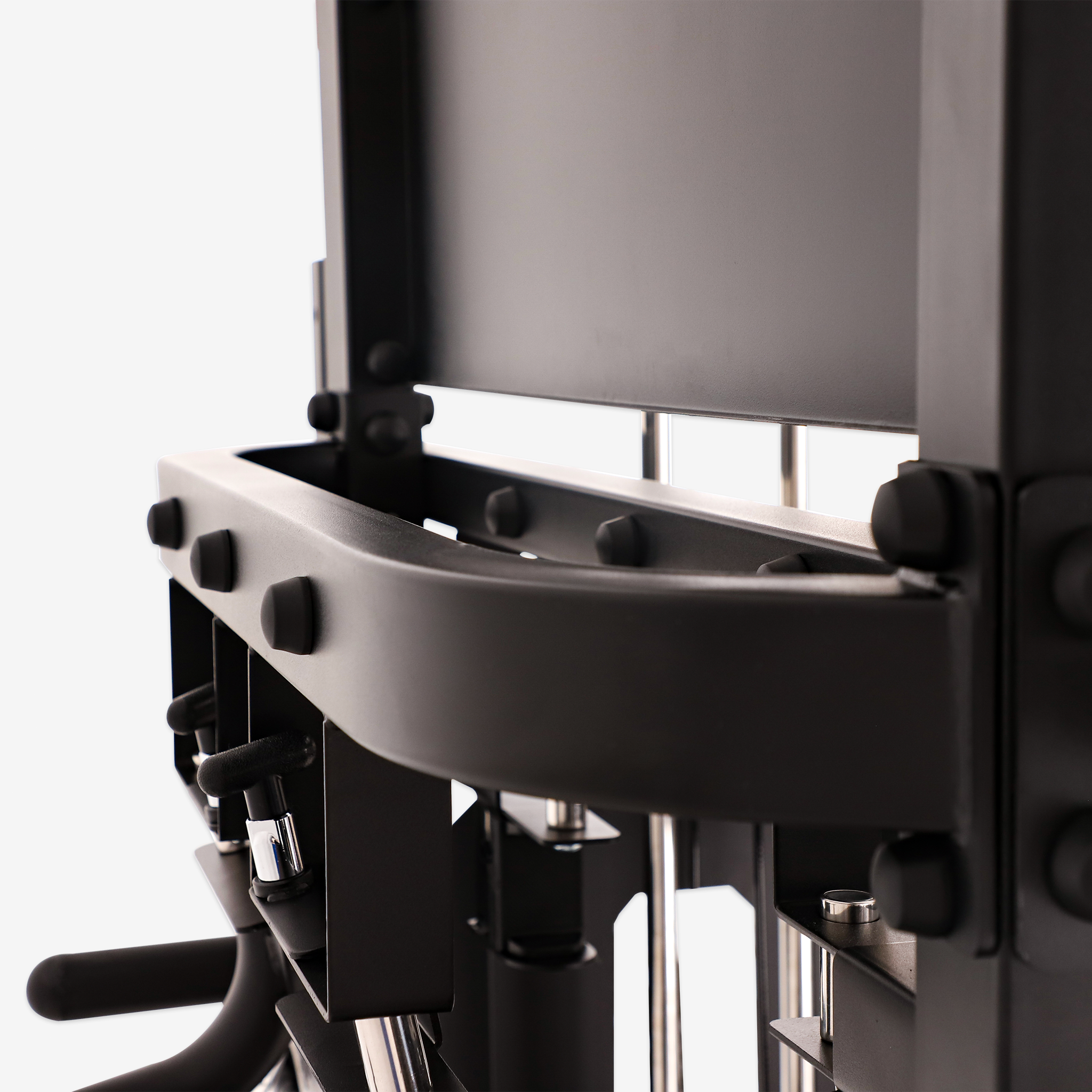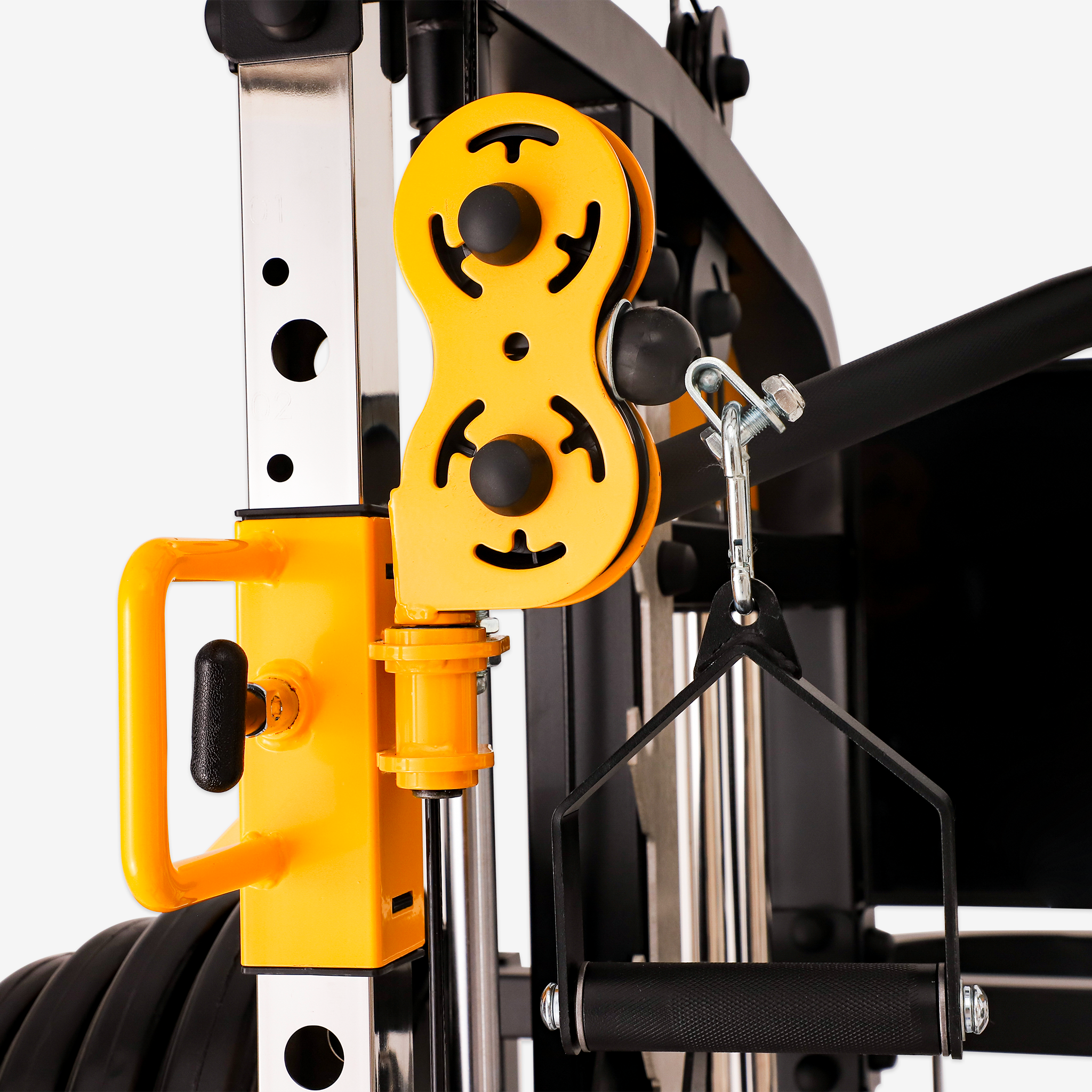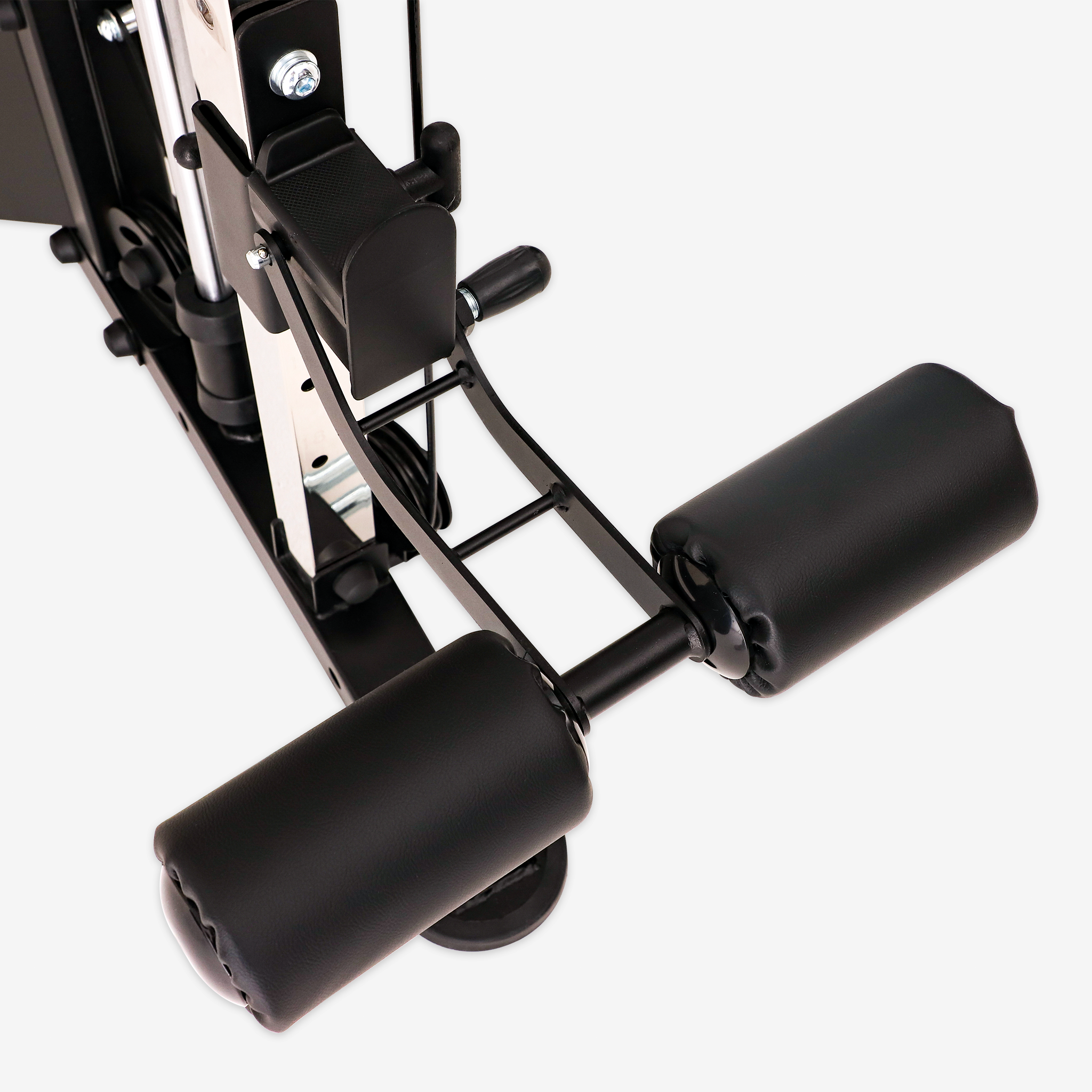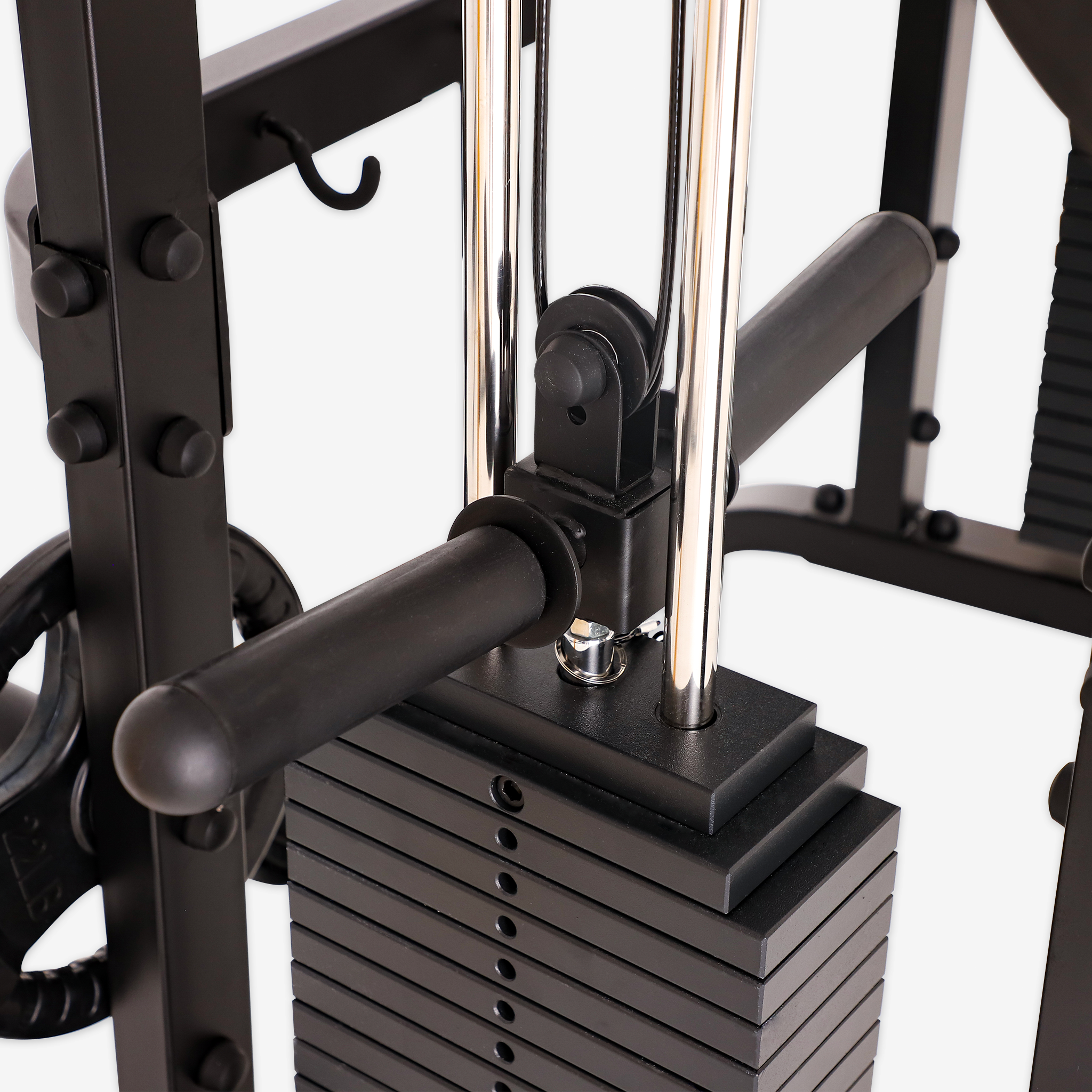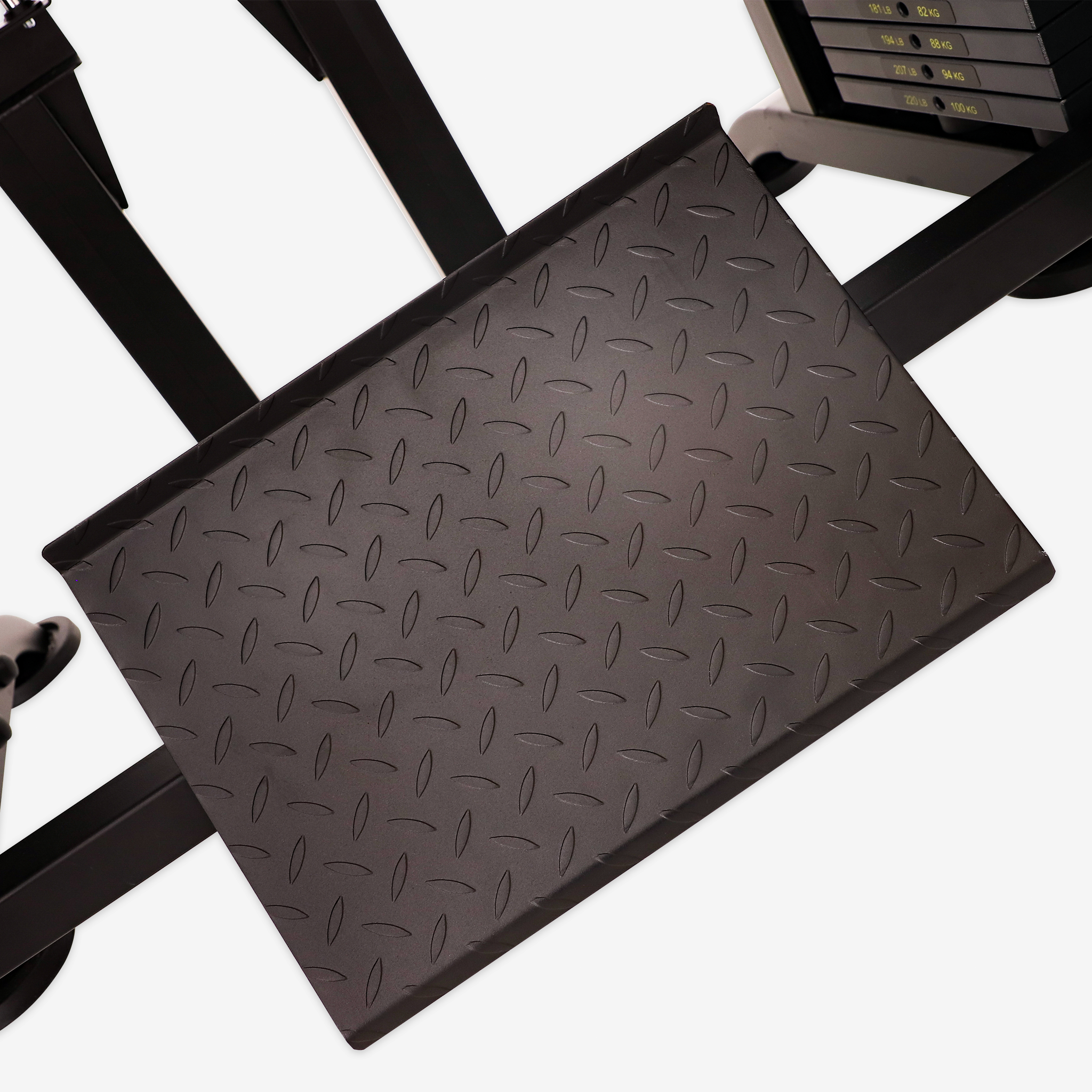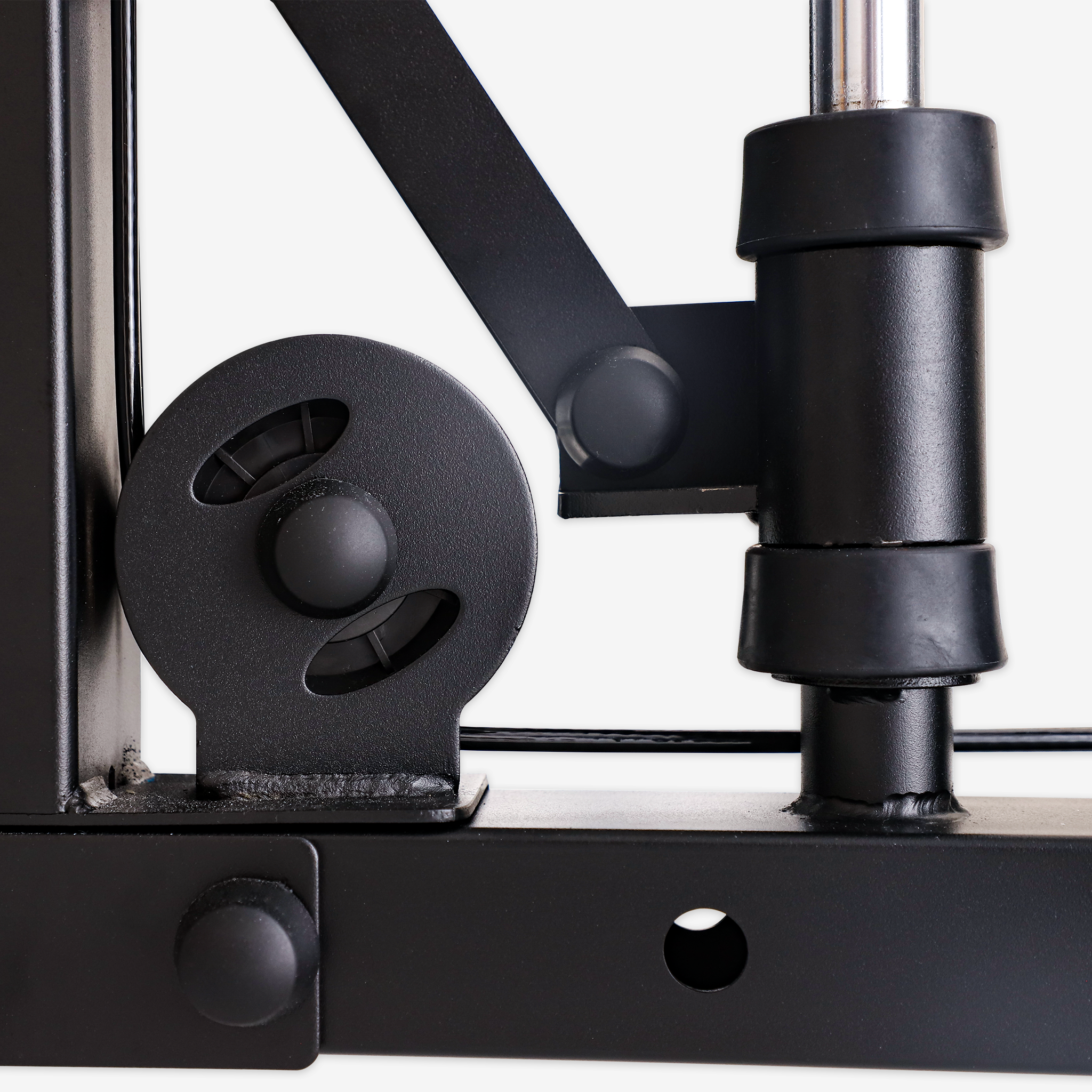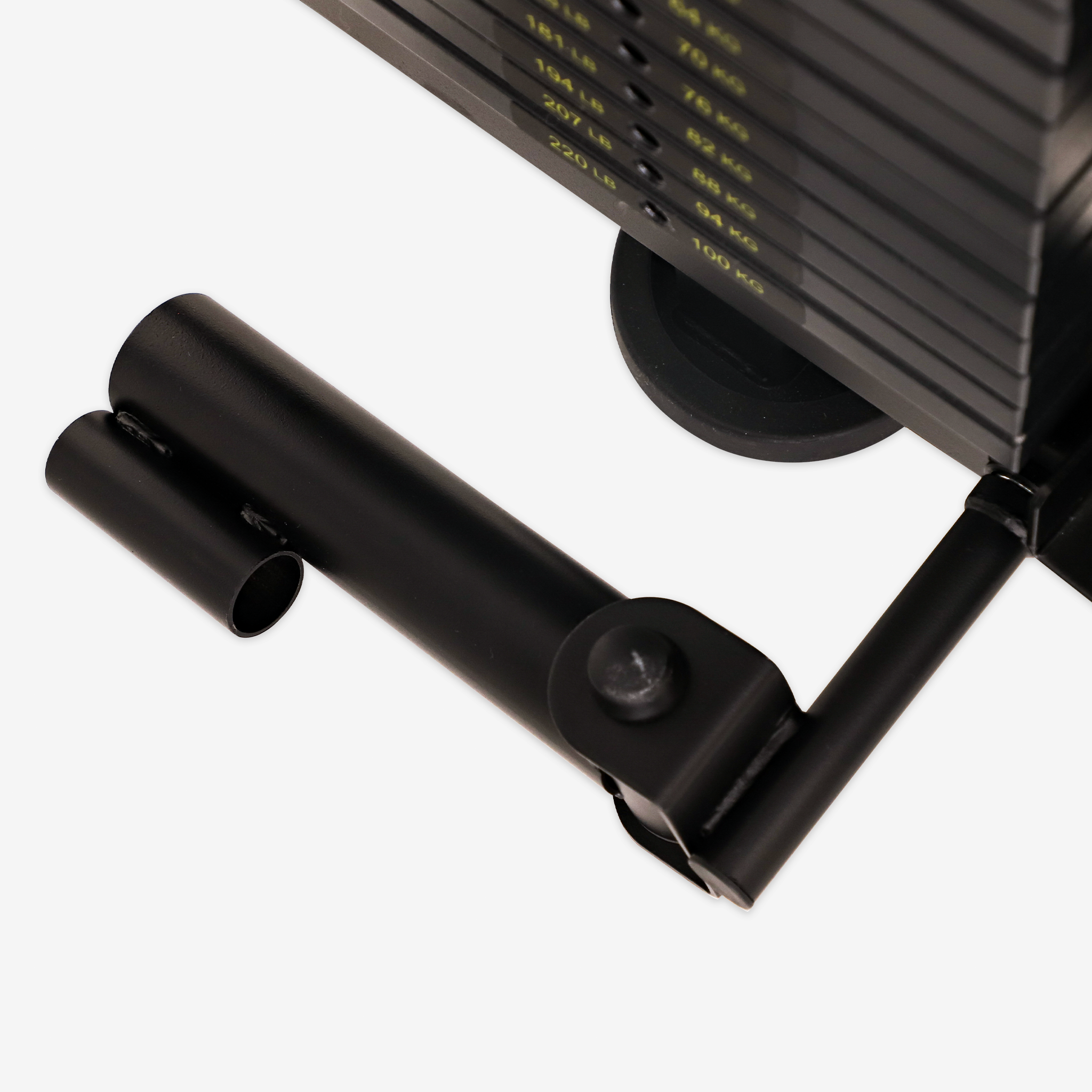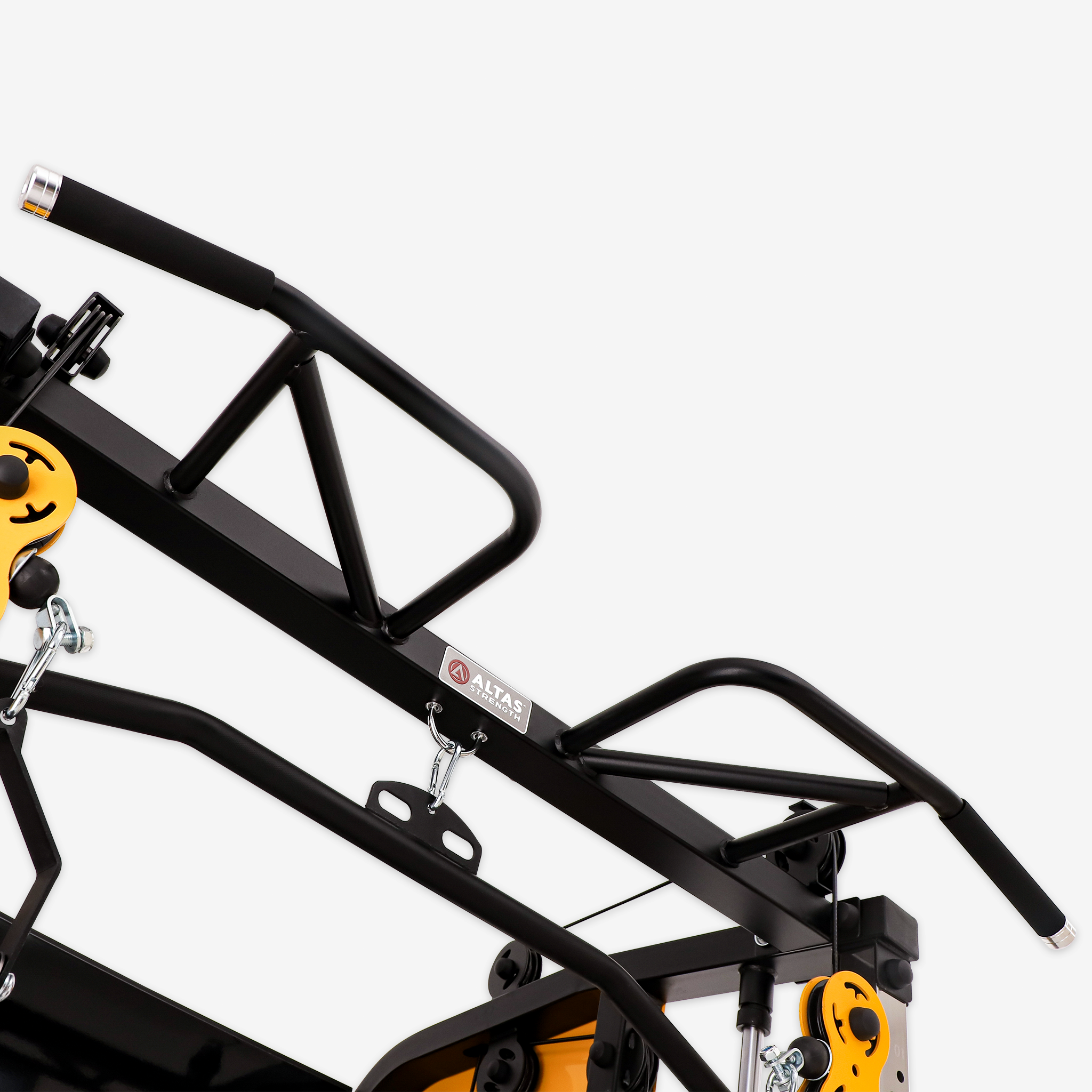
A Smith machine is a strength-training station that guides a bar along a fixed track. For home gym users, it can provide a structured way to perform exercises such as squats, presses, and rows without needing to balance a free bar through the same range of motion.
However, a Smith machine is not a universal replacement for free weights. Its guided path, safety features, weight capacity, footprint, and available attachments all affect whether it fits a person’s training goals.
This guide explains what a Smith machine is designed to do, how it compares with other home gym options, and what to consider before buying one.
What Is a Smith Machine?
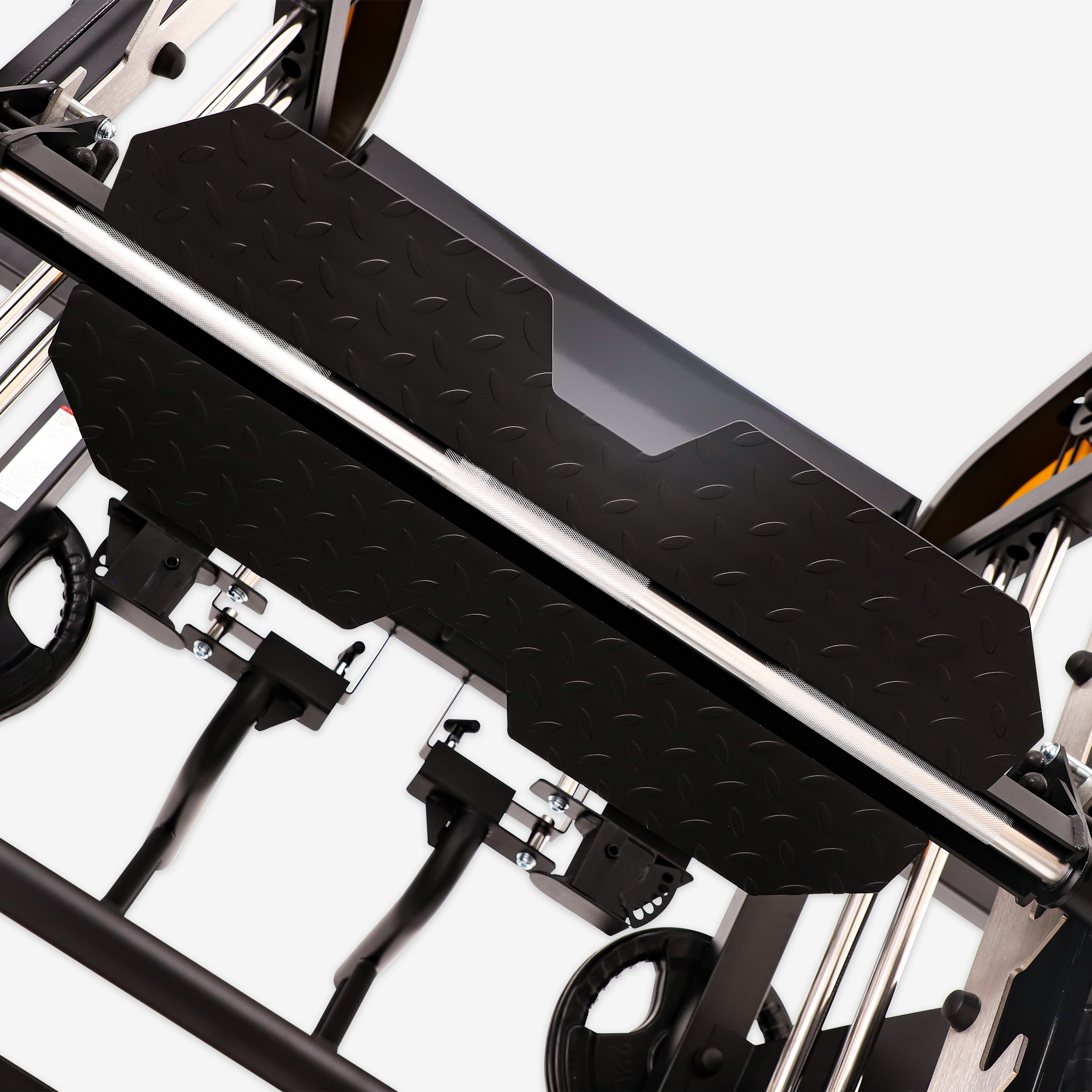
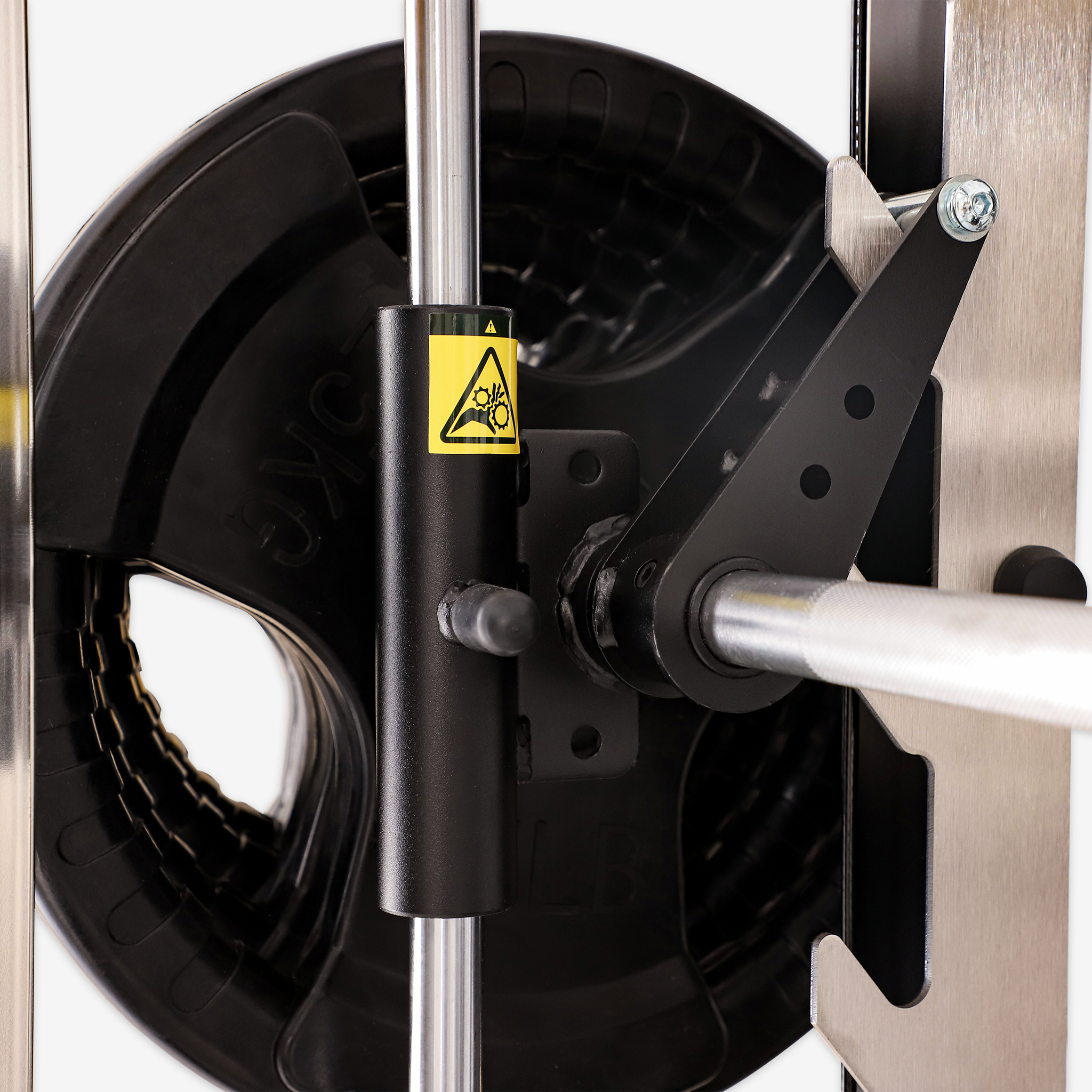
A Smith machine is a weight-training machine with a bar that travels along a guided track. Depending on the model, the track may be vertical or angled, and the bar may include hooks or other mechanisms that allow it to be secured at different points.
Unlike a free barbell, the Smith machine guides the bar’s movement. This can make some exercises feel more controlled, especially for people who are still becoming familiar with resistance training.
Smith machines vary considerably. Before purchasing, check the specific model’s bar starting resistance, weight capacity, safety mechanism, dimensions, and included accessories.
What Problems Can a Smith Machine Help Solve?
1. Training without a workout partner
Home gym users may not always have a spotter available. A Smith machine’s guided bar and built-in safety features can provide additional support during selected exercises.
The safety mechanism is model-specific, so buyers should understand how it works and how to set it before training. A guided track does not remove every risk, and it does not replace appropriate setup, controlled movement, or safe equipment use.
2. Learning selected strength-training movements
Some beginners find free-weight movements challenging because they must control both the weight and its movement path. A Smith machine reduces the need to balance the bar along an unrestricted path.
This may help users focus on learning an exercise and managing the load. However, the fixed path does not automatically correct technique or guarantee proper muscle activation. Users still need to learn suitable positioning and movement control.
3. Combining strength exercises in a home gym
A Smith machine can support several types of strength exercises in one station. Depending on the model and compatible accessories, users may be able to perform squats, presses, rows, and other movements.
For home gym buyers, this can reduce the need to purchase separate pieces of equipment for every exercise. The actual range of exercises depends on the machine’s design, available space, and accessories.
Key Features to Consider
Guided bar path
The fixed track is one of the main differences between a Smith machine and a free barbell. Some machines use a vertical path, while others use an angled path.
Neither design should be assumed to suit every exercise or user. Consider whether the track feels appropriate for the movements you intend to perform and whether the machine’s dimensions allow you to position a bench or other equipment correctly.
Safety hooks and stops
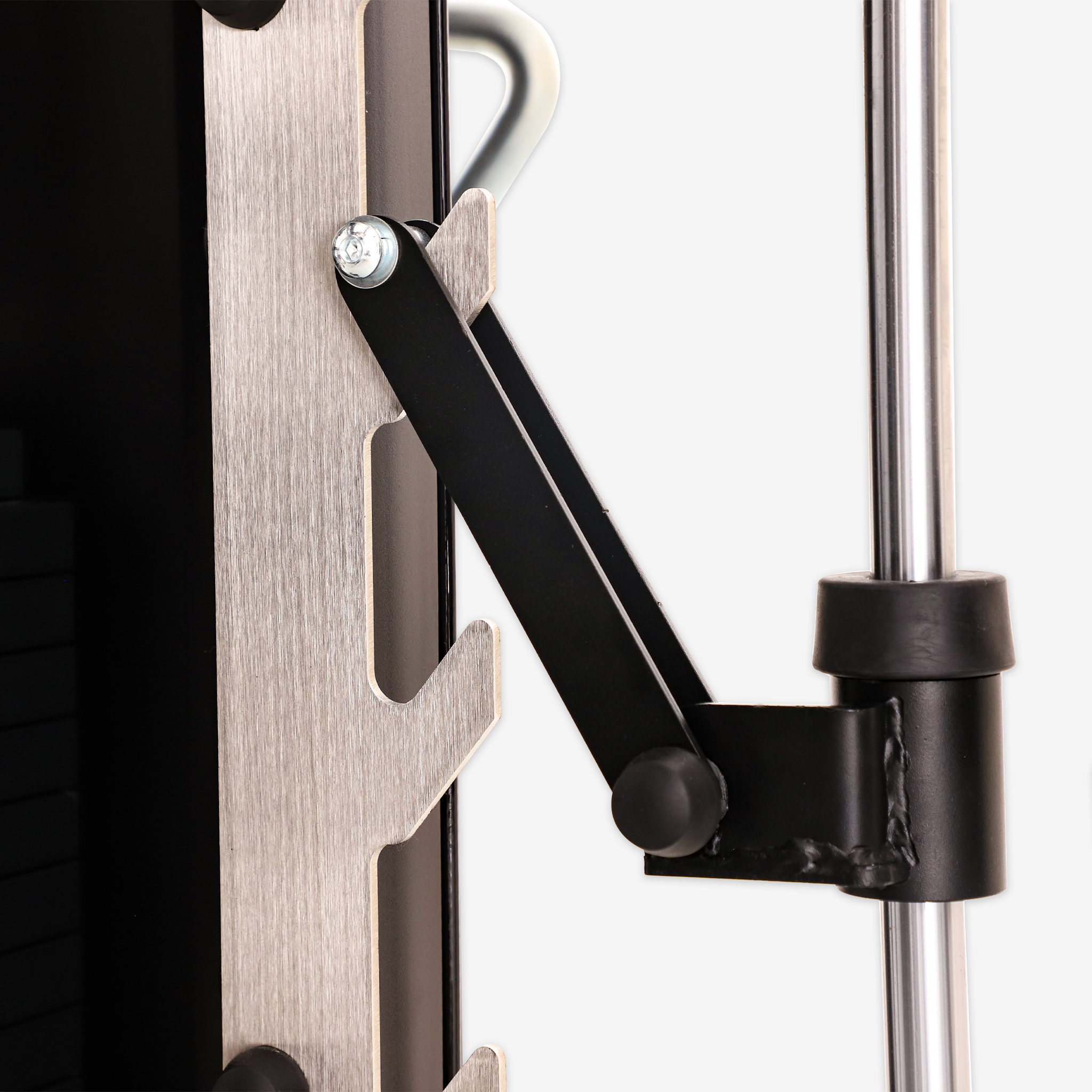
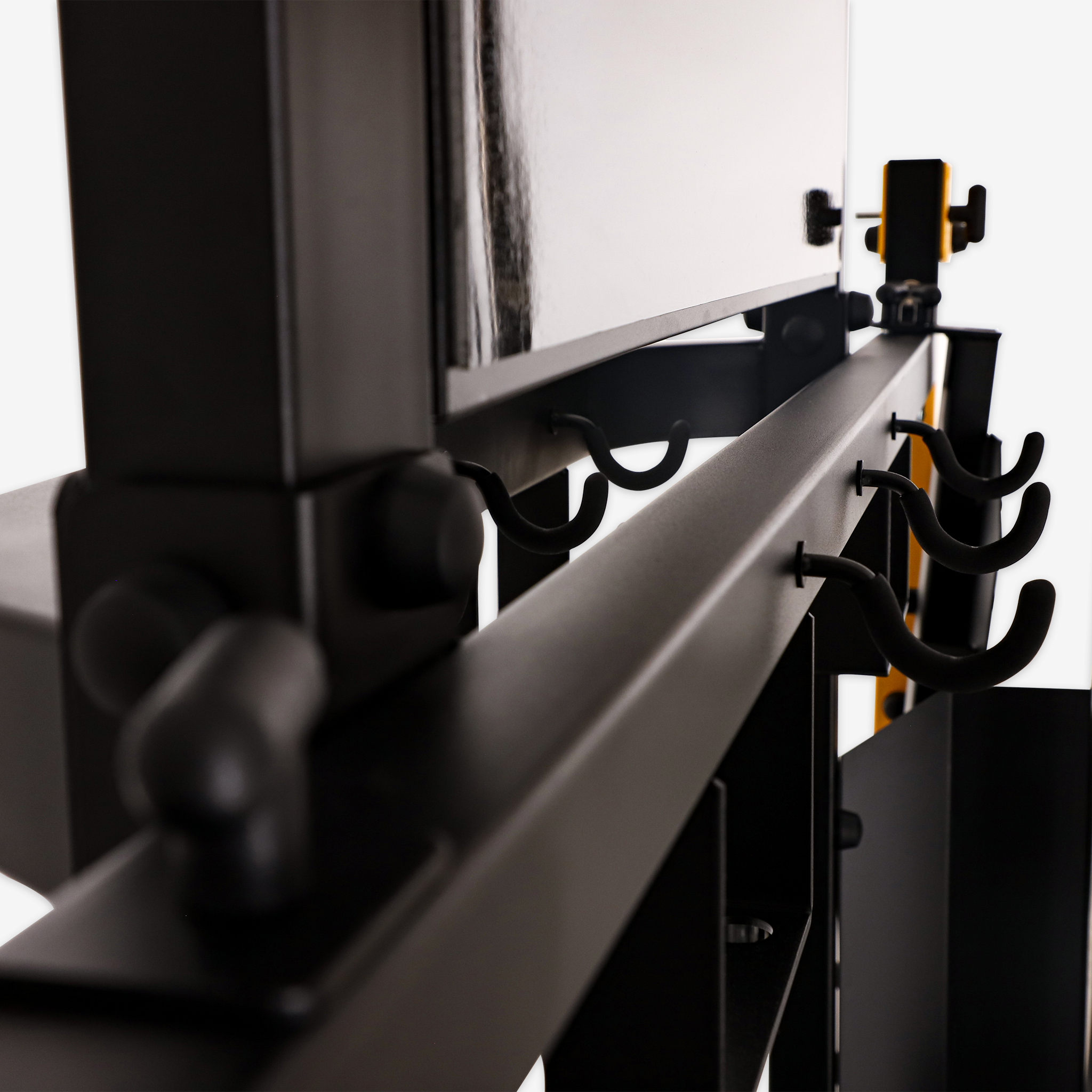
Many Smith machines include a mechanism for securing the bar at selected positions. Some models also include adjustable safety stops.
Check how the bar locks, how the stops are adjusted, and whether the safety setup is suitable for the exercises you plan to perform. Do not assume that all Smith machines use the same locking system.
Frame and base stability
The frame supports the guided bar and the loads used during training. Buyers should review the manufacturer’s stated weight capacity and inspect the overall construction, base design, and assembly requirements.
A machine’s listed capacity is not a substitute for following the manufacturer’s instructions or checking that the equipment is assembled and used as intended.
Exercise options and compatibility
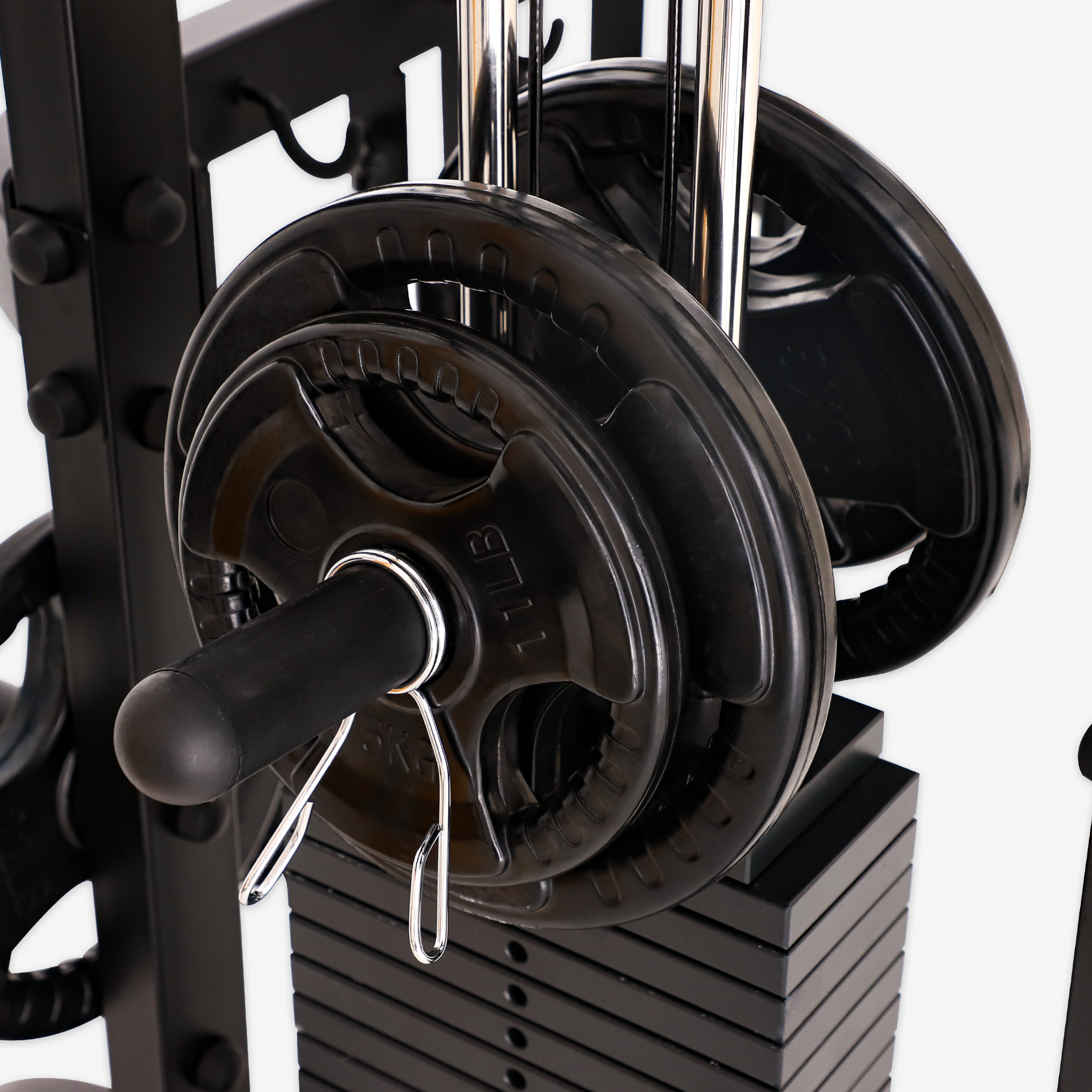
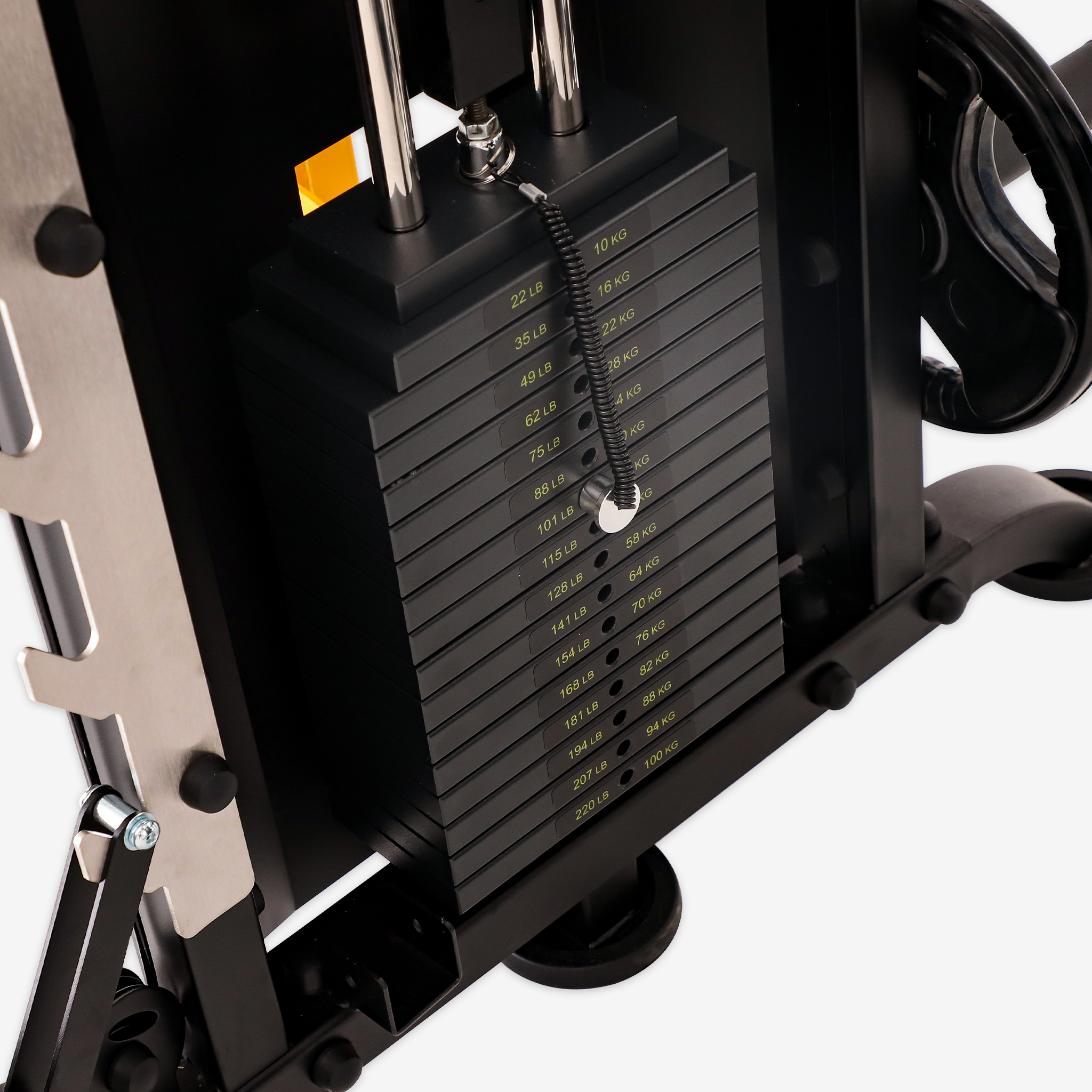
Some Smith machines are designed as part of a larger home gym system. Depending on the model, they may be compatible with a weight bench, weight plates, or additional training attachments.
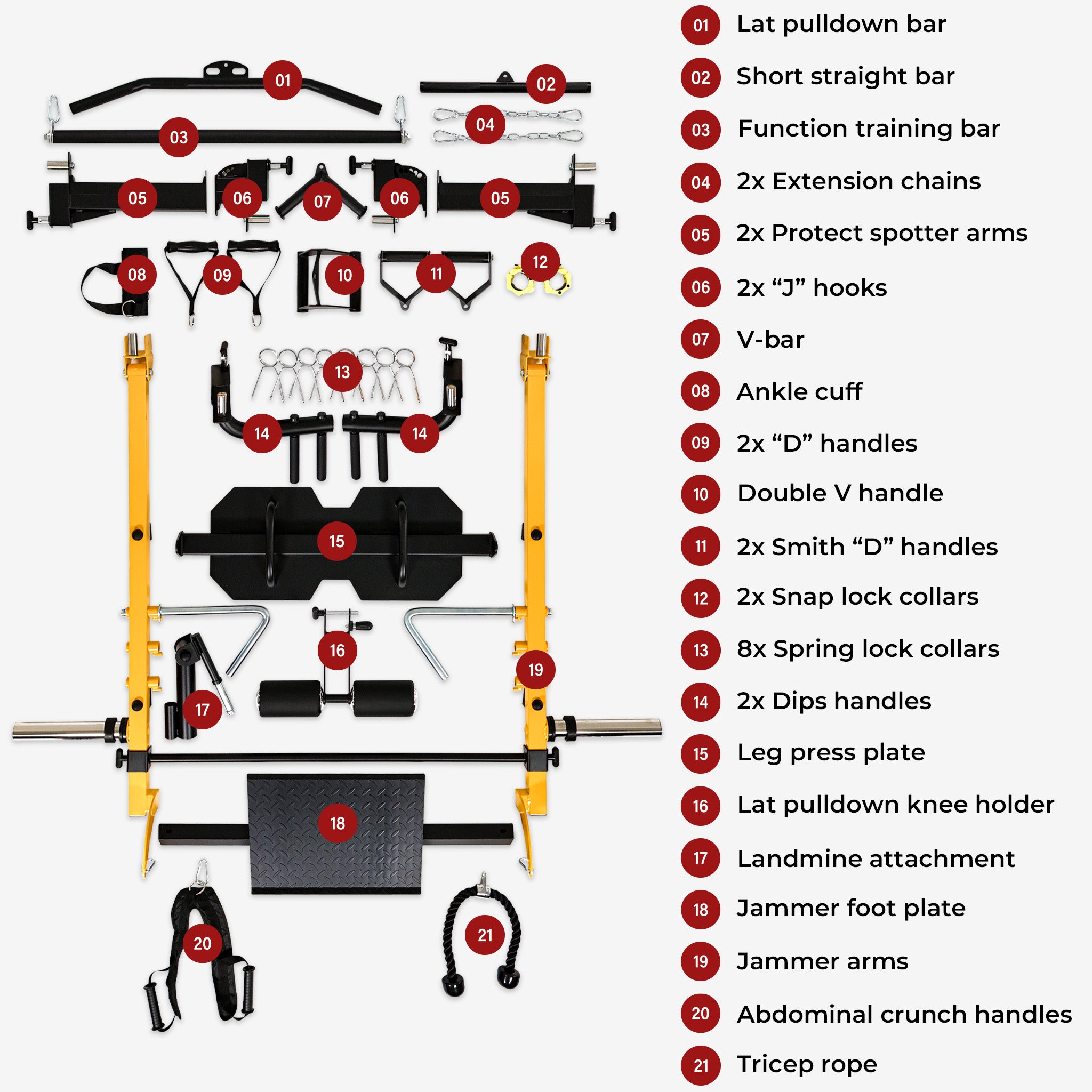
Before buying, confirm which accessories are included and which must be purchased separately. Also check that the bench and other equipment can be positioned correctly around the machine.
Footprint and room layout
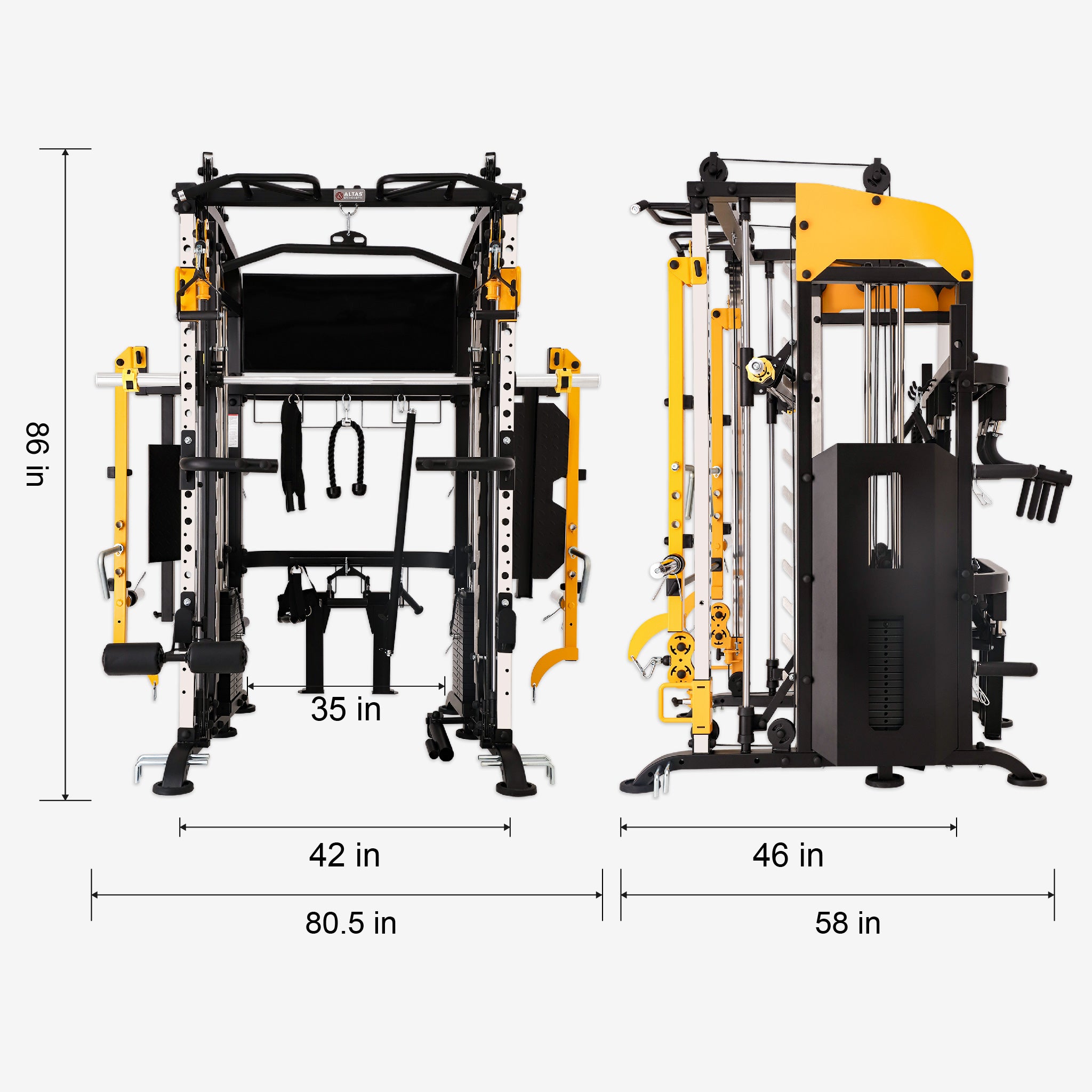
A Smith machine requires a dedicated space. The footprint listed in the product specifications is only part of the planning process: users also need room to enter and exit the station, load plates, adjust a bench, and perform exercises.
Measure the available floor area and ceiling height before purchasing. Consider how the machine will fit alongside other equipment and whether it will restrict movement around the room.
Smith Machine vs. Free-Weight Barbell
A Smith machine and a free-weight barbell can both be used for strength training, but they provide different training experiences.
| Consideration | Smith machine | Free-weight barbell |
|---|---|---|
| Bar movement | Guided along a fixed track | Moves freely |
| Balance demands | Reduced need to balance the bar’s path | User controls the bar’s path |
| Exercise technique | Movement path is constrained by the machine | Movement path is determined by the lifter |
| Safety setup | May include hooks and stops; varies by model | Often requires a rack, safeties, and/or spotter depending on the exercise |
| Exercise flexibility | Limited by track design and machine setup | Supports a broad range of free-weight movements |
| Home gym setup | Integrated station with a defined footprint | May require a bar, plates, rack, bench, and storage |
A Smith machine may suit users who prefer guided bar movement and a dedicated station. A free-weight barbell may suit users who want to practice unrestricted barbell movements and develop the balance and coordination those movements require.
The two options can also complement each other in a home gym.
Smith Machine vs. Squat Rack
A squat rack supports free-weight exercises while leaving the bar’s movement path unrestricted. Depending on the rack, it may include adjustable safety arms or other safety components.
A Smith machine guides the bar along its track and may include built-in locking features. A squat rack generally offers more freedom of movement, while a Smith machine provides a more constrained bar path.
When comparing them, consider:
-
Whether you prefer guided or unrestricted bar movement
-
Which exercises you want to perform
-
The rack’s safety features and adjustment options
-
Whether you have the space for a barbell, plates, and rack
-
Whether you want to practice free-weight technique
-
The total cost of the equipment and accessories
A Smith machine and a squat rack serve overlapping but different purposes. The right fit depends on the user’s training preferences and available space.
Smith Machine vs. Multi-Functional Home Gym
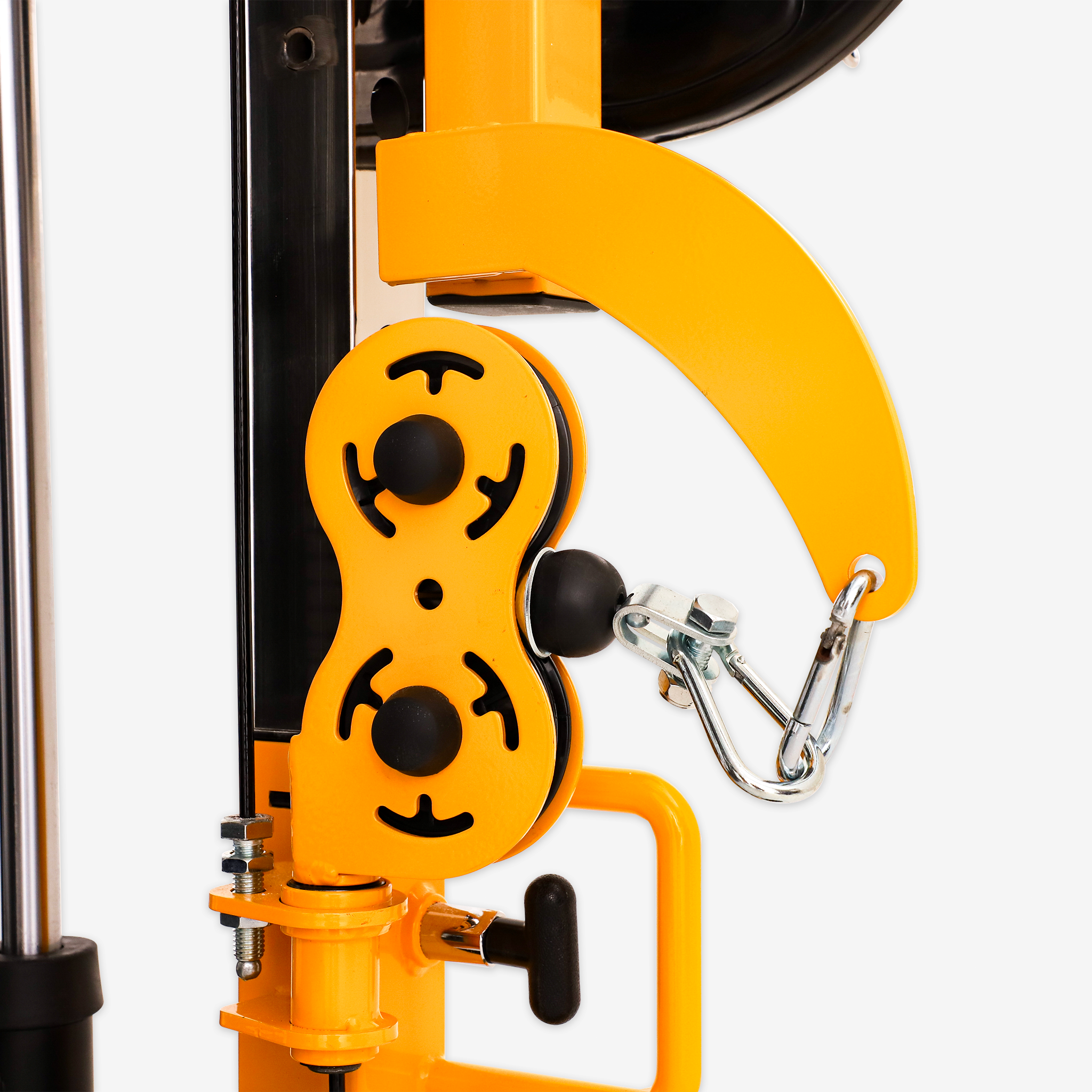
Multi-functional home gym stations often emphasize cable-based exercises and accessory movements. A Smith machine focuses on guided-bar exercises, although some combination units include both systems.
| Consideration | Smith machine | Multi-functional home gym |
|---|---|---|
| Main training focus | Guided-bar strength exercises | Often cable and accessory exercises |
| Compound movements | Supports selected bar-based movements | Depends on the station’s design |
| Movement path | Bar follows a fixed track | Cable path depends on pulley placement |
| Exercise variety | Depends on the machine and attachments | Depends on cable stations and included accessories |
| Space and setup | Requires room for the machine and bar movement | Requires room for the station and cable movement |
Some users may prefer a Smith machine for guided-bar exercises, while others may prioritize cable stations and accessory training. Combination units may offer both, but buyers should check the actual equipment configuration rather than relying on the category name alone.
Common Limitations and Buyer Considerations
Assembly may take time
Some buyers may find assembly instructions difficult to follow, particularly when parts are not clearly identified. Before purchasing, review the assembly requirements and determine whether you have the space, tools, and assistance needed for setup.
Assembly time varies by model and experience. Do not rely on a general estimate as a guarantee.
The fixed track may not suit every lifter
A Smith machine constrains the bar’s movement path. Some experienced lifters prefer free weights because they allow a more natural, individually controlled bar path and require the lifter to stabilize the weight.
The guided path can be useful for certain training preferences, but it does not reproduce every aspect of free-weight lifting. Users focused on unrestricted barbell technique or sport-specific training may want free-weight equipment as well.
Weight capacity may limit some users
Smith machines have model-specific weight limits. Buyers who plan to train with heavier loads should confirm the manufacturer’s stated capacity and understand which parts of the system the rating applies to.
Do not assume a machine is suitable for advanced or high-load training based only on its appearance or frame size.
It still needs dedicated space
A Smith machine may combine several functions, but it is not a small piece of equipment. Users in very compact apartments should measure the machine and the space required to use it before deciding.
Who May Benefit from a Smith Machine?
A Smith machine may be worth considering for:
-
Home gym users who prefer a guided bar path
-
Beginners who want to learn selected strength exercises with a more constrained movement path
-
People who often train alone and value built-in bar hooks or safety stops
-
Users who want several bar-based exercises in one station
-
Home gym owners who have enough room for a dedicated strength-training machine
It may be less suitable for:
-
Lifters who specifically want unrestricted free-weight movement
-
Athletes whose training requires practicing free-bar technique
-
Users who do not have enough space for the machine and its working area
-
Buyers whose intended training loads exceed the model’s stated capacity
-
People who want a machine that requires no assembly
These are general considerations. Individual suitability depends on the specific model, the user’s experience, and the training plan.
What to Check Before Buying an Altas Strength Smith Machine
Before choosing an Altas Strength Smith Machine, review the specifications and product configuration for the exact model.
-
Bar path: Is the track vertical or angled, and does it suit your planned exercises?
-
Starting resistance: What is the bar’s stated starting resistance?
-
Weight capacity: What load limit does the manufacturer specify?
-
Safety mechanism: How do the hooks and stops work?
-
Included accessories: Is a bench included, or is it sold separately? Which other accessories are included?
-
Compatibility: Which weight plates and accessories can be used?
-
Dimensions: Does the machine fit the room, including space for exercise movement and plate loading?
-
Assembly: What tools, setup space, and assistance may be needed?
-
Warranty and support: What coverage and support does the manufacturer provide?
These details can vary across models and bundles. Confirm them on the product listing or with the manufacturer before making a purchase.
Final Takeaway
A Smith machine is a guided-bar strength-training option for home gyms. It can make selected exercises feel more controlled and may provide useful safety features for people training without a spotter. It also offers a way to combine several strength movements in one dedicated station.
Its fixed track is also its main limitation: it does not provide the same unrestricted movement as a free-weight barbell. Buyers should compare the machine’s track, safety setup, weight capacity, accessories, and footprint with their own training goals.
For home gym users considering Altas Strength, the decision should come down to the exact model’s specifications and whether its guided-bar design, available exercises, and space requirements match the way they plan to train.