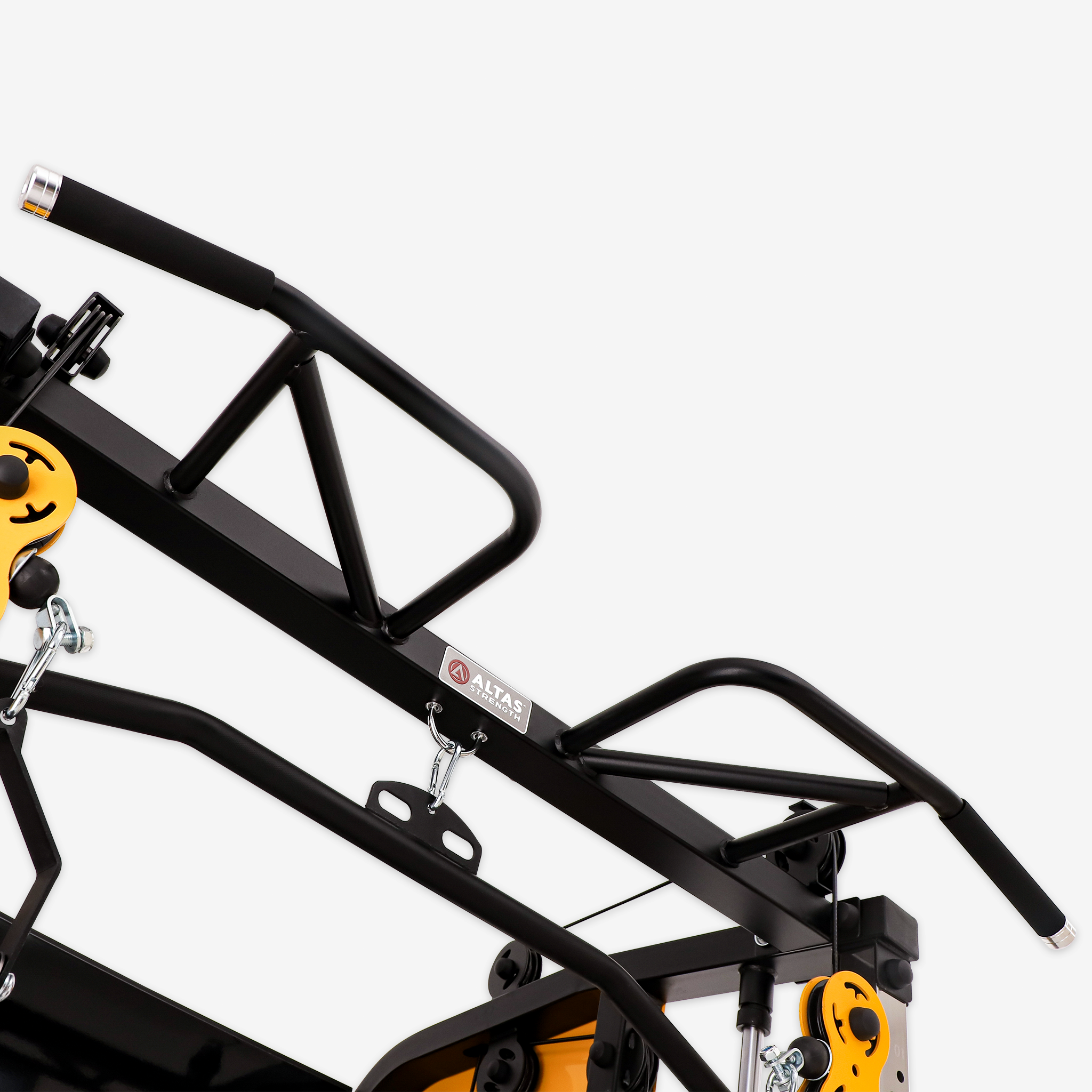
Trap bars, also called hex bars, are commonly used for deadlifts, carries, and other strength exercises. One important detail to check before training is the weight of the unloaded bar.
Not every trap bar weighs the same. Frame design, handle height, dimensions, and construction can all affect its starting weight. Knowing the bar’s actual weight helps you calculate the total load and track your training consistently.
This guide explains trap bar weight, how trap bars compare with straight barbells, and what to consider when choosing one for a home gym.
What Is a Trap Bar?
A trap bar is a specialty barbell with a hexagonal or rectangular frame that allows the lifter to stand inside the bar. Many models include neutral-grip handles positioned at the sides.
This design places the load closer to the lifter’s body than a conventional straight-bar deadlift setup. Depending on the model, the handles may also be raised, which changes the starting position of the lift.
Trap bars are often used for:
-
Trap bar deadlifts
-
Farmer’s carries
-
Shrugs
-
Selected pulling and strength exercises
The exercises available depend on the bar’s dimensions, handle design, and loading capacity.
How Much Does a Trap Bar Weigh?
There is no single standard weight for every trap bar. Some models are relatively light, while others use heavier frames and may weigh considerably more.
A product listing may state the bar’s weight in pounds, kilograms, or both. Check the manufacturer’s specifications for the exact model rather than assuming that all hex bars share the same starting weight.
How to calculate the total load
For a trap bar loaded with weight plates:
Total load = unloaded trap bar weight + weight plates
For example, if a trap bar weighs 55 lb and you add 90 lb in plates, the total load is 145 lb, assuming the listed bar weight represents the complete unloaded bar.
Always check whether the product specification refers to the complete bar or only part of the frame. If the manufacturer lists a starting resistance or another load measurement, use the definition provided for that model.
Why Trap Bar Weight Matters
1. Calculating the starting load
The unloaded bar contributes to the total weight lifted. A heavier bar may create a higher starting load before plates are added, which can matter for people choosing equipment for different strength levels.
For new lifters, it is useful to know whether they can manage the unloaded bar comfortably and with appropriate control before adding plates.
2. Tracking training consistently
Knowing the bar’s weight makes it easier to record total load from one session to the next. This helps avoid confusing the weight of the plates with the total weight being lifted.
When comparing training records, make sure you are using the same calculation method and the same bar.
3. Understanding the bar’s design
A heavier trap bar is not automatically better or more stable. Weight alone does not establish the quality, durability, or capacity of the frame.
Compare the manufacturer’s stated weight, load capacity, construction, handle design, and dimensions together.
Trap Bar vs. Straight Barbell
Trap bars and straight barbells can both be used for deadlifts, but their shapes and lifting positions differ.
| Consideration | Trap bar | Straight barbell |
|---|---|---|
| Bar design | Hexagonal or rectangular frame; lifter stands inside | Straight bar positioned in front of the lifter |
| Grip | Often neutral-grip side handles | Usually overhand, mixed, or other barbell grips |
| Load position | Handles are typically closer to the body’s sides | Bar is held in front of the body |
| Movement options | Deadlifts, carries, shrugs, and other compatible movements | Deadlifts, squats, presses, rows, and many other barbell lifts |
| Technique | Movement depends on frame and handle design | Movement depends on the lift and barbell setup |
| Home gym use | Specialized bar with a larger frame | Versatile bar for a broad range of exercises |
A trap bar can be a useful option for people who prefer its handle position and lifting setup. A straight barbell offers greater versatility across many traditional barbell exercises.
Neither bar is automatically the right choice for everyone. Consider your training goals, experience, available space, and the movements you want to practice.
Trap Bar vs. Lightweight Budget Trap Bar
When comparing trap bars, buyers may consider a lighter, lower-cost model alongside a heavier or more robust design.
A lower unloaded weight can be useful for some users, but it does not by itself indicate poor quality. Similarly, a heavier frame does not guarantee better performance.
Compare the following specifications:
-
Unloaded bar weight
-
Maximum stated load capacity
-
Frame dimensions
-
Handle height and grip style
-
Plate sleeve size and compatibility
-
Storage and portability
-
Manufacturer warranty and support
If precise training records matter to you, use the manufacturer’s stated bar weight and verify that you are comparing the same measurement across models.
Trap Bar vs. Leg Press or Hack Squat
A trap bar is free-weight equipment: the user controls the bar and their body position during the exercise.
A leg press or hack squat uses a machine-based movement path. These machines may suit people who prefer a supported setup for certain lower-body exercises.
The equipment serves different purposes. A trap bar can support loaded carries and pulling movements, while a leg press or hack squat is designed around a specific machine exercise. Your choice should reflect the exercises you want to include in your routine and the space available.
Common Buyer Considerations
Bar weight may be higher than expected
Some trap bars weigh more than a standard training bar or lightweight specialty bar. Check the unloaded weight before purchasing, especially if you want to begin with a low total load.
Heavy frames can be harder to move and store
Trap bars have a wider frame than straight barbells. Depending on the design, they may require more floor space and may be less convenient to move or store in a small home gym.
Measure your storage area and check the bar’s dimensions before buying.
Weight capacity and bar weight are different specifications
The unloaded weight tells you how heavy the bar is before plates are added. The maximum load capacity describes the load limit stated by the manufacturer.
Do not assume that a heavier bar automatically has a higher capacity. Review both specifications for the exact model.
A trap bar does not replace every barbell exercise
Trap bars are useful for certain pulling and carrying movements, but their frame shape limits their use for many conventional barbell exercises.
If you want one bar for squats, presses, rows, and conventional deadlifts, a straight barbell may provide broader exercise options. A trap bar can also complement a standard barbell rather than replace it.
Who May Want a Trap Bar?
A trap bar may be worth considering for:
-
Home gym users who want a dedicated option for trap bar deadlifts
-
Lifters who prefer neutral-grip handles
-
People interested in loaded carries and selected pulling exercises
-
Users who want to compare different deadlift setups
-
Home gym owners with enough space to store and use the bar
It may be less suitable for:
-
Competitive powerlifters whose training requires conventional competition deadlifts
-
Users who need one bar for a wide range of traditional barbell exercises
-
People with very limited storage space
-
Beginners who have not checked whether the unloaded bar is manageable for them
-
Buyers whose intended loads exceed the manufacturer’s stated capacity
These are general considerations, not universal rules. Individual needs and the exact bar design matter.
What to Check Before Buying an Altas Strength Trap Bar
Before choosing an Altas Strength trap bar, review the specifications for the exact product model.
-
Unloaded weight: What is the complete bar’s stated weight?
-
Load capacity: What maximum load does the manufacturer specify?
-
Handle design: Does it include high handles, low handles, or both?
-
Frame dimensions: Will it fit your workout and storage area?
-
Plate compatibility: What plate sleeve size does it use?
-
Grip and clearance: Is there enough room to hold the handles and load plates?
-
Construction: What materials and structural details are listed?
-
Warranty and support: What coverage is provided?
Do not assume all Altas Strength bars share the same dimensions, unloaded weight, or capacity. Confirm the details on the product page for the model you are considering.
Final Takeaway
Trap bar weight matters because it affects the starting load and helps you calculate the total weight lifted. However, there is no single weight that applies to every trap bar.
When choosing a trap bar, compare its unloaded weight with its load capacity, handle design, dimensions, plate compatibility, and intended use. A trap bar can be a useful addition to a home gym for deadlifts, carries, and other compatible exercises, but it does not replace every function of a straight barbell.
For an Altas Strength trap bar, use the exact model’s specifications to determine whether its weight, design, and storage requirements match your training needs.